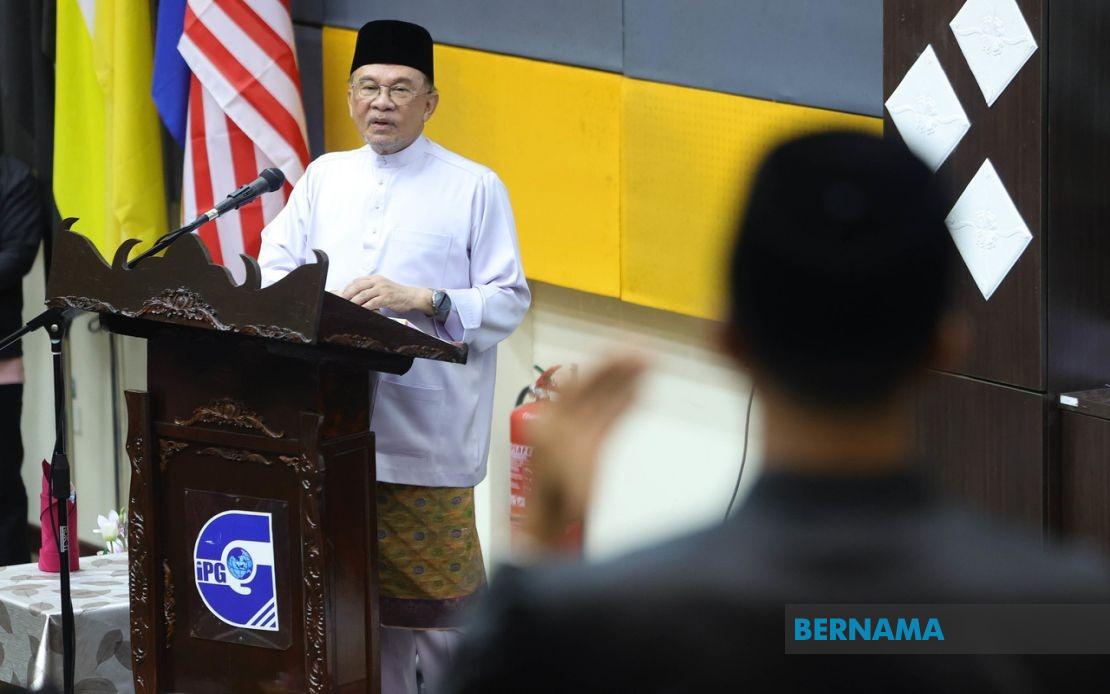
Prime Minister Datuk Seri Anwar Ibrahim has outlined an ambitious vision for Malaysia's teaching workforce that demands simultaneous mastery of cutting-edge technology and unwavering commitment to moral principles. Speaking in Nilai on July 17, Anwar stressed that the nation's future competitiveness depends on developing educators capable of navigating both the digital revolution and the complexities of a rapidly globalizing world. His remarks underscore growing concern among policymakers that Malaysia risks falling behind regional competitors unless its education system evolves to embrace fields such as artificial intelligence, data science, and advanced engineering while maintaining the cultural and spiritual grounding that has long defined Malaysian society.
The Prime Minister's intervention reflects recognition that conventional curricula and pedagogical approaches are increasingly inadequate for preparing students to thrive in an economy fundamentally reshaped by automation, digitalization, and artificial intelligence. Rather than advocating wholesale adoption of Western educational models focused exclusively on technical competency, Anwar articulated a distinctly Malaysian approach—one he encapsulated in the phrase "reach for the skies while keeping our roots on the ground." This formulation acknowledges the reality that economic survival in the twenty-first century demands technological literacy and innovation capacity, yet simultaneously insists that such capabilities must be anchored in ethical reasoning, cultural awareness, and commitment to shared human values that transcend national boundaries.
The emphasis on character and ethics among educators carries particular weight in Malaysia's context. As a nation where religious identity, ethnic diversity, and community cohesion remain central to national governance and social stability, the composition and orientation of the teaching profession inevitably influences not merely academic outcomes but the broader health of society. Anwar's warning that education fails fundamentally when it becomes a vehicle for racial or religious prejudice identifies a genuine vulnerability within systems where teachers themselves may harbor intergroup biases or where curriculum design inadvertently privileges certain communities. The Prime Minister thus positioned ethical teacher development not as supplementary to technical training but as integral to educational quality itself.
Education Minister Fadhlina Sidek's presence at the address signals government commitment to translating these principles into policy and institutional change. The involvement of IPGKPT director Dr Kartini Abdul Mutalib—whose institution oversees teacher education and professional development—suggests that implementation may involve restructuring initial teacher training programs, establishing new professional standards, and potentially revising assessment frameworks to evaluate educators on dimensions beyond subject-matter knowledge. Whether such changes materialize swiftly or face bureaucratic obstacles remains uncertain, but the public positioning of these priorities at ministerial level indicates the government regards the issue as sufficiently urgent to warrant systematic intervention.
The broader context for these remarks involves Malaysia's performance in international educational assessments and ongoing anxiety about workforce preparedness. Regional competitors including Singapore and South Korea have invested heavily in STEM education and teacher development, while simultaneously emphasizing character education and civic responsibility. Malaysia's own enrollment in tertiary STEM fields, while growing, remains below levels in comparable regional economies, and concerns persist about whether graduates possess both theoretical knowledge and practical problem-solving capacity. The Prime Minister's insistence that technological mastery without ethical grounding leads to incomplete development of human potential reframes the challenge beyond mere technical skill acquisition toward holistic educator preparation.
Anwar's emphasis on diversity and intergroup tolerance as prerequisites for educational excellence also addresses documented challenges within Malaysian schools. Reports of racial or religious tension in educational settings, whether manifesting through curriculum bias, disciplinary disparities, or peer conflict, have prompted periodic calls for greater emphasis on civic education and interfaith understanding. By connecting such concerns explicitly to educational quality and national progress, the Prime Minister signaled that multicultural competence constitutes a core professional requirement for teachers, not an optional add-on. This positioning proves particularly important given Malaysia's constitutional commitment to multiracialism and the potential costs—economic, social, and security-related—of educational systems that inadvertently exacerbate rather than mitigate communal division.
The practical implications of these principles for curriculum design, teacher assessment, and professional development remain to be worked out. How precisely should teacher training programs balance intensive STEM content preparation against character and ethics coursework? What assessments could credibly measure educators' capacity to model ethical decision-making and foster intercommunal respect? Which pedagogical approaches most effectively develop both technical competency and human values simultaneously? These questions will likely occupy policymakers and educational specialists in coming months. International experience suggests that teacher quality initiatives combining technical upgrading with professional learning communities centered on ethical practice can yield positive results, though implementation demands sustained institutional commitment and adequate resourcing.
The challenge of recruiting and retaining high-caliber teachers equipped with both technical expertise and strong ethical foundations deserves particular attention. Malaysia competes with other sectors and nations for talented individuals capable of mastering complex technologies. Ensuring that the teaching profession attracts such candidates requires not merely competitive remuneration—itself a contentious issue in Malaysian public sector budgets—but also professional respect, career advancement pathways, and organizational cultures that genuinely value the integration of technical innovation with humanistic commitment. Without deliberate attention to the conditions under which teachers work and develop, aspirations for transforming the profession risk remaining rhetorical rather than translating into sustained change.
Regional and international observers will note that Anwar's framing positions Malaysia as seeking a distinctive path between unreflective technological adoption and resistance to necessary modernization. This middle position, while politically sensible and reflecting genuine societal values, demands more sophisticated implementation than either pole. Southeast Asian nations increasingly recognize that twenty-first-century competitiveness cannot be achieved through technical training alone, yet translating this insight into educational practice requires institutional innovation and political will. Malaysia's success in developing a teaching force matching Anwar's vision—simultaneously technologically sophisticated and rooted in human values—may well influence how neighboring countries approach similar challenges, establishing a regional model or cautionary example.
Looking ahead, the test of these principles will lie in their translation into concrete policy choices with clear resource implications. Teacher education curricula must be redesigned, which requires consultation with universities currently training educators. Professional development programs must evolve to address both emerging technologies and ethical reasoning in integrated fashion. School leadership development should emphasize the headmaster's or headmistress's role in fostering inclusive, ethically grounded learning environments where technological innovation serves genuinely human purposes. Without such systematic implementation across multiple institutional domains, even eloquently articulated principles risk becoming aspirational rhetoric disconnected from classroom reality. The months and years ahead will reveal whether Malaysia's government possesses the administrative capacity, political cohesion, and financial commitment required to realize Anwar's vision of a transformed teaching profession.

