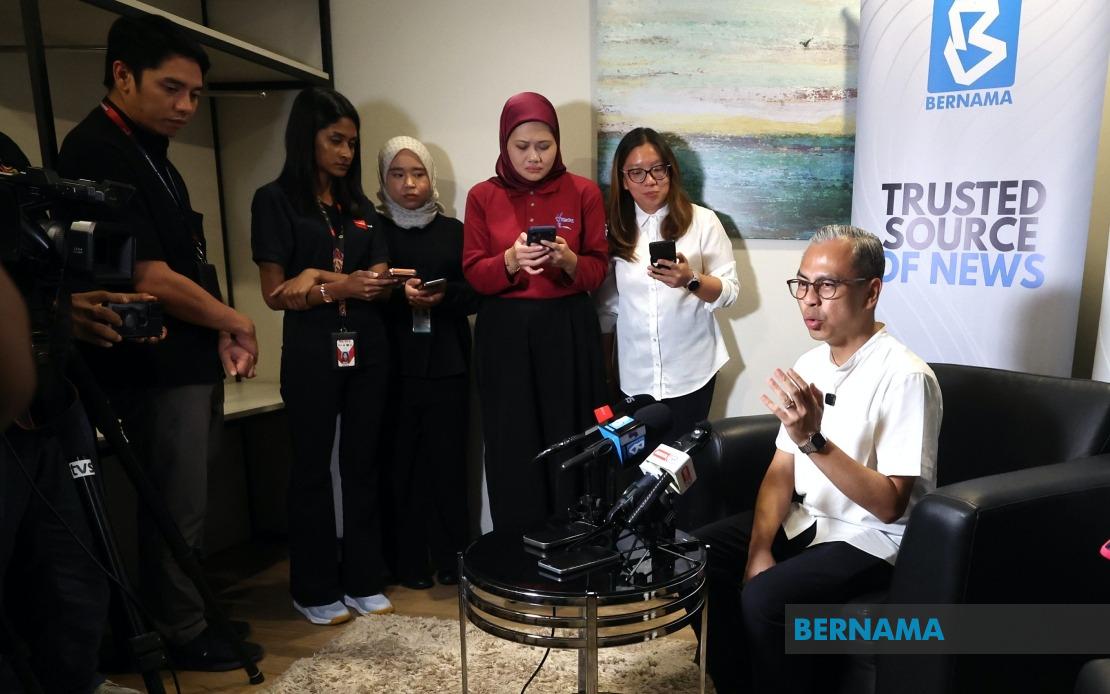
The Malaysian Media Council must be fortified as an independent self-regulatory mechanism if the country's media landscape is to evolve in an ethical and accountable manner, Communications Minister Datuk Fahmi Fadzil said during a visit to the Malaysian National News Agency's operations centre in Johor Bahru on July 7. The government would provide targeted support during the council's formative years while simultaneously encouraging both traditional media outlets and digital platforms to participate in the structure, he indicated, signalling a comprehensive approach to media governance across all information channels.
Fahmi's remarks underscored the government's commitment to bolstering industry-led oversight rather than relying solely on regulatory intervention from state bodies. By expanding the council's membership base, media-related complications could be resolved through the sector's own mechanisms rather than through external enforcement, he suggested. This philosophical shift represents a departure from more interventionist approaches, positioning the council as a buffer between government authorities and media practitioners, thereby theoretically insulating journalists from arbitrary or politically motivated action.
Prime Minister Datuk Seri Anwar Ibrahim had previously announced a significant procedural change: complaints lodged against journalists working for recognised media organisations would no longer trigger automatic investigation or prosecution. Instead, such grievances must first be directed to the Malaysian Media Council, creating a preliminary review stage intended to ensure fairness and transparency. This mechanism aims to protect news professionals from unwarranted scrutiny while maintaining accountability standards, positioning the council as a gatekeeper that evaluates complaints on merit before they escalate to formal proceedings.
The structural arrangement reflects broader anxieties about press freedom and journalistic independence in the region. By mandating referral to the council as a first step, the government effectively raises the procedural bar for complaints, potentially reducing frivolous or politically charged accusations against reporters. For Malaysian journalists who have historically faced pressure from various quarters, this institutional layer offers practical protection, though its effectiveness depends entirely on the council's independence and the rigour of its deliberations.
Yet Fahmi acknowledged that traditional media organisations alone cannot address the full spectrum of contemporary information challenges. Most established news outlets maintain adherence to established ethical journalism standards, he noted, but the digital ecosystem presents a fundamentally different terrain. Content circulating through social media platforms often lacks contextual consideration or sensitivity to local circumstances, flowing across borders without regard for national sensitivities or legal frameworks. This asymmetry has created a regulatory vacuum where problematic material proliferates beyond the reach of traditional self-regulatory bodies.
The minister highlighted a concrete example illustrating these dangers: a recent incident in Banting where a teenager stabbed a student resulted in the victim's face and police investigation details being widely shared across social platforms. Such scenarios reveal how digital networks can amplify sensitive information in ways that endanger privacy, compromise investigations, and cause unnecessary harm to affected individuals. Unlike established media, which typically maintains protocols around identifying victims and protecting investigation integrity, social platforms operate with minimal editorial judgment, automated moderation, or contextual understanding.
Incorporating social media companies into the Malaysian Media Council's framework would theoretically enable these platforms to adopt more locally-attuned governance standards. While such companies maintain their own content policies, these guidelines frequently reflect global priorities disconnected from Malaysian legal requirements, cultural considerations, or community concerns. By joining a locally-rooted self-regulatory body, platforms could theoretically align their practices with national expectations while maintaining operational flexibility, though sceptics question whether multinational technology firms would genuinely subordinate their global policies to regional councils.
Fahmi positioned this expansion of the council's remit as potentially beneficial to Malaysia's standing in international press freedom assessments. The Media Freedom Index, which evaluates countries on various press autonomy and independence metrics, partly reflects how different stakeholders perceive institutional protections for journalism. By establishing visible, industry-led mechanisms for both traditional and digital media accountability, Malaysia could demonstrate commitment to self-regulation and pluralistic oversight rather than state control, potentially improving its international profile even as domestic critics question the practical efficacy of such bodies.
The invitation to social platforms to join the Malaysian Media Council represents an intriguing governance experiment. Global technology firms typically resist submitting to national regulatory frameworks, preferring centralised, cross-border policy structures. However, escalating government pressure across multiple jurisdictions, combined with reputational concerns about platform accountability, has created marginal openings for negotiation. Malaysia's approach—offering participation in a self-regulatory body rather than imposing statutory obligations—may present a more palatable option for platforms than alternatives being considered elsewhere, though their willingness to participate remains uncertain.
The success of this expanded council model ultimately depends on several contingencies. Genuine independence and transparent decision-making processes would be essential to earning legitimacy among both media practitioners and the public, yet self-regulatory bodies often struggle with perceptions of self-interest and insufficient rigour. Additionally, social platforms' willingness to subordinate their content decisions to a Malaysian council remains speculative; most have resisted similar attempts globally. The council would also need enforcement mechanisms or incentives—such as regulatory forbearance or status recognition—to ensure compliance.
For Malaysian readers and media professionals, Fahmi's advocacy signals a government preference for negotiated industry self-regulation over direct statutory control. Whether this represents genuine commitment to press freedom or a more sophisticated mechanism for managing media accountability remains contested. The coming months will reveal whether social platforms meaningfully engage with the Malaysian Media Council or maintain their current operational independence, and whether the referral mechanism truly protects journalists or becomes merely procedural window-dressing around existing power dynamics.

