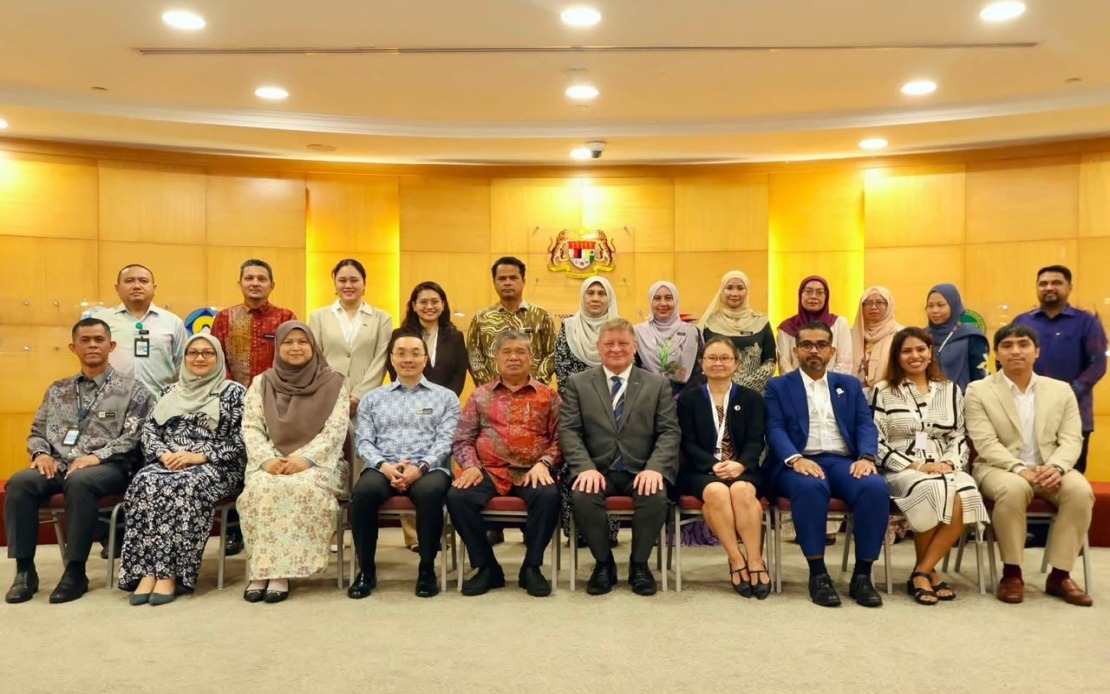
Malaysia is intensifying its engagement with European partners to modernise its agricultural sector and bolster regional food security. Agriculture and Food Security Minister Datuk Seri Mohamad Sabu hosted EU-ASEAN Business Council executive director Chris Humphrey and his team at Wisma Tani in Putrajaya, underscoring the government's commitment to leveraging international expertise in addressing pressing agricultural challenges.
The meeting centred on implementing Malaysia's National Agro-Food Policy 2.0, a comprehensive framework designed to strengthen domestic food production capabilities while building resilience against global supply chain disruptions. This policy represents a strategic shift towards modernising farming practices and enhancing self-sufficiency across key food sectors. The discussions reflected growing recognition among Malaysian policymakers that technological advancement and international collaboration are essential to sustaining agricultural productivity and ensuring stable food supplies for the nation's growing population.
Artificial intelligence and advanced farming technologies emerged as critical discussion points, reflecting Malaysia's broader economic ambitions. The integration of AI and precision agriculture could significantly boost crop yields, optimise resource management, and reduce post-harvest losses—persistent challenges that have constrained profitability for Malaysian farmers. European companies possess substantial expertise in these domains, making them valuable partners for knowledge transfer and technology implementation across the local agricultural sector.
The dairy industry received particular attention during the dialogue. Strengthening Malaysia's domestic dairy supply chain would reduce import dependency and create lucrative opportunities for local producers. Currently, Malaysia imports the majority of its dairy requirements, representing a vulnerability in national food security and a drain on foreign exchange reserves. European expertise in dairy production efficiency, animal husbandry, and quality assurance could catalyse significant improvements in this subsector.
Biosecurity and animal health standards also figured prominently in the discussions. As regional agricultural trade intensifies, adherence to rigorous Sanitary and Phytosanitary measures becomes increasingly important for market access and disease prevention. Aligning Malaysian standards with international best practices would facilitate smoother trade flows and enhance consumer confidence in local livestock and agricultural products, both domestically and across Southeast Asia.
Modaad Sabu emphasised that the European Union remains among Malaysia's most significant commercial and technological partners, a recognition that reflects the bloc's advanced capacity in sustainable agriculture, climate adaptation, and supply chain modernisation. This partnership is particularly timely given accelerating climate change impacts on regional agricultural systems and the imperative to build farming practices that can withstand environmental volatility.
Capacity building emerged as a shared priority. Malaysian officials stressed the need for European companies to support training initiatives that would equip local farmers and livestock breeders with skills in quality compliance, international standards adherence, and market access strategies. Such support is vital for enabling smaller producers to participate in higher-value export markets and to compete effectively in an increasingly quality-conscious global marketplace.
The ongoing Malaysia-European Union Free Trade Agreement negotiations received endorsement from both parties, signalling mutual commitment to deepening bilateral economic ties. A successful trade agreement could provide Malaysian agri-food producers with preferential market access to the EU, one of the world's most prosperous trading blocs, while simultaneously opening Malaysian markets to EU agricultural technology and processed food products. For Malaysia, market access is particularly valuable given the EU's stringent food safety requirements, which align with the government's push to elevate domestic production standards.
The dialogue also touched on strategic cooperation between European and Malaysian companies, with emphasis on technology-driven initiatives to modernise the agro-food supply chain. Rather than simple commodity exchanges, both parties appear interested in deeper value-chain integration—from production through processing to distribution. This approach would create employment opportunities across rural areas while strengthening Malaysia's competitive position in regional agricultural markets.
Mohamad utilised the occasion to extend an invitation to the EU-ABC delegation to participate in the Malaysia Agriculture, Horticulture and Agro-Tourism Exhibition scheduled for August 28 to September 6, 2026, at the Malaysia Agricultural Expo Park in Serdang, Selangor. MAHA represents a significant platform for showcasing local agricultural innovations, attracting international buyers, and facilitating networking among industry stakeholders. European participation would enhance the exhibition's profile and create valuable business opportunities for Malaysian producers seeking international partnerships.
The meeting reflects broader Southeast Asian trends in agricultural policy, where regional nations increasingly recognise that food security requires technological advancement, institutional capacity building, and diversified trade partnerships. For Malaysia specifically, European engagement offers pathways to address structural challenges in the agricultural sector—including aging farming populations, climate vulnerability, and competition from larger regional producers—while positioning local producers for participation in premium international markets.
Looking forward, the depth and scope of Malaysia-EU agricultural cooperation will likely expand as free trade negotiations progress and as both parties identify specific joint venture opportunities. The successful implementation of technologies and standards discussed during this courtesy call could serve as a template for broader ASEAN-EU agricultural collaboration, particularly if other Southeast Asian nations demonstrate interest in similar partnerships. For Malaysian consumers and farmers alike, closer European engagement in the agricultural sector promises both enhanced food security and improved market opportunities for local producers.

