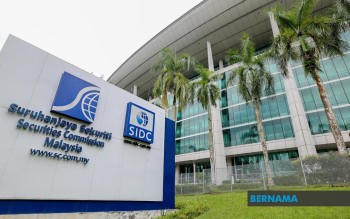
Malaysia is positioning itself as a bridge between Russian investors and the global Islamic finance market, marking a strategic shift in how the country markets its expertise beyond traditional Middle Eastern and Southeast Asian partners. The Ministry of Finance and Securities Commission Malaysia have outlined an ambitious plan to deepen engagement with Russia and Central Asia, recognising untapped potential in these regions for shariah-compliant investment products and services.
The Securities Commission is preparing an exploratory mission to Central Asia scheduled for 2026 or 2027, representing a tangible step toward implementing Malaysia's broader internationalisation agenda for Islamic capital markets. This visit will serve multiple purposes: evaluating whether local markets are prepared to adopt shariah-based financial instruments, strengthening relationships with key stakeholders, and laying groundwork for a cohesive Islamic finance ecosystem that bridges Malaysia with the Russian sphere. The timing reflects confidence that sufficient groundwork has been completed to justify formal exploration.
A significant catalyst for this expansion emerged in May 2025 when the Head of the Republic of Tatarstan expressed interest in adopting Malaysia's Islamic finance development model. This endorsement from Russia's largest Muslim-majority region opens doors for Malaysia to export not just financial products but also the sophisticated knowledge infrastructure that has made it a global leader. The opportunity extends to professional services including shariah advisory capabilities, bespoke consultancy engagements, training programmes and capacity-building initiatives tailored to Russian and Central Asian institutions.
The Securities Commission has already invested diplomatic effort into these relationships, conducting bilateral meetings with the Central Bank of Russia and the Saint Petersburg International Mercantile Exchange in 2023 and again in 2025. These ongoing conversations signal serious commitment rather than exploratory posturing, with discussions likely covering regulatory harmonisation, product development pathways and institutional frameworks that would facilitate future transactions. The engagement pattern demonstrates Malaysia's willingness to invest time in relationship-building before scaling commercial activities.
Understanding the strategic context matters for Malaysian businesses. Russia's financial system has faced increased isolation owing to international sanctions, creating genuine demand for alternative financial channels and partnerships with Asian institutions perceived as neutral. Malaysia's positioning as a respected Islamic finance authority without geopolitical antagonism toward Russia creates ideal conditions for meaningful collaboration. Russian investors seeking exposure to global markets through shariah-compliant vehicles face limited options, positioning Malaysia as a valuable intermediary.
The Securities Commission plans to sustain momentum through the Capital Market Masterplan 2026-2030, which emphasises stronger regulatory frameworks, innovation in product design and expanded international partnerships. This masterplan provides the institutional scaffolding necessary for scaling engagement beyond initial exploratory phases. By embedding Russian and Central Asian expansion into Malaysia's longer-term capital market strategy, the government signals this is not a temporary initiative but rather part of Malaysia's permanent repositioning as a truly global Islamic finance hub.
Malaysia's approach reflects sophisticated understanding of how Islamic finance can serve geopolitical purposes. Rather than competing primarily on price or volume like conventional finance, Islamic finance emphasises ethical principles and sustainable development aligned with Maqasid al-Shariah—the objectives underlying Islamic jurisprudence. This philosophical alignment allows Malaysia to market itself as offering not just financial returns but participation in a values-based system. For Russian investors seeking alternatives to Western-dominated financial structures, this proposition holds particular appeal.
The government has been clear that engagement with Russian investors remains conditional on compliance with domestic Malaysian laws and international standards. This positioning protects Malaysia's financial integrity while remaining open to legitimate Russian capital flows. The careful framing suggests policymakers are aware of sensitivities around Russian investment but believe the benefits of expanded Islamic finance cooperation outweigh reputational risks, particularly given that transactions would be transparent and regulated.
For Malaysian financial institutions and professional service providers, these developments represent concrete commercial opportunities. Shariah scholars, Islamic finance consultants and Malaysian banks stand to benefit from capacity-building contracts, advisory mandates and transaction facilitation as Russian institutions develop or reform their Islamic finance capabilities. A successful Tatarstan pilot could establish Malaysia as the preferred partner for Islamic finance development across multiple Russian regions and neighbouring Central Asian republics.
The implications extend beyond bilateral Malaysia-Russia relations. By successfully establishing itself in Central Asia and Russia, Malaysia reinforces its credentials as the world's leading Islamic finance hub capable of operating across diverse geopolitical contexts. This strengthens Malaysia's ability to attract other non-traditional investors and positions the country as essential infrastructure for any institution seeking shariah-compliant financial solutions on a global scale. The effort also demonstrates that Islamic finance can serve as a bridge rather than a dividing line in international commerce.
Successfully executing this strategy requires sustained commitment. The planned 2026-2027 visit must produce concrete outcomes beyond networking. Tatarstan's interest in adopting Malaysia's model should translate into formal partnerships, training exchanges and potentially regulatory frameworks that allow Tatarstan-based institutions to issue or trade shariah-compliant securities. Without tangible deliverables, enthusiasm will dissipate.
Malaysia's pivot toward Russian investors also reflects broader recognition that Islamic finance's future growth lies increasingly outside the Middle East. As Gulf markets mature and competition intensifies, developing new markets in underserved regions like Central Asia and Russia offers Malaysia significant growth potential. The timing aligns with when Malaysia's institutional expertise and regulatory maturity can credibly support such expansion.

