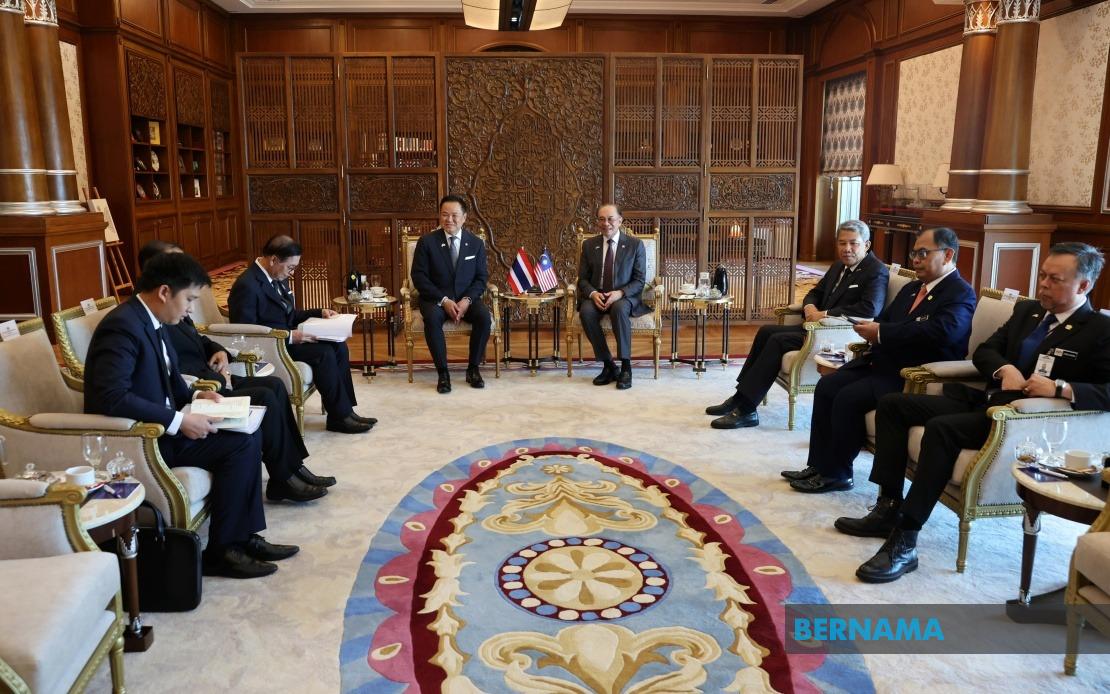
Malaysia continues to advocate for diplomatic solutions to the Myanmar crisis, with Prime Minister Datuk Seri Anwar Ibrahim underscoring the importance of sustained dialogue and regional cooperation during bilateral discussions with Thai Prime Minister Anutin Charnvirakul in Putrajaya on Thursday. The two leaders' talks highlighted a shared regional approach to addressing the escalating humanitarian and political emergency that has unfolded since Myanmar's military seized power in February 2021, displacing thousands and destabilising one of Southeast Asia's most strategically significant nations.
Anwar's emphasis on effective engagement reflects Malaysia's broader foreign policy doctrine, which privileges dialogue and consensus-building over confrontational measures. Speaking at a joint press conference, the Malaysian premier stressed that Myanmarese citizens must have the freedom to chart their own political destiny, a principle that underpins ASEAN's collective framework for responding to the crisis. This position distinguishes Malaysia's approach from more hardline stances that some nations have adopted, instead betting on the notion that sustained conversation with all stakeholders—including military leadership—offers the best pathway toward de-escalation.
The focal point of Anwar's remarks was Thailand's potential to serve as a catalytic force in Myanmar peace efforts. As Myanmar's immediate neighbour sharing a 2,416-kilometre border and deep cultural ties, Thailand possesses unique leverage and credibility that few other nations can match. Bangkok's historical role as a regional mediator, combined with its economic interdependencies and security concerns, positions it to exert meaningful influence on Naypyidaw's junta leadership. Anwar's explicit acknowledgement of Thailand's pivotal position represents a strategic recognition that regional solutions require empowering countries with the most at stake in Myanmar's stabilisation.
ASEAN's Five-Point Consensus, adopted in April 2021, remains the cornerstone of the regional bloc's Myanmar strategy despite persistent challenges in implementation. The framework calls for an immediate cessation of violence, constructive dialogue between all parties, provision of humanitarian assistance, special ASEAN envoy engagement, and visits to Myanmar for mediation purposes. However, the junta's resistance to substantive talks and the opposition's demands for complete military withdrawal have created implementation obstacles that continue to frustrate ASEAN members. Malaysia's continued backing of this consensus, now five years after its adoption, signals patience with a long-term diplomatic investment even as the humanitarian toll mounts within Myanmar itself.
Anwar's remarks also reflected wider concerns about regional stability extending beyond Myanmar's borders. He expressed appreciation for Thailand's commitment to maintaining tranquility regarding the separate Thailand-Cambodia border dispute, an issue that has periodically threatened to destabilise mainland Southeast Asia. By acknowledging Thailand's efforts to preserve peace on multiple fronts, Anwar implicitly recognised the interconnected nature of regional security challenges. The Malaysian leader's statement that Malaysia trusts the wisdom of concerned leaders to resolve disputes peacefully underscores ASEAN's preference for member states handling bilateral issues through quiet diplomacy rather than through public pressure or multilateral intervention.
Thailand's position as a bridge between Myanmar and the wider international community carries particular significance given Bangkok's own complex relationship with democratic governance. Anutin's own government, despite recent democratic transitions, has experienced military interventions in Thailand's political history, providing him with nuanced understanding of both civilian aspirations and military institutional concerns. This background potentially equips Thai leadership to navigate conversations with Myanmar's generals while simultaneously maintaining credibility with democratic movements and other ASEAN members prioritising humanitarian principles.
The timing of Anutin's first bilateral visit to Malaysia since his reappointment as Thai PM in March reflects the importance both governments place on bilateral ties beyond Myanmar issues alone. The two-day official visit encompasses not only high-level political discussions but also practical infrastructure cooperation, exemplified by the joint inauguration scheduled for Friday of a cross-border road linking Malaysia's Bukit Kayu Hitam immigration complex with Thailand's Sadao customs facility. Such projects symbolise the deepening physical and economic integration between neighbours, creating mutual interests in regional stability that extend beyond diplomatic rhetoric.
The Malaysia-Thailand bilateral relationship encompasses significant trade flows, tourism patterns, and security cooperation frameworks that depend upon stable regional conditions. Thailand remains a critical node in Southeast Asia's supply chains, while Malaysian businesses maintain substantial investments across Thai territory. These economic realities ensure that both Kuala Lumpur and Bangkok have vested interests in seeing Myanmar achieve political settlements that prevent prolonged economic disruption and refugee movements affecting the broader region. Malaysia, in particular, hosts significant Rohingya populations and has experience managing humanitarian consequences of Myanmar's internal conflicts.
Anwar's framing of Myanmar's resolution as fundamentally a matter for Myanmarese people to determine themselves represents a philosophical stance distinguishing Malaysia from external actors seeking to impose particular political outcomes. This approach respects ASEAN's foundational non-interference principle while simultaneously advocating for democratic values and human rights—a delicate balance Malaysia has attempted to maintain throughout the crisis. By delegating primary responsibility to regional actors like Thailand rather than endorsing intervention by distant powers, Malaysia's position aligns with broader Southeast Asian preferences for managing internal disputes through regional mechanisms.
The ongoing Myanmar impasse presents persistent challenges to ASEAN's unity and credibility as a regional organisation. Some member states have pushed for stronger measures against the junta, while others prioritise engagement and fear that isolation strengthens military hardliners. Malaysia's continued investment in dialogue-based approaches, coupled with strategic elevation of Thailand's mediatory role, suggests Kuala Lumpur believes incremental progress through sustained engagement ultimately offers better prospects than confrontational tactics. Whether this patient approach yields tangible progress toward genuine political transition remains uncertain as Myanmar's crisis enters its fifth year with no resolution in sight.

