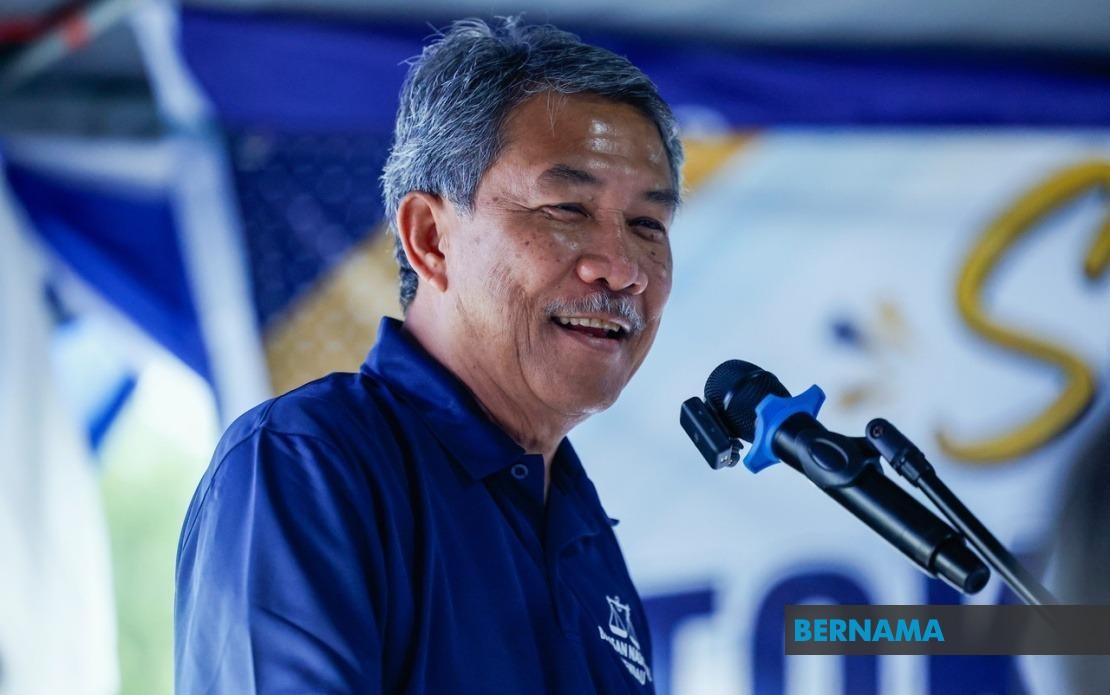
Malaysia has formally restated its refusal to recognise Israel during recent diplomatic exchanges with the United States, underscoring the persistence of this contentious policy despite mounting international pressure. Foreign Minister Datuk Seri Mohamad Hasan confirmed that Malaysia's Ambassador to the US, Tan Sri Muhammad Shahrul Ikram Yaakob, had been called in by the US State Department to clarify the nation's position, with the diplomatic mission subsequently explaining that the stance represents a longstanding principle rather than a new development.
The reaffirmation comes amid heightened tension between Kuala Lumpur and Washington following the recent expulsion of a dual American-Israeli citizen who had entered Malaysia using his US passport. Immigration checks subsequently revealed his Israeli citizenship, prompting authorities to ask him to depart. Mohamad Hasan characterised the handling of the incident as appropriate and reiterated that Malaysia's immigration system has never recognised the State of Israel or what the government terms the Zionist regime. This policy framework has remained consistent across multiple administrations and reflects deep-rooted principles within Malaysia's foreign relations doctrine.
Prime Minister Datuk Seri Anwar Ibrahim had previously addressed the controversy by reiterating Malaysia's commitment to maintaining its non-recognition stance, explicitly rejecting the objections raised by eight Democratic members of Congress. The lawmakers—Greg Landsman, Josh Gottheimer, Jimmy Panetta, Dan Goldman, Debbie Wasserman Schultz, Jared Moskowitz, Brad Sherman and Jake Auchincloss—had written to the US Secretary of State expressing dissatisfaction with the decision to expel the Israeli citizen. Anwar's response centred on Malaysia's principled opposition to what he characterised as ongoing oppression, aggression and killings of Palestinians in Gaza, framing the policy as fundamentally rooted in human rights advocacy rather than diplomatic caprice.
The incident highlights a persistent fault line in Malaysia-US relations, where Malaysian governments have consistently positioned their Israel policy within a broader narrative of supporting Palestinian rights and opposing what they describe as Israeli violations. This positioning resonates domestically with Malaysia's Muslim-majority population and aligns with the nation's historical alignment with pro-Palestinian causes within international forums. The government's willingness to withstand Congressional pressure demonstrates that this is not a peripheral matter but rather a core element of Malaysia's foreign policy identity that transcends partisan politics.
For Malaysian readers, this reaffirmation carries implications for how the country navigates its relationship with its closest security ally. The United States remains crucial to Malaysia's defence architecture and economic interests, yet the Israeli non-recognition policy represents an area where Kuala Lumpur refuses to compromise. This tension has periodically surfaced, particularly when Malaysia takes visible actions such as expelling Israeli nationals or blocking entry to individuals connected to Israeli institutions. The diplomatic handling of such incidents becomes a delicate balancing act.
The Congressional letter represents a relatively unusual intervention in Malaysian domestic policy, suggesting that pro-Israel advocates in Washington view Malaysia's stance as increasingly untenable in the context of broader Middle Eastern developments. However, Malaysian officials have demonstrated that they view this not as a matter susceptible to external pressure but as foundational to the nation's values system. Anwar Ibrahim's characterisation of the policy as reflecting Malaysia's commitment to defending human rights provides the government with a principled framework that extends beyond religious or ethnic considerations.
Regionally, Malaysia's firm stance mirrors positions adopted by other Southeast Asian nations that have maintained critical distances from Israel, though few have gone as far as Malaysia in maintaining complete non-recognition. The Mohamad Hasan clarifications suggest that the government recognises the international criticism surrounding its policy but remains unwilling to recalibrate. This consistency, while politically valuable domestically, creates ongoing friction points with the United States and potentially complicates broader strategic cooperation on issues ranging from defence to economic partnerships.
The timing of these clarifications, occurring during preparations for a Negeri Sembilan state election, also underscores the political salience of the Israel question within Malaysian politics. Foreign Minister Mohamad Hasan's statements were made during a campaign engagement, indicating that the government views clear articulation of its Palestinian solidarity as politically advantageous domestically. This domestic political dimension reinforces the likelihood that Malaysian governments will continue maintaining the non-recognition policy regardless of external diplomatic pressure.
Looking forward, this episode illustrates how the Israel-Palestine question continues to intrude into Malaysia's bilateral relationship with the United States in ways that neither government may ideally prefer. The US State Department's summons to the Malaysian Ambassador suggests a desire to influence or at least formally protest the policy, yet Malaysia's response makes clear that such diplomatic channels are unlikely to produce policy shifts. For Malaysian policymakers, maintaining this stance while preserving the broader US alliance relationship requires careful diplomatic choreography, where formal statements reaffirm principles while practical cooperation continues across defence, trade and security domains.

