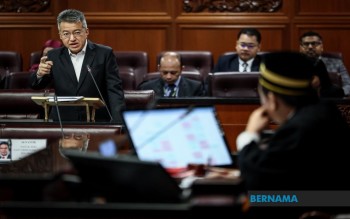
Malaysia's government has secured nearly RM5 billion in budgetary savings through disciplined expenditure management in the first half of 2026, Deputy Finance Minister Liew Chin Tong revealed in Parliament on July 29. The achievement reflects the fruit of a RM10 billion adjustment to the annual operating expenditure allocation that began earlier in the year, positioning the nation to navigate economic headwinds without sacrificing core public services.
The cost-control initiative originated from directives issued by the Ministry of Finance on April 29, 2026, which instructed all federal ministries and government agencies to recalibrate their spending allocations. Rather than imposing uniform cuts across the board, the approach allowed individual departments flexibility to reorganise their budgets according to shifting priorities and operational needs. Subsequently, the MOF conducted engagement sessions with ministry representatives to communicate the specific criteria that would guide the expenditure control process and explain the rationale behind the fiscal tightening.
Liew's announcement came during a Senate question-and-answer session addressing concerns from Senator Hussin Ismail about the extent of budget reductions, the total allocations trimmed, and whether government agencies had conducted impact assessments of the cuts. The deputy minister's response highlighted how the government balanced fiscal discipline with the practical realities of maintaining public sector performance during an uncertain international environment marked by supply chain disruptions.
The structure of the spending constraints reveals the government's strategic priorities in protecting vulnerable populations and essential services. Liew clarified that budget reductions centred on non-essential expenditure categories, including discretionary spending on official travel and the deferral of recruitment initiatives for new civil service positions. This targeted approach allows the government to achieve savings without dismantling the institutional capacity of public agencies or reducing headcount in critical operational areas.
Particularity was shown towards safeguarding social safety nets and productivity-enhancing programmes. The minister explicitly underscored that health services, consumer subsidies, social welfare assistance, rural development incentives for agriculture, and educational funding would remain insulated from the expenditure restrictions. This commitment reflects recognition that premature reductions in these domains could undermine social stability and long-term economic competitiveness, especially for lower-income Malaysians dependent on government support.
The global supply chain crisis that prompted these measures has created uncertainty for economies throughout Southeast Asia, making Malaysia's proactive fiscal response noteworthy. By implementing expenditure controls early in 2026 rather than waiting for budgetary pressures to intensify, the government aimed to forestall more severe disruptions later in the year. Liew argued that this preventive stance had successfully insulated Malaysia from the worst effects of international supply chain volatility, maintaining macroeconomic stability even as trading partners and competitors grappled with inflation and logistics challenges.
The flexibility granted to individual ministries to reset their spending profiles reflects lessons from previous budget adjustments and suggests a more mature approach to fiscal consolidation than top-down percentage cuts. By permitting agencies to align expenditure with current operational demands rather than imposing blanket reductions, the government sought to minimize service disruptions while still meeting overall savings targets. This decentralised model requires greater coordination and reporting from ministry finance teams but potentially yields more efficient outcomes than rigid, uniformly applied restrictions.
The Ministry of Finance signalled its willingness to revisit the expenditure constraints should ministries present compelling cases for additional funding, subject to the government's overall fiscal capacity and stated budget priorities. This conditional openness suggests that the RM5 billion savings figure represents a floor rather than a ceiling for fiscal consolidation, with potential for further adjustments should circumstances warrant. However, such reviews remain contingent on formal requests and demonstrable necessity rather than routine escalation.
The timing and scale of the savings programme underscore growing international attention to fiscal prudence in the post-pandemic era. With many governments facing elevated debt levels and uncertain revenue growth, Malaysia's achievement of nearly RM5 billion in controllable savings within a five-month timeframe reflects institutional capacity and political will to manage public finances responsibly. For Malaysian policymakers and regional observers, the initiative demonstrates that fiscal discipline need not necessarily translate into service degradation if cuts are strategically targeted and exceptions are carefully calibrated.
Looking forward, the government's approach to expenditure management will likely influence how subsequent budget cycles are structured and communicated. The emphasis on protecting core services while trimming discretionary spending establishes a template that may persist regardless of external economic conditions. Additionally, the demonstrated ability to achieve substantial savings without public sector strikes or visible service disruptions strengthens the government's credibility in future fiscal announcements and builds confidence among international investors monitoring Malaysia's macroeconomic management.
The RM5 billion savings achieved so far in 2026 represents only the first phase of what may become a more sustained programme of fiscal adjustment. As Malaysia faces ongoing global uncertainties and potential recession risks in key export markets, the capacity to manage government spending efficiently will remain critical to maintaining social stability and preserving the government's flexibility to respond to future emergencies or opportunities.

