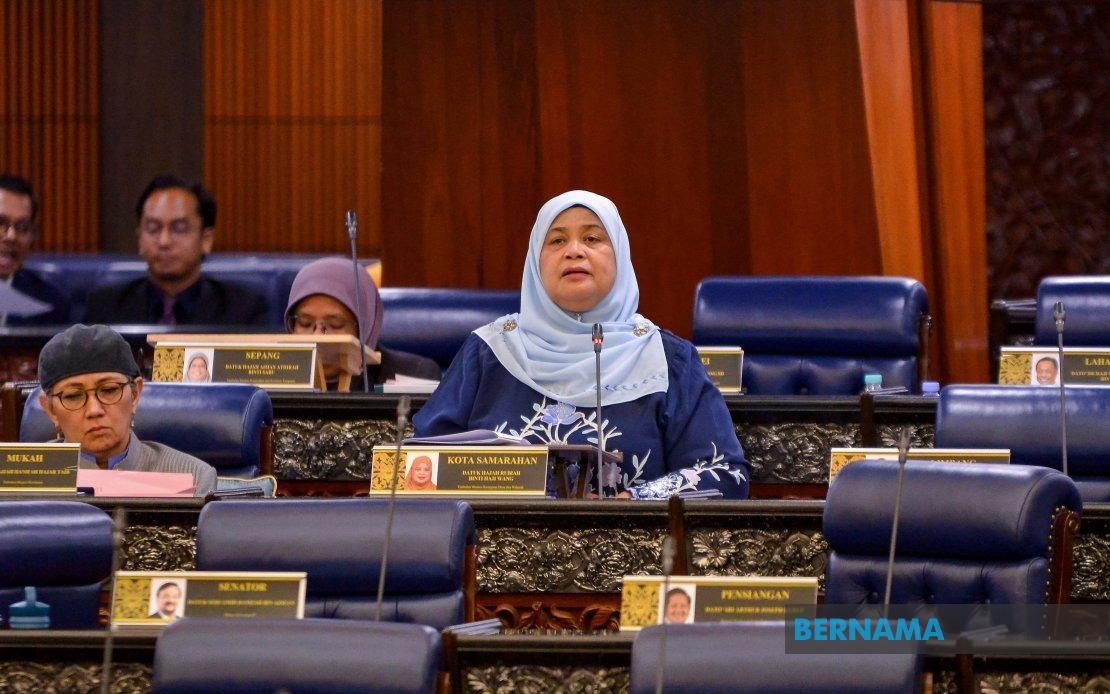
The Malaysian government is undertaking a significant restructuring of its Technical and Vocational Education and Training framework to ensure that graduates emerge with credentials valued directly by employers. Speaking in Parliament, Deputy Minister of Rural and Regional Development Datuk Rubiah Wang outlined how the TVET 2.0 initiative will harness accreditation transformation as a cornerstone mechanism, creating explicit pathways for industry validation of competency standards. This strategic pivot addresses a persistent challenge facing Malaysia's skills development infrastructure: the disconnect between what training institutions teach and what the labour market demands.
The crux of the reform centres on aligning TVET learning outcomes with tangible employment needs, a particularly pressing concern given Malaysia's ongoing struggle with skills mismatch across multiple sectors. By embedding direct industry recognition into the accreditation process, the government aims to elevate graduate employability rates and reduce the phenomenon of qualified workers unable to secure suitable positions. This approach reflects growing international best practice, where employers actively shape curricula rather than passively receiving graduates. For Malaysian workers, especially those in rural areas where TVET opportunities are critical for economic mobility, this alignment could significantly improve career prospects and earning potential.
Rubiah emphasised that the Ministry of Rural and Regional Development's integrated TVET strategy pursues a dual mandate: producing technologically advanced graduates while simultaneously fostering entrepreneurship within rural economies. The emphasis on techno-entrepreneurs represents a deliberate departure from traditional TVET models that focus primarily on wage employment. By cultivating graduates capable of launching their own ventures and creating jobs for others, the ministry seeks to address rural unemployment whilst building distributed economic resilience. This entrepreneurial dimension has particular relevance for Southeast Asia, where small and medium enterprises drive substantial employment and innovation.
A notable component of the TVET 2.0 framework is the integration of Islamic religious education with technical training through the TVET Tahfiz programme. This initiative aims to develop a cohort of hafiz—individuals who have memorised the Quran—with concurrent mastery of digital and advanced technologies. The programme reflects Malaysia's commitment to combining spiritual and moral formation with technical excellence, recognising that workforce development encompasses character alongside competence. Hafiz graduates equipped with AI, cloud computing, and cybersecurity knowledge would represent a unique workforce cohort capable of operating effectively in both local and international markets whilst maintaining strong ethical foundations.
The government has established specialised TVET centres of excellence across the country, each concentrating on distinct technological domains critical to Malaysia's economic transformation. TVETMARA Petaling Jaya has been designated as an Internet of Things hub, positioning it to develop expertise in connected device systems and sensor networks increasingly vital to manufacturing and service sectors. TVETMARA Besut focuses on cloud computing infrastructure, a foundational technology for digital economy initiatives. TVETMARA Pasir Mas serves as a Building Information Modelling centre, supporting the construction and infrastructure sectors' transition toward digital design and planning methodologies. This dispersed hub approach distributes opportunity across regions whilst creating geographic specialisation that allows deeper expertise development.
Beyond these centres, the German-Malaysian Institute plays a crucial role in transferring advanced manufacturing technologies rooted in Germany's industrial expertise. The emphasis on Industrial Revolution 4.0 principles—characterised by automation, data exchange, and smart systems—signals Malaysia's determination to position itself at the frontier of manufacturing innovation rather than remaining a low-cost labour destination. For Malaysian manufacturers competing in global supply chains, access to workforce trained in these advanced systems is essential for upgrading production capabilities and commanding premium market positioning.
At the higher education tier, Universiti Kuala Lumpur functions as Malaysia's premier institution for High TVET, offering degree-level qualifications including a Bachelor of Artificial Intelligence Technology. This institutional arrangement creates a coherent ladder enabling students to progress from foundational TVET through specialist technical diplomas to university-level qualifications without disruption, facilitating lifelong learning pathways. The AI technology degree particularly signals recognition that Malaysia must develop homegrown talent capable of designing, implementing, and managing artificial intelligence systems rather than remaining perpetually dependent on foreign expertise.
The comprehensive technology focus—spanning AI, Internet of Things, cloud computing, cybersecurity, automation, robotics, and smart manufacturing—reflects Malaysia's strategic assessment of technological domains determining global competitiveness. These fields represent both immediate employment opportunities and longer-term structural drivers of economic productivity growth. For Malaysian workers entering the labour market over the next decade, proficiency in these areas will increasingly become non-negotiable for accessing quality employment.
Implementing this accreditation transformation presents substantial operational challenges. Coordinating between government training institutions, industry bodies, employers, and professional associations requires sustained stakeholder engagement and alignment of often-divergent interests. Industry partners must invest time defining competency benchmarks and validating training outcomes, commitments that smaller employers may struggle to sustain. Institutions must periodically refresh curricula as technologies evolve, demanding continuous investment in instructor training and facility upgrades. Malaysia's experience with previous skills development initiatives reveals that enthusiasm at launch frequently diminishes when implementation complexities emerge.
The regional implications of Malaysia's TVET reformation extend across Southeast Asia. As other nations grapple with similar skills challenges, Malaysia's accreditation model—particularly its emphasis on direct industry recognition—offers a potentially replicable template. Should Malaysia successfully demonstrate that this approach produces measurably higher graduate employment rates and reduced skills mismatch, neighbouring countries facing comparable challenges may adopt analogous frameworks. Conversely, if implementation falters, it could reinforce regional scepticism about TVET's capacity to address labour market dynamics.
For Malaysian employers, particularly those in technology-intensive sectors, this TVET restructuring offers opportunity to shape workforce development more directly through accreditation validation roles. Manufacturers seeking skilled technicians, digital enterprises needing AI practitioners, and infrastructure companies requiring BIM-competent professionals may find their recruitment challenges eased as the pipeline of trained graduates strengthens. However, this requires sustained engagement beyond one-time curriculum consultation.
The success of TVET 2.0 ultimately depends on whether industry recognition translates into genuine hiring preference for graduates carrying these accredited credentials. If employers continue recruiting based on existing networks or educational pedigree rather than competency validation, the accreditation transformation loses practical value. The government's role in monitoring graduate employment outcomes and adjusting frameworks based on real-world results will prove critical to the initiative's credibility and effectiveness.

