Prime Minister Datuk Seri Anwar Ibrahim has ordered a formal review of the promotion mechanisms governing Malaysia's senior military officers, recognising that career advancement within the Malaysian Armed Forces (MAF) frequently lags behind comparable pathways in the broader civil service. The government has acknowledged a structural issue affecting personnel at the highest ranks, prompting immediate attention from the highest levels of federal administration. The initiative reflects growing awareness that retention and morale within the military leadership require streamlined career progression frameworks aligned with broader public sector expectations.
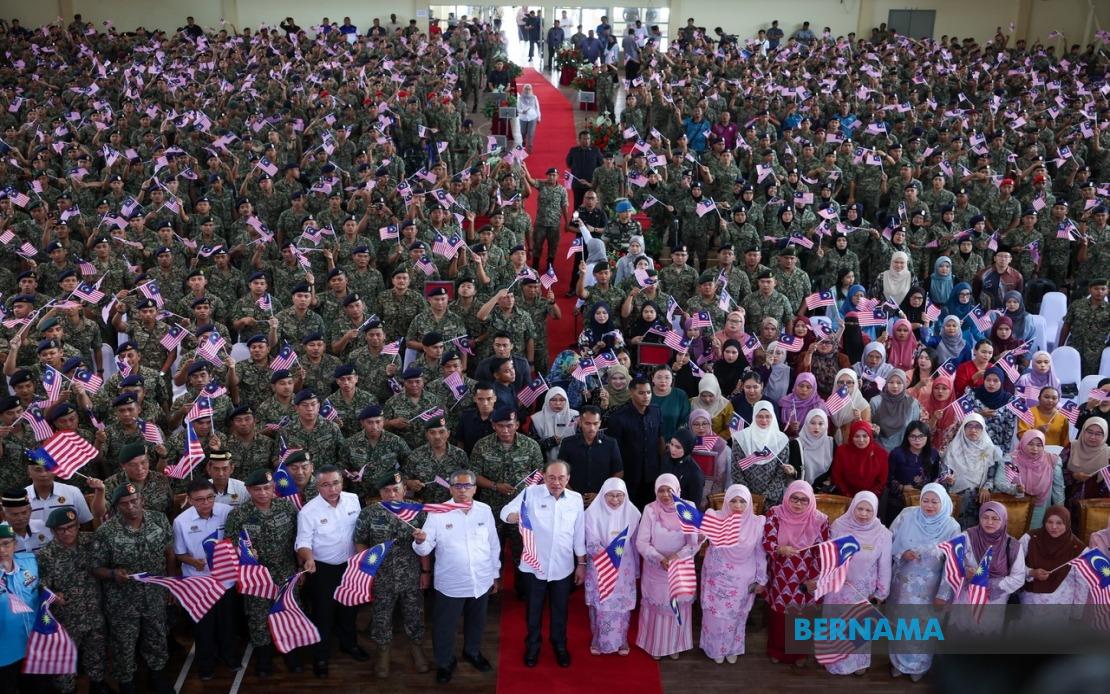
Announcing the decision in Tampin on July 27, Anwar highlighted that delays in senior military promotions represent an anomaly when measured against advancement patterns experienced by other government employees. The prime minister characterised the situation as potentially damaging to institutional cohesion and officer satisfaction, emphasising that the armed forces should neither perceive themselves as undervalued nor sidelined within the broader public administration ecosystem. His remarks signal political commitment to resolving what has emerged as a longstanding structural constraint within military personnel management.
The government has already tasked Tan Sri Shamsul Azri Abu Bakar, the Chief Secretary to the Government, with examining the promotion approval processes and identifying bottlenecks that contribute to extended waiting periods. This assignment places the responsibility for systemic reform at the highest administrative level, suggesting the government views the issue as sufficiently significant to warrant intervention by the nation's top civil servant. The review will examine procedural inefficiencies, regulatory frameworks, and approval hierarchies that may collectively extend promotion timelines beyond what operational effectiveness demands.
Financial implications emerge as a critical consideration in the forthcoming policy deliberation. While the cohort affected by promotion delays remains relatively modest in absolute numbers, any restructuring of advancement mechanisms for senior ranks carries budgetary consequences that require careful analysis. The government has indicated it will assess these fiscal dimensions thoroughly before implementing changes, ensuring that reforms do not create unsustainable commitments or disproportionate cost escalations within defence budgets already stretched across multiple operational priorities.
The announcement builds upon earlier government initiatives modernising public sector compensation. Senior military personnel have already benefited from implementation of the Public Service Remuneration System (SSPA), which introduced revised salary structures across the civil service. That foundational reform established the principle that defence personnel warrant competitive compensation packages. The current promotion system review extends this commitment by addressing not just remuneration but the pathways through which officers advance within institutional hierarchies.
Anwar indicated that preliminary discussions regarding the promotion system overhaul have already occurred among senior defence and administrative officials, positioning the matter for imminent finalisation. A meeting convened under the prime minister's chairmanship will serve as the decision-making forum where concrete proposals will be evaluated and implementation parameters established. This timeline suggests the government intends to resolve the matter within a compressed period rather than allowing the review to linger indefinitely.
The gathering in Tampin, attended by Chief of Defence Forces General Tan Sri Malek Razak Sulaiman, Army Chief General Tan Sri Azhan Md Othman, and Deputy Defence Minister Adly Zahari, underscored the seriousness with which military leadership regards the initiative. The physical presence of these senior figures during the prime minister's announcement symbolised institutional endorsement and suggested defence establishment consensus that promotion system reform constitutes a legitimate priority requiring executive intervention.
For Malaysian defence personnel, the review carries practical implications extending beyond individual career advancement. Military institutions depend upon officer retention and institutional morale to function effectively across operational, administrative, and strategic planning functions. Protracted promotion delays can catalyse frustration, encourage capable officers to seek alternative employment, and undermine the sense of professional recognition that sustains long-term commitment to military service. The government's responsiveness to these concerns demonstrates awareness that military institutional health depends upon addressing personnel management issues before they accumulate into broader problems affecting force readiness and organisational cohesion.
Regionally, Malaysia's focus on military personnel management reflects broader Southeast Asian patterns, where defence establishments increasingly recognise that technological sophistication and operational capability depend significantly upon retaining experienced, motivated officer corps. Countries throughout the region have implemented or contemplated promotion system reforms intended to compete effectively for talent and ensure senior leadership pipelines function without artificial constraints. Malaysia's initiative aligns with these regional trends while addressing unique circumstances within the MAF structure.
The review also carries implications for defence policy continuity and institutional knowledge preservation. Officers delayed in advancement may retire before accessing senior positions where institutional memory and strategic experience prove most valuable. Streamlining promotion mechanisms therefore supports broader objectives of maintaining continuity in defence leadership and ensuring critical expertise circulates through senior command structures rather than departing the institution prematurely. This institutional dimension explains why government leaders view promotion system efficiency as a legitimate governance concern rather than merely an administrative detail.
Anwar's commitment to resolving the issue "soon" reflects political recognition that military personnel management affects public confidence in defence institutions and demonstrates government attentiveness to security sector concerns. The prime minister's personalised engagement with the matter signals that defence establishment priorities receive executive-level consideration, potentially encouraging broader military confidence in the government's commitment to institutional modernisation and personnel management reform. This reassurance carries particular significance given historical relationships between military institutions and government in Malaysian political context.
As the forthcoming review proceeds, the government faces balancing competing priorities: ensuring financial sustainability of expanded benefits, maintaining equity across civilian and military sectors, and implementing changes sufficiently comprehensive to address underlying systemic inefficiencies. The complexity of these calculations explains why advance notice of the pending decision emphasises thorough analysis rather than premature implementation. Stakeholders can anticipate that final recommendations will reflect detailed examination of promotion mechanisms, comparative analysis with other government sectors, and careful financial projections supporting whatever structural modifications emerge from the process.

