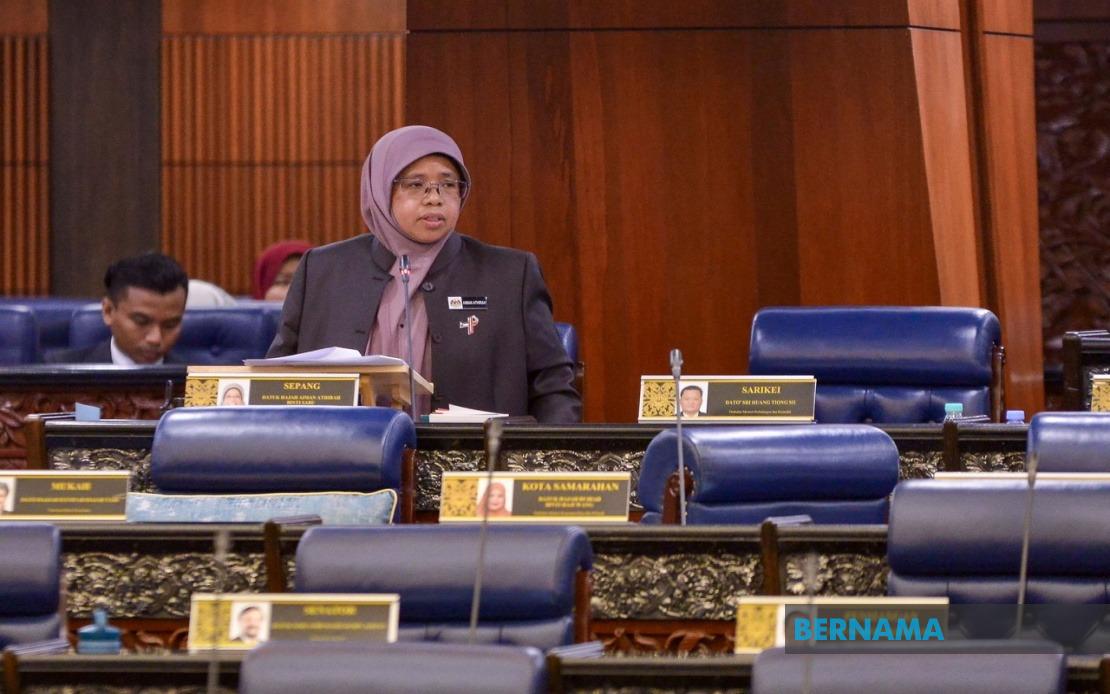
The Malaysian government is transforming its approach to housing development by embracing evidence-based planning methodologies designed to align residential construction with genuine population needs and purchasing power across the nation. Deputy Housing and Local Government Minister Datuk Aiman Athirah Sabu outlined this strategic shift during parliamentary proceedings, emphasising that the shift moves beyond traditional speculation-driven development towards a calculated, demand-responsive model that prioritises both availability and affordability.
At the heart of this initiative lies comprehensive data integration from multiple authoritative sources. The Department of Statistics Malaysia, the National Property Information Centre, and the Malaysian Urban Observatory now feed housing development decisions with granular information about household incomes, property markets, and urban growth patterns. This tri-layered approach allows planners to move beyond demographic hunches and instead construct housing portfolios precisely calibrated to what specific states and localities can absorb, both in terms of infrastructure capacity and resident purchasing capacity. The government recognises that previous construction patterns often reflected developer preferences rather than community requirements, creating pockets of oversupply while demand remained unmet elsewhere.
The coordination challenge of balancing federal policy with state-level execution has been addressed through the establishment of the National Affordable Housing Council, chaired by the Prime Minister himself. This elevated governance structure signals the political seriousness attached to housing outcomes and ensures that affordable housing initiatives receive consistent high-level attention rather than defaulting to bureaucratic routine. The council's mandate encompasses both policy coordination and strategic problem-solving, positioning it as an active resolver of obstacles rather than a passive monitoring body. For Malaysian states struggling with housing backlogs, this centralised coordination mechanism offers direct pathways to federal resources and expertise.
One of the government's most tangible achievements has been addressing the festering problem of stalled residential developments. Since establishing the Special Task Force on Delayed, Sick and Abandoned Private Housing Projects in December 2022, authorities have successfully rehabilitated 1,615 projects encompassing 190,422 individual housing units. The sheer scale—RM150.8 billion in gross development value—underscores how severely this backlog had impaired housing supply and consumer confidence. These weren't speculative ventures abandoned by careless developers; many represented genuine shelter needs for families who had paid deposits yet faced indefinite construction delays. The revival of these projects simultaneously addresses immediate housing shortages and restores market credibility by demonstrating that government intervention can force completion of stalled commitments.
Looking ahead, the finalised National Housing Policy 2026-2035 promises further refinement of affordability mechanisms. The policy shifts away from static price ceilings towards dynamic local benchmarking anchored to actual household income data by state and district. This approach recognises that what constitutes "affordable" housing in prosperous urban centres like Kuala Lumpur differs fundamentally from rural or semi-urban Malaysian regions. By tethering affordability definitions to the 2024 Household Income and Basic Amenities Survey conducted by the Department of Statistics Malaysia, the government creates legitimate, defensible price bands that reflect ground-level economic realities rather than arbitrary bureaucratic determinations. Such granularity is especially important for a nation as economically diverse as Malaysia, where income distribution varies substantially across geography.
The government has also responded pragmatically to the financial burden facing first-time homebuyers by expanding the Housing Credit Guarantee Scheme beyond traditional parameters. By guaranteeing up to 120 percent of a property's value, the scheme acknowledges that purchase price represents only one component of homeownership costs. The additional 20 percent buffer specifically covers renovation expenses and related charges, reducing the financial shock that frequently deters young Malaysians from entering the property market. This recognition that total housing affordability encompasses renovation and maintenance costs reflects a maturing policy perspective that moves beyond simplistic price-fixing towards holistic affordability support. For first-time buyers navigating both mortgage qualification and the practical reality of preparing a new property for occupation, this cushion substantially improves accessibility.
The parliamentary exchange that prompted these disclosures illustrated broader political awareness surrounding housing frustration. Syed Saddiq Syed Abdul Rahman's questioning on behalf of constituents highlighted public concern about uncontrolled construction and persistent price escalation, concerns that resonate across Malaysian demographics. The government's detailed responses suggest movement beyond rhetorical commitment towards quantifiable action, though scepticism about implementation and sustainability remains warranted given Malaysia's history of ambitious housing initiatives that failed to materialise as promised. The sheer complexity of coordinating federal agencies, state governments, private developers, and financial institutions means that policy excellence requires sustained political will rather than episodic attention.
For Southeast Asia more broadly, Malaysia's data-driven pivot offers instructive lessons about housing governance in rapidly urbanising middle-income nations. Housing affordability crises plague the entire region as rapid urban migration and property financialisation have decoupled home prices from local earning capacity. Countries facing similar misalignments between supply and genuine demand might observe how Malaysia's integration of statistical agencies into planning mechanisms creates feedback loops that prevent the worst speculative excesses. Equally, the revival of 1,615 failed projects demonstrates that abandoned residential developments represent a tractable policy problem when attacked with sufficient institutional focus and coordinated enforcement across multiple government levels.
The interconnection between data-driven planning, project revival, and affordability mechanisms reveals a government attempting to address housing challenges through simultaneously attacking multiple pressure points. Rather than relying on single levers like price controls or massive public housing expenditure, the approach distributes responsibility and accountability across planning bodies, financial institutions, and enforcement agencies. Whether this distributed model achieves its aspirational goals depends partly on execution capacity at state and local levels, partly on political consistency as electoral cycles change, and partly on whether private developers internalise the government's development priorities or continue pursuing short-term profit extraction. The coming years will test whether data-driven intentions translate into household realities.

