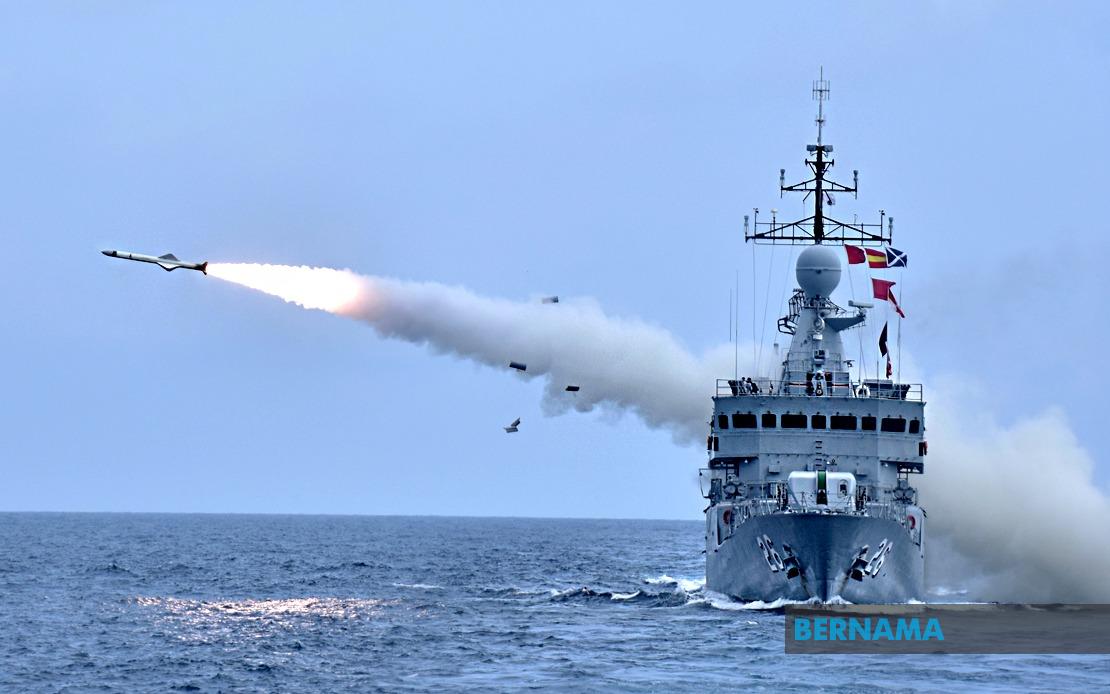
Malaysia is recalibrating its defence strategy and budgetary priorities to address a broadening spectrum of security challenges that extend well beyond conventional regional concerns. Defence Minister Datuk Seri Mohamed Khaled Nordin has outlined how the government's decision to substantially boost military spending reflects a fundamental shift in how Kuala Lumpur assesses and responds to national security threats. The rationale encompasses not only the traditional geopolitical tensions that have long characterised the Southeast Asian maritime domain, but also emerging dangers such as sophisticated cyber warfare, electromagnetic threats, and coordinated disinformation campaigns that can destabilise nations without firing a shot.
The defence ministry's expanded threat assessment arrives as Prime Minister Datuk Seri Anwar Ibrahim, who doubles as Finance Minister, signalled that Malaysia may need to commit hundreds of millions or even billions of ringgit in additional defence resources. This represents a significant policy pivot that acknowledges the interconnectedness of contemporary security challenges. Where previous defence planning focused primarily on naval capabilities and territorial protection, the current framework recognises that non-kinetic threats—digital attacks on critical infrastructure, psychological operations, and information warfare—pose equally serious risks to national stability and require dedicated investment in detection, prevention, and response capabilities.
The intensification of great power competition in the Indo-Pacific region forms the strategic backdrop for Malaysia's budgetary recalibration. Mohamed Khaled articulated a nuanced position that avoids framing Malaysia as taking sides in broader geopolitical rivalries, whilst simultaneously acknowledging reality: as major powers expand their military footprint and operational tempo in contested regions, the probability of unintended escalation rises considerably. The crowding of military assets within the relatively confined waters of Southeast Asia naturally increases the risk calculus. What begins as a minor incident or miscommunication between vessels or aircraft from different nations could spiral rapidly into something far more consequential if proper safeguards and diplomatic channels are absent.
The Philippines' evolving security arrangements and military activities in areas proximate to Sabah have attracted particular attention from Malaysian strategists, though Mohamed Khaled was careful to frame this not as a confrontational stance but as legitimate regional monitoring. Malaysia respects Manila's sovereign right to arrange its own defence partnerships and capabilities according to its perceived needs. However, any significant military escalation in the southern Philippines inevitably carries implications for broader South China Sea stability and, by extension, Malaysian national security interests. The minister stressed that maintaining open communication channels with the Philippines remains essential for preventing misunderstandings from hardening into genuine conflict.
The emphasis on cyber and electromagnetic threats reflects Malaysia's growing vulnerability to digital-age warfare that transcends traditional borders. Hostile actors—whether state-sponsored or non-state entities—can target Malaysian financial systems, power grids, telecommunications infrastructure, and government networks without deploying conventional military force. Mass misinformation campaigns, often amplified through social media and coordinated digital networks, can undermine public confidence in institutions and fragment social cohesion. These threats demand not merely better-equipped armed forces but integrated civil-military approaches spanning cybersecurity specialists, intelligence analysts, and strategic communications practitioners. The budget expansion must therefore encompass modernisation of digital defence architectures alongside traditional military hardware.
Malaysia's commitment to increasing defence spending toward 1.5 per cent of Gross Domestic Product by 2030 should be understood as a long-term structural adjustment rather than a reactive spasm to immediate crises. This trajectory reflects recognition that regional security architecture is entering a more demanding phase requiring sustained investment. For context, many advanced economies routinely spend two to three per cent of GDP on defence, so Malaysia's target, whilst representing a significant increase from current levels, remains modest by global standards. The modernisation of the Malaysian Armed Forces has historically proceeded in fits and starts, constrained by budgetary limitations and competing economic priorities. A more predictable, multi-year funding commitment offers the opportunity for coherent force development and capability acquisition planning.
The strategic importance of locations such as Pulau Layang-Layang underscores Malaysia's determination to strengthen defence infrastructure across its maritime domain. These investments serve Malaysia's core national interests—ensuring sovereignty over claimed territories and protecting the sea lanes through which crucial trade transits. The minister's clarification that such measures are defensive and not aimed at any particular nation reflects the delicate diplomatic balance Malaysia must maintain. Whilst expanding military capabilities, Kuala Lumpur must simultaneously avoid triggering security dilemmas that provoke counter-responses from neighbours or major powers. This dual-track approach—building strength whilst advocating for dialogue and restraint—characterises Malaysian strategic thinking.
The South China Sea remains central to these calculations. Progress on negotiating a Code of Conduct amongst ASEAN members and China would establish clearer rules of engagement, reducing ambiguity that can lead to escalation. Malaysia has consistently advocated for ASEAN centrality in regional dialogues, positioning the bloc as an honest broker capable of maintaining space for negotiation despite overlapping territorial claims and strategic rivalries. This approach serves Malaysia's interests by preventing any single great power from dominating regional affairs whilst preserving the possibility of peaceful resolution of disputes. Continued emphasis on dialogue and diplomatic solutions, even amid military modernisation, reflects Malaysia's realistic assessment that armed conflict would devastate the region's prosperity and stability.
The broader regional security environment has transformed significantly over the past decade. Chinese military modernisation, increased US strategic engagement in the Indo-Pacific, and escalating military activities by multiple nations have created an environment of heightened strategic competition. Malaysia, as a mid-sized power without the military capacity to match major powers, must pursue a strategy of balanced strength-building combined with diplomatic leadership. The defence spending increase signals Malaysia's refusal to accept a position of strategic vulnerability, whilst the simultaneous emphasis on dialogue and ASEAN unity demonstrates commitment to collaborative solutions. This positioning allows Malaysia to strengthen its own hand whilst maintaining relationships essential to long-term regional prosperity and stability.
For Malaysian readers and the broader Southeast Asian audience, these developments carry significant implications. Higher defence spending will compete with other budget priorities including healthcare, education, and infrastructure development, raising questions about opportunity costs. The cyber and information warfare threats identified by the defence ministry extend beyond military spheres into civilian domains, affecting businesses, media organisations, and individual citizens. Regional stability directly impacts Malaysian economic interests, as any major conflict would disrupt trade flows, investment, and tourism upon which the economy depends. Understanding that Malaysia's defence approach aims not at confrontation but at maintaining a stable environment where competition occurs through economic and diplomatic means rather than military force provides perspective on these strategic adjustments.

