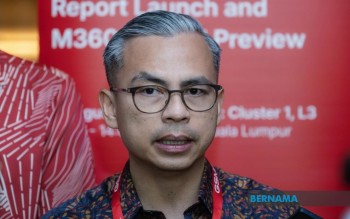
Malaysia has secured a significant regional honour by becoming the inaugural host for M360 ASEAN 2026, a major telecommunications and digital technology summit organised by the GSM Association. Scheduled for September 9 and 10, the event will take place in Kuala Lumpur and marks both the first time the conference has been held in Malaysia and its inaugural gathering across the entire ASEAN bloc. Communications Minister Datuk Seri Fahmi Fadzil highlighted the strategic importance of this selection, noting that the summit positions Malaysia at the forefront of shaping Southeast Asia's digital future and reinforcing the country's credentials as a regional technology hub.
The M360 ASEAN 2026 conference will convene a broad spectrum of stakeholders from across Southeast Asia's digital economy. Telecommunications industry players, technology vendors, policy experts, venture capital investors, academic researchers, and government officials will converge to deliberate on critical challenges and opportunities facing the region. This diversity of participants creates unprecedented scope for dialogue between the private sector and policymakers, potentially catalysing new partnerships and collaborative frameworks that extend beyond the two-day event itself.
Central to the summit's agenda will be discussion of the strategic direction for ASEAN's digital sector expansion. Rather than focusing narrowly on infrastructure deployment, the conference will address how the region can expand connectivity infrastructure while simultaneously managing the responsible deployment of artificial intelligence. This dual emphasis reflects the complexity facing Southeast Asian governments and businesses, which must balance the imperative to build modern digital networks with the emerging challenge of ensuring AI systems operate within ethical and regulatory boundaries appropriate to each nation.
The economic stakes underlying this conference are substantial. According to the GSM Association's research, mobile technologies and services currently contribute approximately US$1 trillion to the Asia-Pacific economy annually. The organisation projects this figure will surge to US$1.4 trillion by 2030, representing a 40 per cent expansion over the coming years. For Malaysia and its ASEAN neighbours, capturing a meaningful share of this growing economic value depends partly on policy decisions and sectoral coordination that summits like M360 ASEAN 2026 facilitate.
Four converging priorities have been identified as shaping the region's next phase of digital development, according to GSMA research presented at the summit announcement. The first priority concerns the rapid proliferation of artificial intelligence across sectors. Unlike previous technological transitions, AI deployment presents acute governance challenges, from labour market disruption to algorithmic bias. ASEAN nations must collectively formulate responses that enable innovation while protecting workers and vulnerable populations from harmful consequences.
The second priority centres on declining digital trust, a phenomenon increasingly evident across the region and globally. Cybersecurity breaches, data misuse, and misinformation spread through digital channels have eroded public confidence in technology platforms and digital systems. Rebuilding this trust requires coordinated action on data protection standards, platform accountability mechanisms, and digital literacy initiatives that extend beyond individual nations to achieve regional coherence.
Demand for more resilient digital infrastructure constitutes the third priority. Previous regional experiences with network outages and natural disasters have exposed vulnerabilities in Southeast Asia's digital backbone. As economies become more dependent on digital systems—from financial services to healthcare to government administration—infrastructure resilience becomes a national security and economic continuity concern. The summit will likely explore regional approaches to redundancy, backup systems, and cross-border network cooperation.
The final priority reflects a rising concern among Southeast Asian governments: digital sovereignty. This encompasses the desire to reduce dependence on foreign technology platforms and corporations for critical digital infrastructure and services. Several nations in the region have pursued localisation requirements and alternative technologies partly to assert greater control over their digital ecosystems. The summit provides a forum for exploring how ASEAN can collectively strengthen regional technological capabilities while maintaining the interconnectedness essential for regional commerce and communication.
For Malaysia specifically, hosting M360 ASEAN 2026 offers tangible benefits beyond diplomatic prestige. The summit will direct international investment attention toward Malaysia's telecommunications sector and emerging AI industry. Technology companies considering regional headquarters or research and development hubs may view Malaysia's hosting of the event as evidence of government commitment to the sector. The conference also provides a platform for Malaysian technology firms to showcase products and services to investors and peers from wealthier neighbouring economies.
The timing of the summit also carries significance for ASEAN's broader digital integration agenda. The region continues advancing various frameworks for digital cooperation, from data governance standards to cybersecurity protocols. A flagship conference on digital futures, hosted by Malaysia and bringing together the region's technology leaders, signals that ASEAN takes coordinated digital development seriously as a regional priority comparable to trade liberalisation or infrastructure connectivity.
Moreover, hosting the event reflects confidence in Malaysia's regulatory environment and technological sophistication. The nation has invested substantially in digital infrastructure, supported the development of technology parks and innovation hubs, and maintained relatively progressive telecommunications regulation. These factors made Kuala Lumpur an attractive venue choice for an event aimed at charting the region's digital direction.
The summit's significance extends beyond the immediate two-day conference. Bilateral conversations between Malaysian officials and counterparts from other ASEAN nations, partnerships forged between technology companies, and research collaborations initiated at M360 ASEAN 2026 will likely generate benefits for months and years following the event. For policymakers, the conference offers an opportunity to benchmark Malaysia's digital policies against regional peers and learn from examples of successful digital transformation elsewhere in Southeast Asia.
Ultimately, M360 ASEAN 2026 represents Malaysia's strategic positioning within ASEAN's digital evolution. As artificial intelligence, cybersecurity, and digital infrastructure shape economic competitiveness increasingly, nations hosting major conferences on these topics gain soft power advantages and attract talent and investment. By securing the inaugural ASEAN gathering of this influential conference, Malaysia has enhanced its standing as a technology leader within the region and created opportunities for its businesses, policymakers, and researchers to influence how Southeast Asia navigates the digital transition ahead.

