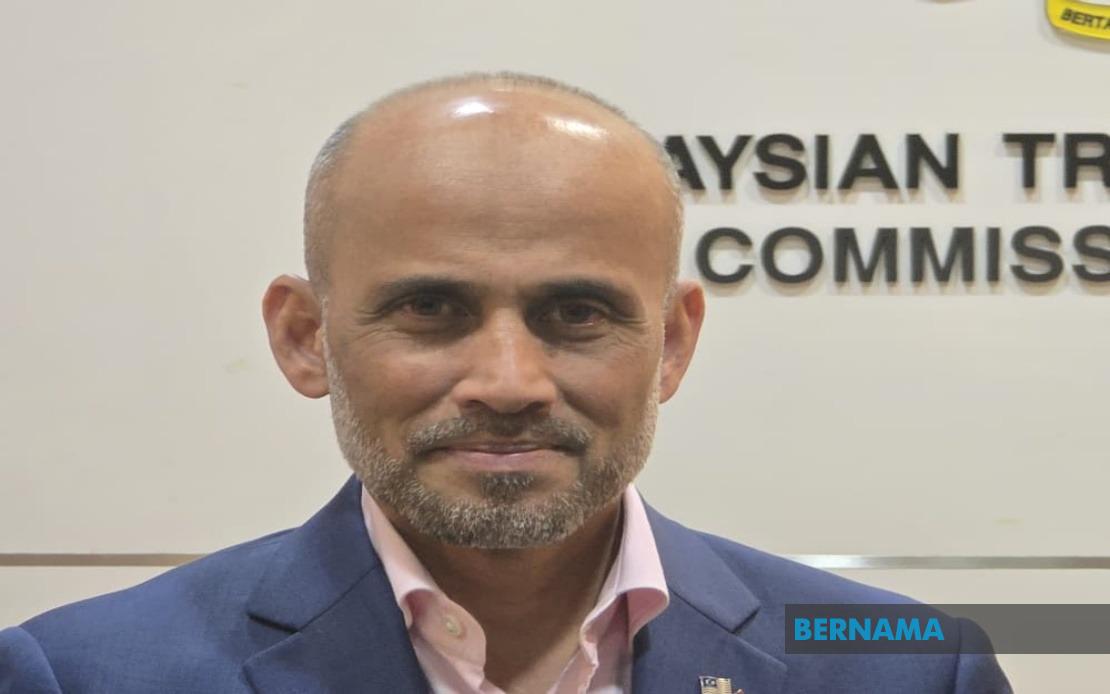
As Malaysia's High Commissioner to Singapore prepares to assume his new posting in London, Datuk Dr Azfar Mohamad Mustafar has reflected on five years of intensive diplomatic engagement that has fundamentally strengthened bilateral ties between the two neighbouring nations. Effective July 1, following his appointment by His Majesty Sultan Ibrahim, King of Malaysia on May 18, Azfar's tenure in the republic has been marked by a concerted effort to deepen multifaceted partnerships even as both countries confronted unprecedented global headwinds.
The outgoing envoy, who took office in June 2021, arrived at a pivotal moment when the COVID-19 pandemic was fundamentally reshaping cross-border movement and commerce between Malaysia and Singapore. The implementation of containment measures, particularly the closure of land borders, created severe disruptions for the substantial daily flow of Malaysian workers and business professionals who depend on movement across the causeway for their livelihoods. Beyond the immediate economic disruption, the pandemic also generated complex consular challenges as Malaysian citizens in Singapore required urgent diplomatic support during periods of lockdown and travel restrictions. Azfar acknowledged that managing these issues required swift and coordinated responses from his mission to protect the welfare of Malaysians while respecting Singapore's public health protocols.
Despite the severe economic headwinds of the pandemic period, the bilateral trade and investment relationship has demonstrated remarkable resilience. According to Azfar, commercial flows between Malaysia and Singapore have not merely recovered but have returned to pre-pandemic levels, underscoring the fundamental strength of economic integration between the two economies. Singapore maintains its position among Malaysia's largest trading partners, a status reflecting decades of interconnected supply chains, financial flows, and business networks that transcend temporary disruptions. This trading relationship provides the foundation for broader regional economic cooperation and demonstrates how deeply embedded the two economies have become.
Beyond trade, the investment dimension represents a critical pillar of bilateral cooperation. Singapore continues to function as a major source of foreign direct investment into Malaysia, with significant capital flows supporting manufacturing, services, and technology sectors across the country. The anticipated expansion of economic linkages through the Johor-Singapore Special Economic Zone presents new frontiers for deepening this investment relationship. Azfar expressed optimism that the zone's development would accelerate Singapore's engagement with Johor specifically, creating employment opportunities and technology transfer that could benefit the broader Malaysian economy. The zone represents more than a mere trade mechanism; it signals a strategic commitment by both governments to bind their economies more tightly together through integrated production networks and shared prosperity.
Looking beyond his tenure, Azfar emphasised Malaysia's steadfast support for Singapore as the city-state prepares to assume the ASEAN chairmanship in the coming year. This diplomatic backing reflects Malaysia's recognition that Singapore's presidency will shape the regional agenda on critical issues affecting all Southeast Asian nations. Malaysia has signalled its intention to collaborate closely with Singapore in advancing economic integration initiatives across the 10-member bloc, recognising that deeper ASEAN cohesion serves Malaysian interests by strengthening the region's collective voice in navigating great power competition and economic fragmentation. The coming year of Singapore's stewardship will test the region's ability to maintain unity on substantive policy matters.
Among the specific initiatives warranting bilateral and regional focus is the ASEAN Power Grid initiative, an ambitious infrastructure project designed to facilitate electricity trade and grid integration across Southeast Asia. Malaysia and Singapore have committed to working closely on this undertaking, which carries profound implications for regional energy security and the transition to cleaner electricity systems. The power grid project reflects a broader recognition that infrastructure interconnectivity—whether in energy, transport, or digital systems—creates mutual vulnerabilities but also shared benefits that can anchor long-term stability and prosperity. For Malaysia, participation in such projects enhances its strategic positioning within ASEAN and diversifies its energy security options beyond domestic generation capacity.
Azfar's career trajectory within Malaysia's diplomatic service provides context for his stewardship of the Singapore posting. Having joined the Foreign Ministry in 2001 following his appointment as an Administrative and Diplomatic Officer in 1996, he brings nearly three decades of government experience to his assignments. His tenure as Ambassador to France from 2018 to 2021 prior to assuming the Singapore position demonstrates his experience managing relationships with major trading partners and influential powers. This background informed his approach to the Singapore posting, where he recognised the need for sustained, high-level engagement to manage both routine bilateral matters and emerging challenges requiring coordinated responses.
The diplomat's reflection that Malaysia "still has a long way to go" in strengthening ties with Singapore suggests a pragmatic rather than triumphalist assessment of bilateral achievements. Despite shared geography and economic integration, Malaysia and Singapore have historically navigated complex issues ranging from water supply agreements to maritime boundaries to labour migration frameworks. Azfar's measured acknowledgement of continued work ahead indicates that deepening ties requires persistent attention to detail, cultural sensitivity, and recognition of divergent interests. His "small part" in this broader enterprise reflects the humility appropriate for a diplomat serving his nation's interests while respecting those of a valued neighbour.
The transition of diplomatic leadership between nations carries significance beyond personnel changes. Azfar's departure to London and the arrival of his successor will mark a moment to assess the Malaysia-Singapore relationship's trajectory and reset priorities for the coming period. The bilateral agenda will increasingly focus on maximising opportunities created by new infrastructure projects, managing labour migration flows in ways that benefit both economies, and coordinating responses to regional security challenges. Both nations face external pressures from great power competition and economic uncertainty, making bilateral stability and cooperation increasingly valuable assets in an unpredictable global environment.

