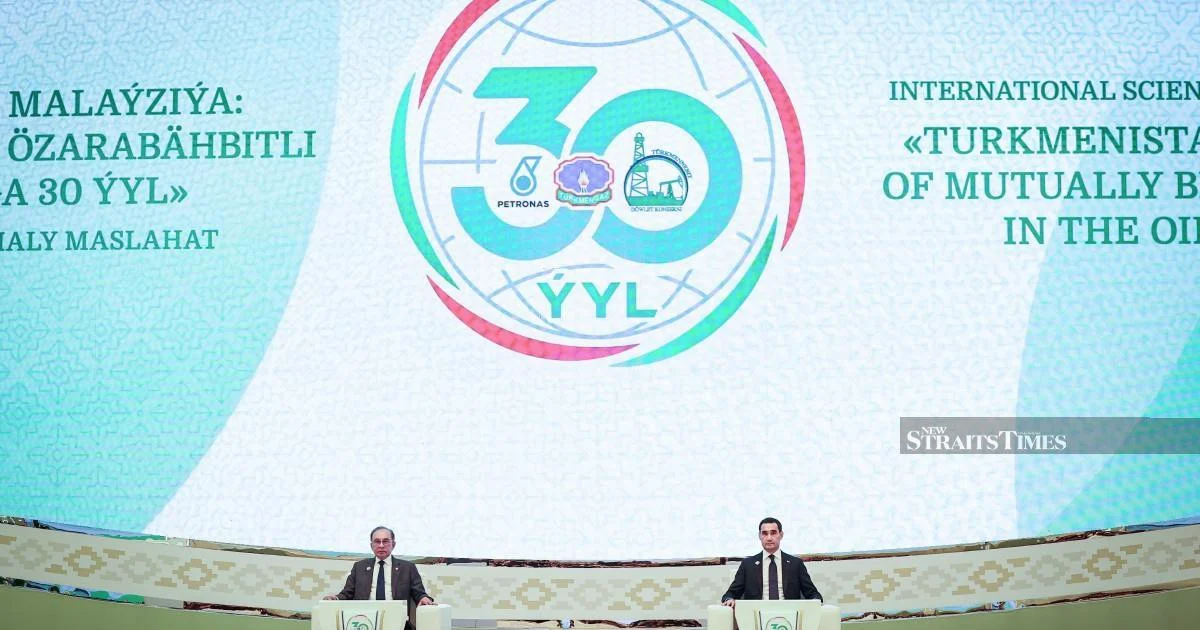
Prime Minister Datuk Seri Anwar Ibrahim's diplomatic tour to Russia and Turkmenistan last week marks a deliberate recalibration of Malaysia's energy strategy, moving to secure long-term hydrocarbon supplies from strategically positioned suppliers. The visit, while brief, produced tangible outcomes in oil and gas cooperation that merit serious attention given Malaysia's growing demand for reliable energy sources and the shifting geopolitical landscape reshaping global commodity markets.
Malaysia's energy sector faces mounting pressures from declining domestic production and rising consumption demands. The nation's oil and gas reserves, while still significant, are gradually depleting as existing fields mature. By cultivating relationships with major energy producers in Central Asia and Eastern Europe, Anwar is effectively hedging against future supply constraints that could otherwise force Malaysia into more expensive spot-market purchases or dependency on fewer suppliers. This approach reflects mature energy diplomacy, acknowledging that diversification across multiple geographies reduces vulnerability to regional disruptions.
Russia, despite international sanctions related to its Ukraine invasion, remains one of the world's largest energy producers with sophisticated extraction and liquefaction technologies. For Malaysia, establishing or deepening commercial ties with Russian energy firms offers access to expertise and potential long-term contracts that could stabilize prices and secure volumes. The geopolitical risk is manageable for Malaysian companies operating at arm's length, particularly if arrangements involve established intermediaries and comply with international regulatory frameworks. The broader strategic calculus suggests Anwar recognizes that major economies, including India and China, continue trading with Russian energy suppliers despite Western sanctions, and Malaysia need not remain on the sidelines of these arrangements.
Turkmenistan's significance lies in its vast natural gas reserves and positioning as a transit hub between Central Asian producers and potential markets. As one of the world's top gas exporters, Turkmenistan has long sought to diversify its customer base beyond historical Soviet-era relationships and Chinese arrangements. Malaysia's engagement opens possibilities for long-term liquefied natural gas (LNG) contracts, which would bolster domestic power generation capacity while potentially freeing Malaysian gas for downstream petrochemical industries. The construction of new LNG export facilities or the securing of allocations from existing Turkmen projects could substantially alter Malaysia's energy profile over the coming decade.
For Southeast Asia more broadly, Malaysia's energy diplomacy carries important implications. The region's developing economies face similar supply challenges and growth-driven electricity demands. A Malaysian success in negotiating favorable terms with Caspian Sea producers or Russian suppliers could establish templates for other nations. Thailand, Indonesia, and Vietnam might follow comparable pathways, collectively strengthening the region's negotiating position while reducing dependence on Middle Eastern suppliers. This represents a quiet but significant shift in Asian energy geopolitics, where Southeast Asia increasingly sources inputs from diverse suppliers rather than concentrating risk.
The visit also underscores Malaysia's multi-aligned foreign policy approach. Rather than restricting engagement to Western partners or exclusively pursuing Middle Eastern relationships, Anwar has positioned Malaysia as willing to engage pragmatically with all significant players. This flexibility enhances Malaysia's diplomatic leverage and appeals to investors seeking partners who maintain stable, non-ideological relationships across geopolitical fault lines. For energy companies evaluating where to invest capital and expertise, Malaysia's demonstrated openness to partnerships spanning Europe, Asia, and Central Asia signals a business-friendly environment.
Domestically, securing new oil and gas supplies has immediate implications for Malaysia's economic growth and industrial competitiveness. Energy represents a substantial cost component for manufacturing and processing industries. Stable, competitively priced imports from Russia and Turkmenistan could help Malaysian manufacturers maintain cost advantages while supporting the transition of the economy toward higher-value petrochemical production. Petronas, Malaysia's national oil company, stands to benefit directly from these relationships, positioning itself as a crucial intermediary between Central Asian suppliers and regional markets.
The timing of Anwar's mission also reflects awareness of shifting global energy markets. Renewable energy transitions in developed economies are gradually reducing global oil and gas demand, placing commodity producers under growing pressure to secure customers. Russia and Turkmenistan, facing long-term demand headwinds and international isolation in Russia's case, are incentivized to offer favorable terms to reliable Asian buyers. Malaysia, positioned as a serious, credible partner capable of consuming substantial volumes over decades, becomes an attractive counterparty. This creates favorable negotiating conditions that Anwar's administration appears to have leveraged effectively.
The success of energy diplomacy ultimately depends on sustained follow-through. Agreements announced during high-level visits must translate into concrete contracts, financing arrangements, and operational infrastructure. Malaysian companies require confidence that commitments will materialize before investing in supply chain adaptations and downstream processing capabilities. Future trade missions, technical delegations, and commercial negotiations will determine whether last week's announcements become genuinely transformative or remain largely symbolic gestures. The sustainability of these partnerships will depend on both Malaysia's ability to deliver committed volumes and the political stability of counterparties facing their own domestic pressures and international constraints.
Anwar's diplomatic initiatives reflect understanding that Malaysia's prosperity increasingly depends on securing stable inputs from globally dispersed sources. Energy security in an era of geopolitical complexity requires cultivating multiple relationships, accepting some risk, and maintaining pragmatic engagement across ideological divides. Whether these partnerships deliver anticipated benefits will become apparent as implementation details emerge and commercial relationships deepen over coming months and years.

