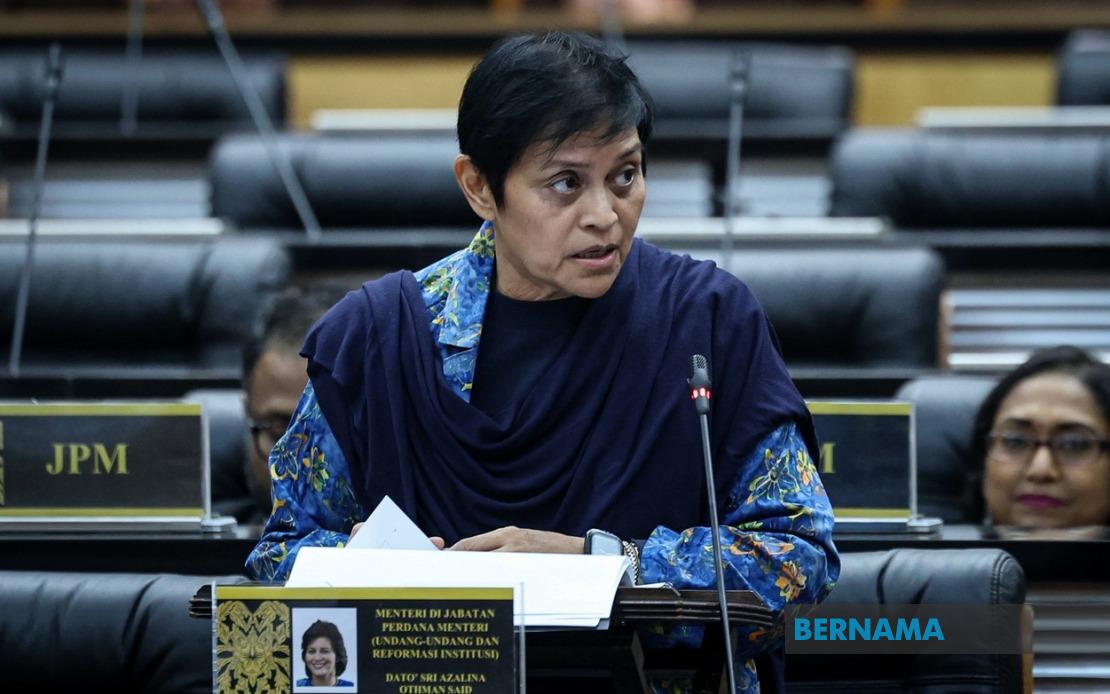
Malaysia is moving to significantly strengthen its witness protection framework with the introduction of the Witness Protection (Amendment) Bill 2026, which was formally tabled for first reading in the Dewan Rakyat on July 13. The legislation represents a comprehensive overhaul of protections available to individuals who come forward in criminal and legal proceedings, addressing longstanding gaps in the system while introducing new support mechanisms tailored to psychological and post-programme needs. Datuk Seri Azalina Othman Said, the Minister in the Prime Minister's Department (Law and Institutional Reform), presented the Bill and indicated that Parliament would proceed to its second reading during the current legislative sitting, signalling the government's commitment to expedited passage of the reforms.
The amendment introduces several substantive changes to the Witness Protection Act 2009 (Act 696), the foundational legislation governing how Malaysia's witness protection programme operates. The most immediately consequential modification concerns vulnerable witnesses who may lack the legal capacity to independently apply for admission into the protection scheme. Under the revised framework, parents or legal guardians may now submit applications on behalf of child witnesses or adults with diminished legal capacity, removing bureaucratic obstacles that previously prevented some of Malaysia's most vulnerable citizens from accessing protection. This change acknowledges the reality that witnesses requiring the greatest protection—particularly children—often cannot navigate administrative processes independently, and by empowering guardians to act as proxies, the amendment removes a critical barrier to safety.
More specifically, the amendment modifies subsection 7(3) of Act 696 by inserting language that extends protection eligibility beyond minors under eighteen years of age to include any individual lacking legal capacity. This linguistic adjustment carries significant practical implications, as it explicitly encompasses adults with cognitive disabilities, mental health challenges, or other conditions affecting their legal decision-making authority. In a jurisdiction where vulnerable populations have historically faced reduced access to justice protections, this clarification represents meaningful progress toward more inclusive safeguarding.
The Bill's introduction of new Sections 10A and 10B establishes a formal contractual framework governing the relationship between programme participants and the government. Section 10A mandates that all individuals entering the witness protection programme must execute written agreements before designated officers, spelling out the specific protections being provided, the participant's responsibilities, conditions of participation, and other material terms. This formalisation serves dual purposes: it creates legal clarity regarding mutual obligations while establishing documented evidence of the commitments made to witnesses, reducing scope for later disputes about what protections or benefits were promised. The requirement for execution before designated officers adds procedural rigour and prevents informal arrangements that might later be challenged or forgotten.
Section 10B addresses the transitional implications of these amendments, providing essential continuity for existing programme participants. Rather than disrupting ongoing protections for individuals already enrolled in the scheme, the legislation explicitly permits continuation of pre-existing agreements, provided they remain valid. Crucially, both the government and participating witnesses retain their rights and benefits under the amended legislation, ensuring that programme participants do not experience diminished protections during the transition period. This sensible approach prevents the perverse outcome whereby legislative improvements unintentionally disadvantaged those already within the system.
Among the most substantive additions to Malaysia's protective framework is the explicit incorporation of psychological assistance into the support services available to programme participants. The amendment modifies subsection 13(2) of Act 696 to include counselling services and broader psychological support as compensable elements of the protection programme. This recognition reflects contemporary understanding of witness trauma and the psychological toll that testifying in serious criminal proceedings—particularly cases involving violence, sexual abuse, or other traumatic events—exacts on individuals. By establishing psychological support as a formal programme component rather than an ad-hoc discretionary benefit, the amendment ensures that witnesses receive trauma-informed care as an integrated component of their protection.
The timing of this legislative initiative carries significance within Malaysia's broader justice reform agenda. Witness intimidation and tampering remain persistent challenges in Malaysia's criminal justice system, with witnesses frequently reluctant to come forward or maintain their testimony when facing threat or harassment. By strengthening protections and expanding support services, the government signals commitment to addressing these obstacles to effective prosecution. More robust witness protection arrangements facilitate more robust case development, as investigators can conduct thorough inquiries without fearing that witnesses will be frightened into silence or recanting testimony.
For Malaysian legal practitioners and criminal justice stakeholders, the amendment's formalisation of written agreements represents procedural clarification that should reduce disputes about what protections witnesses are entitled to receive. The explicit inclusion of psychological support broadens the conversation around witness care beyond purely physical security concerns, aligning Malaysia's framework more closely with international best practices in witness protection. Commonwealth jurisdictions including Australia, Canada, and the United Kingdom have long recognised psychological support as integral to effective witness protection, and Malaysia's incorporation of this principle reflects learning from comparative experience.
The amendment also carries implications for how Malaysia manages ongoing relationships with protected witnesses in the post-prosecution phase. By explicitly contemplating post-protection assistance alongside immediate protective measures, the legislation acknowledges that witness support needs extend beyond the trial period. Individuals who have testified under protection, particularly in high-profile or sensitive cases, may face ongoing safety concerns or struggle with psychological recovery after proceedings conclude. Establishing statutory authority for post-programme assistance provides both protected individuals and government agencies with clearer frameworks for determining what support continues after formal protection protocols end.
From a regional perspective, Malaysia's strengthening of its witness protection regime reflects broader Southeast Asian efforts to enhance rule of law and criminal justice effectiveness. Neighbouring jurisdictions have similarly upgraded witness protection frameworks to combat organised crime, corruption, and transnational criminal activity. Malaysia's legislative reforms position the country alongside regional peers in demonstrating commitment to systematic approaches that recognise witness safety as integral to prosecutorial success and judicial integrity.
The Bill's journey through Parliament will likely attract attention from civil society organisations focused on victim support and witness protection. The explicit reference to psychological assistance may prompt discussions about resource allocation—expanding services without corresponding budget increases creates implementation challenges. Parliamentary debate during the second reading will presumably address whether existing resources prove sufficient to deliver the expanded support contemplated by the amendments, or whether new funding commitments accompany the legislative changes.
Looking forward, the Witness Protection (Amendment) Bill 2026 represents deliberate legislative development informed by accumulated experience administering the 2009 Act. By addressing gaps around vulnerable witnesses, formalising contractual arrangements, and institutionalising psychological support, the government demonstrates responsiveness to practitioner and stakeholder feedback about protection framework deficiencies. These amendments should substantially improve Malaysia's capacity to offer witnesses meaningful safety protections and comprehensive support, ultimately strengthening the integrity and effectiveness of criminal prosecutions across the justice system.

