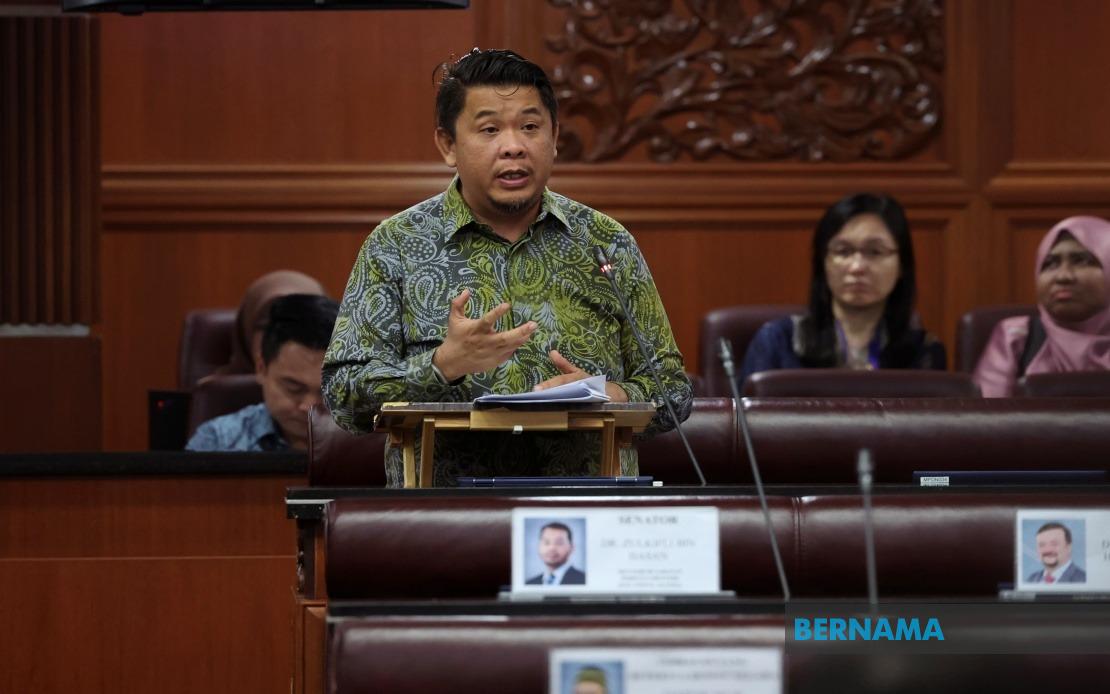
Malaysia has instructed the United Nations High Commissioner for Refugees to suspend all refugee registrations temporarily while the government implements a comprehensive restructuring of its refugee management framework. Deputy Foreign Minister Datuk Lukanisman Awang Sauni announced the decision, which emanates from a Cabinet resolution designed to bring refugee administration under stronger state supervision and establish more systematic procedures for processing and documenting vulnerable populations within the country's borders.
The shift marks a significant pivot in Malaysia's approach to refugee administration, moving away from reliance on UNHCR documentation towards a domestically-managed system known as the Refugee Registration Document, or DPP programme. By centralising refugee data and verification processes within government agencies, Kuala Lumpur aims to establish a unified registration framework that operates independently of international bodies. This transition reflects broader concerns about data sovereignty and the need for Malaysia to maintain comprehensive records of foreign nationals within its jurisdiction, particularly given the scale of refugee populations seeking shelter in the country.
Lukanisman emphasised that the new system will enable authorities to manage refugee data with greater efficiency and transparency. The government intends to conduct identity verification, implement ongoing monitoring mechanisms, and establish regulatory frameworks that prevent exploitation of the registration process by unauthorised individuals. The restructuring acknowledges past challenges in refugee management, where decentralised systems and reliance on international documentation have sometimes hindered effective coordination between Malaysian enforcement and immigration authorities.
The decision directly addresses the long-standing predicament facing Rohingya refugees, who represent the largest undocumented population seeking refuge in Southeast Asia. These individuals typically lack official identification documents and possess no recognised citizenship, as Myanmar's government has statelessness as a tool of ethnic policy. Senator Hussin Ismail raised this specific concern in parliament, prompting Lukanisman's explanation of how the DPP programme would establish clearer pathways for determining eligibility and protecting Malaysia from inadvertently regularising individuals with potential security risks.
The registration pause will operate in conjunction with strict enforcement protocols involving multiple government agencies. These collaborative mechanisms are designed to ensure that only genuinely eligible refugees gain formal documentation status, while simultaneously closing loopholes that might permit illegal migrants to exploit the registration system. The emphasis on inter-agency cooperation underscores recognition that refugee management extends beyond immigration authorities to encompass security, public health, and social services sectors.
Malaysia's position reflects its particular vulnerability as a non-signatory to the 1951 Refugee Convention. Unlike countries bound by international refugee treaties, Malaysia has no formal legal obligations to provide asylum or extend protections to displaced persons. This legal positioning has shaped the government's pragmatic approach, balancing humanitarian concerns with national sovereignty and the capacity of public services to absorb large migrant populations. Lukanisman cited the burden on Malaysia's institutions and the impact on local communities as key justifications for restructuring the registration system.
Parallel to the registration suspension, Malaysia is pursuing multilateral diplomatic initiatives with Myanmar and other ASEAN member states to address the Rohingya crisis at its source. These regional conversations aim to build consensus around solutions that go beyond temporary refuge in Southeast Asia, potentially encouraging Myanmar to modify policies that generate mass displacement. The multilateral track represents acknowledgment that unilateral measures cannot resolve the underlying geopolitical and humanitarian drivers of refugee movements within the region.
Simultaneously, Malaysia is proceeding with repatriation plans affecting approximately 5,000 Myanmar nationals currently held in immigration detention facilities. Lukanisman indicated that Myanmar's government has signalled willingness to receive these individuals, with maritime vessels scheduled to facilitate the transfer. The repatriation process involves coordination between Malaysian and Myanmar authorities to verify identities and ensure returnees reach designated reception points safely. This operation will substantially reduce the detained migrant population, addressing capacity constraints within Malaysia's immigration detention system.
The DPP programme represents a broader recalibration of how Malaysia manages irregular migration and refugee populations. Rather than deferring to international humanitarian organisations for documentation and status determination, the government seeks to establish itself as the authoritative institution for recording and categorising foreign nationals. This approach enables Malaysia to tailor policies to its specific security, economic, and social priorities without external constraints, though it also concentrates power within immigration bureaucracies and potentially limits independent oversight of refugee status determination processes.
For Southeast Asian governments confronting similar pressures from refugee populations, Malaysia's restructuring offers a model of assertive state management. The country's decision to pause international registration processes and build government-led alternatives signals that ASEAN states intend to shape refugee policy according to regional strategic interests rather than global humanitarian norms. This stance reflects broader tensions between international refugee protection frameworks, which assume state capacity and commitment, and the reality of developing countries hosting disproportionate refugee burdens with limited resources.
The implications for Rohingya refugees and other displaced populations remain uncertain. While the DPP programme promises more organised management, the registration suspension creates an interim vacuum where vulnerable populations lack formal status documentation. The success of the restructured system will depend on whether Malaysian authorities implement it equitably and maintain pathways for legitimate refugees to gain recognition, or whether it becomes primarily an enforcement mechanism prioritising deportation and deterrence over protection.
Lukanisman's announcements indicate Malaysia will continue balancing humanitarian considerations with sovereignty concerns, seeking solutions that acknowledge both the reality of refugee populations within its borders and the government's determination to control migration flows. The coming months will reveal whether the DPP programme achieves its stated objectives of orderly management without reproducing the undocumented precarity that currently characterises the situation for hundreds of thousands of refugees and migrants across Malaysia.

