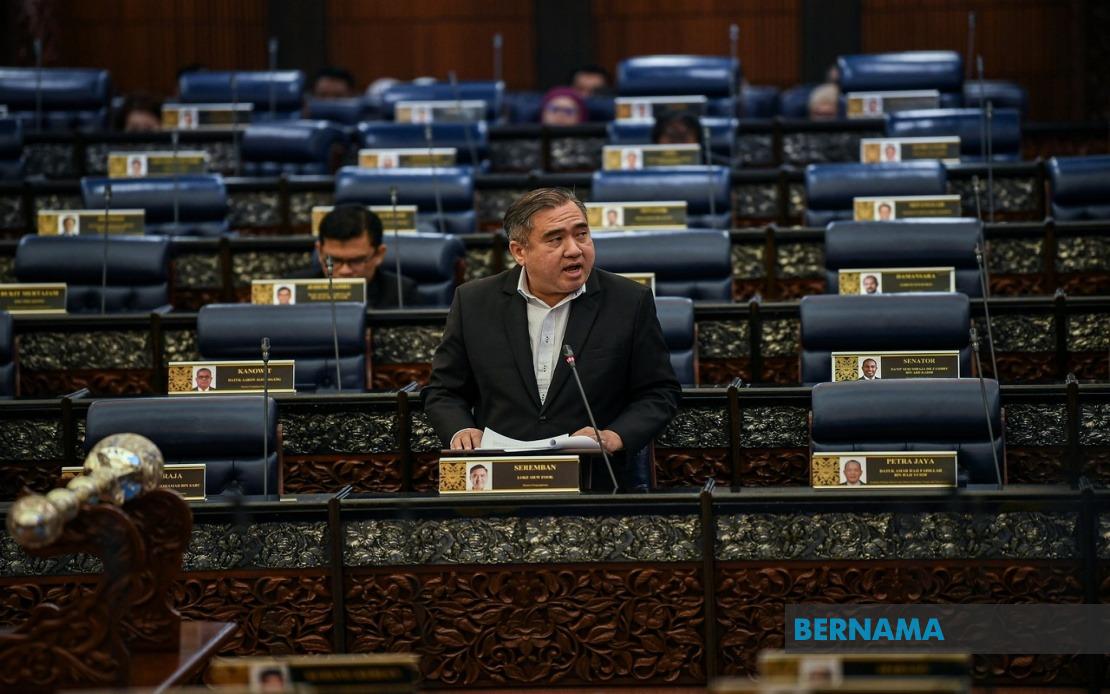
The Malaysian government has moved decisively to address the persistent problem of illegal street racing by introducing landmark legislative changes designed to strengthen enforcement against dangerous driving practices. Transport Minister Anthony Loke tabled the Road Transport (Amendment) Bill 2025 in the Dewan Rakyat, bringing into law a dedicated criminal offence for racing and speed trials conducted on public roads. This represents a significant shift in how authorities can prosecute such offences, moving beyond reliance on existing dangerous driving provisions that have historically proved challenging to apply in racing-related incidents.
Under the proposed Section 42A, the new legislation creates a standalone offence specifically targeting illegal racing and speed testing. First-time offenders caught engaging in such activities face a financial penalty ranging from RM2,000 to RM10,000, imprisonment for up to two years, or both penalties combined. For those repeat offenders who continue such dangerous behaviour after an initial conviction, the law escalates significantly: fines between RM5,000 and RM20,000 with imprisonment stretching up to five years become possible sentences. This progressive penalty structure acknowledges that street racing represents an escalating public safety threat requiring increasingly stringent deterrence measures.
The existing legal framework has long presented enforcement difficulties that the amendment seeks to remedy. Currently, authorities must categorise racing incidents under general dangerous driving laws, yet these provisions lack the specificity needed to prosecute racing effectively. The current approach often requires demonstrable harm—an accident, injury, or fatality—before law enforcement can successfully prosecute perpetrators. This reactive posture leaves authorities unable to intervene before tragedy strikes, essentially allowing dangerous street racing to continue unpunished so long as no immediate harm results. The new provision fundamentally transforms this dynamic by criminalising the racing conduct itself, regardless of outcome.
The practical implications for street enforcement become immediately apparent under this new legal architecture. If multiple motorcyclists engage in racing or speed competitions on public roads, authorities may now take direct action without awaiting an accident or injury. Similarly, motorists who illegally commandeer public roads to test vehicle performance can be prosecuted preemptively. This represents a crucial gap-closing in road safety enforcement, enabling police and traffic authorities to address dangerous behaviour at the moment of occurrence rather than investigating incidents retrospectively. For a nation where motorcycle culture and modifying vehicles for speed remains a persistent enforcement challenge, this proactive legal tool arrives with clear practical value.
Beyond the racing provisions, the amendment introduces complementary enforcement protections through Section 110B, which establishes criminal liability for obstructing or interfering with road transport enforcement officers. This provision addresses a growing problem where individuals actively impede enforcement operations, sometimes deliberately alerting suspected offenders to police presence or roadblock locations. Under the new law, anyone who obstructs, interferes with, assaults, threatens, or follows enforcement vehicles faces severe consequences: fines from RM10,000 to RM50,000, imprisonment between one and five years, or both penalties. Additionally, the offence is classified as arrestable, permitting immediate detention without warrant. Sharing information about enforcement operations to help offenders evade legal consequences falls within this same prohibited conduct.
These provisions directly strengthen the government's capacity to conduct effective enforcement against commercial vehicle violations, vehicle safety non-compliance, and overloading infringements. Street racing networks frequently involve communication networks and lookout systems designed precisely to warn members of enforcement activity. By criminalising such interference, authorities gain meaningful leverage against the organisational structures supporting illegal racing. The deterrent effect extends beyond individual racers to encompass the broader social ecosystem enabling such activities. For Malaysia's cities and highways, where traffic congestion and safety already present serious challenges, eliminating this dangerous subsection of road users carries substantial public interest value.
The amendment package also addresses the financial aspects of road enforcement through revisions to penalty structures. Minimum fines for selected offences are being increased from RM300 to RM500, reflecting cost-of-living adjustments and inflation's erosion of historical penalties. However, the amendment incorporates flexibility by ensuring that compounded fines do not automatically default to maximum amounts. Instead, enforcement authorities will assess each violation individually, considering the offence's nature, severity, settlement period, and prescribed procedures to determine appropriate compound offers. This calibrated approach acknowledges that enforcement fairness requires proportionality between violation severity and financial penalty.
These revised maximum compound rates are scheduled to commence on January 1, 2029, allowing sufficient time for stakeholder adjustment and enforcement agency preparation. The extended implementation timeline ensures that police traffic units, commercial vehicle inspectorates, and road safety personnel receive proper training in applying the new enforcement discretion. Public awareness campaigns can educate motorists about escalated penalties, potentially generating voluntary compliance before the effective date. For repeat offenders and commercial operators who depend on understanding penalty structures, this advance notice provides opportunity to modify behaviour.
The legislative package reflects growing recognition that Malaysia's road safety challenges demand multifaceted responses. Street racing contributes disproportionately to fatal traffic incidents, particularly among young motorcyclists. The phenomenon extends beyond individual thrill-seeking to involve organised groups utilising public resources for activities creating externalities affecting innocent road users. Enforcement has traditionally focused on visible accidents rather than preventative intervention, essentially accepting certain fatalities as inevitable costs of incomplete legal tools. This amendment represents a philosophical shift toward preventative law enforcement, enabling authorities to address dangerous conduct before consequences materialise.
From a regional perspective, Malaysia's legislative approach positions the nation prominently among Southeast Asian jurisdictions prioritising road safety through targeted legal reform. Several neighbouring countries continue relying on general dangerous driving provisions similar to Malaysia's pre-amendment framework, creating comparative enforcement advantages for Malaysian authorities. The specific criminalisation of racing establishes clearer legal boundaries and prosecution pathways, reducing technical legal challenges that previously complicated convictions. For Malaysian lawyers, judges, and law enforcement agencies, the new provisions provide unambiguous statutory language designed to withstand legal challenge while enabling efficient prosecution.
The socioeconomic dimensions merit consideration as well. Street racing disproportionately involves young urban males with disposable income sufficient for motorcycle modification and petrol consumption. The activity often flourishes in environments where legitimate recreational or competitive outlets remain limited or unaffordable. While legal penalties represent crucial deterrence, policymakers might simultaneously consider whether expanding legal motorcycle sports facilities and competitive racing venues could redirect this demographic energy toward safer channels. The amendment's deterrent focus addresses symptoms rather than underlying demand for speed-related recreation, suggesting complementary policy interventions could strengthen overall effectiveness.
Implementation success ultimately depends on enforcement agency capacity and political will to consistently prosecute cases under these new provisions. Historical patterns in Malaysian road enforcement reveal inconsistent application across jurisdictions, with some areas maintaining stricter standards than others. The amendment's effectiveness depends partly on whether enforcement agencies receive adequate resourcing, training, and institutional support to prioritise street racing prosecution alongside traditional revenue-generating traffic enforcement. Monitoring mechanisms and public accountability frameworks should be established to ensure equitable application across demographic groups and geographic regions, preventing enforcement becoming selectively applied against particular communities.
The Road Transport (Amendment) Bill 2025 ultimately represents a necessary evolution in Malaysia's legal response to persistent road safety challenges. By creating specific criminal liability for racing conduct, regardless of accident outcomes, the legislation eliminates enforcement gaps that previously allowed dangerous driving to continue unpunished. The complementary provisions against enforcement obstruction strengthen authorities' operational capacity. While legislation alone cannot eliminate street racing culture, the new framework provides essential tools for meaningful intervention. As the nation continues confronting escalating traffic fatalities, particularly among young people, this amendment constitutes an important step toward establishing legal deterrence structures matching the genuine public safety threat that illegal racing represents.

