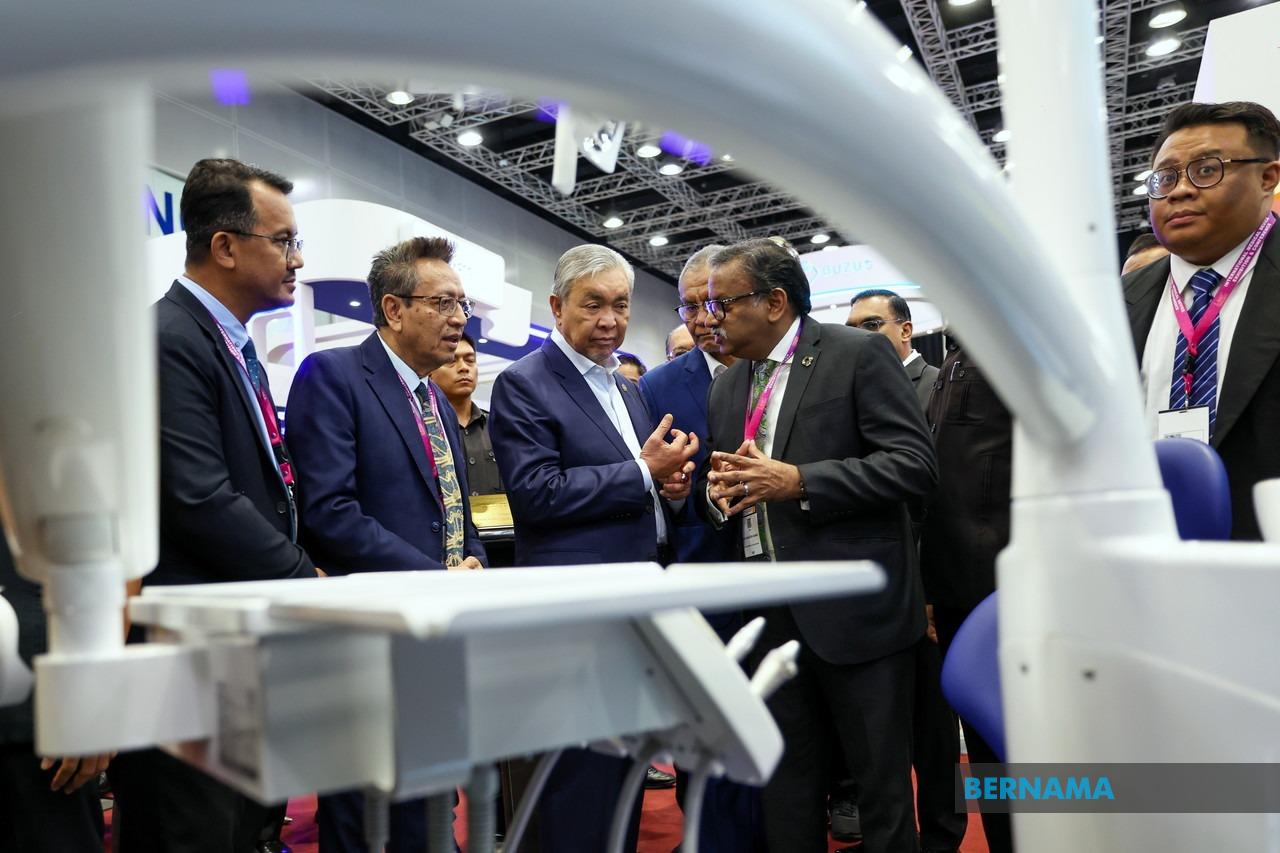
Malaysia's medical device sector is poised for substantial growth, with Deputy Prime Minister Datuk Seri Dr Ahmad Zahid Hamidi calling for export revenues to surpass RM50 billion by 2030—a significant leap from the RM34.54 billion achieved last year. Speaking at the closing ceremony of the International Medical Device Exhibition and Conference (IMDEC) 2026 in Kuala Lumpur on August 28, Ahmad Zahid outlined an ambitious long-term vision designed to transform Malaysia from a manufacturing hub into a genuine innovator and value creator within the global medical technology landscape.
The Deputy Prime Minister's growth projection represents one of three interconnected ambitions intended to chart the nation's progress in building a robust MedTech industry over the next six years. Beyond raw export figures, the strategy reflects a deliberate shift toward higher-value production, recognizing that Malaysia possesses foundational advantages—established manufacturing capacity, preferential market access, and strong international credibility—that now require strategic channeling toward more sophisticated, profitable products. This recalibration acknowledges an uncomfortable reality: sustaining export growth purely through volume-based manufacturing has clear limitations and cannot generate the economic returns Malaysia requires.
The second pillar of Ahmad Zahid's framework targets the development of at least ten Malaysian MedTech champions capable of competing effectively at regional and international levels. This objective directly addresses a structural weakness in Malaysia's current ecosystem, where foreign multinational corporations dominate, controlling intellectual property and decision-making. The government's commitment to nurturing local firms that design, develop, and own their own technologies represents a strategic pivot toward economic sovereignty and sustainable competitive advantage. Such champions would retain profits and capabilities within Malaysia while providing reference points and supply chain opportunities for smaller enterprises throughout the sector.
Simultaneously, Ahmad Zahid emphasized that Malaysia must continue attracting leading global MedTech companies, recognizing that international investment brings capital, technology transfer, and market connections. However, this openness comes with an explicit caveat: foreign investors must complement, not substitute for, the development of domestic technological competence. This balanced approach reflects a mature understanding that isolationism and indiscriminate openness both carry risks; the optimal strategy involves welcoming external players while systematically building internal capabilities that ensure Malaysia remains more than a contract manufacturer.
The third ambition addresses workforce composition, with a target that at least 50 per cent of jobs created through new MedTech investments by 2030 should occupy managerial, technical, and supervisory (MTS) positions. Currently, the sector's MTS employment index stands at only 33.1 per cent, indicating that many positions remain lower-skilled assembly and support roles. Ahmad Zahid framed this aspiration with unambiguous language: if Malaysia claims to host a high-value industry, then the employment it generates must reflect that status. Without deliberate intervention, companies seeking cost advantages will concentrate engineering and decision-making roles elsewhere, leaving Malaysia with low-wage jobs vulnerable to automation and competition from lower-cost jurisdictions.
Critically, Ahmad Zahid, who also chairs the National Technical and Vocational Education and Training Council, articulated a fundamental reversal in how Malaysia should approach workforce development. Rather than training workers only after companies face staffing crises, educational institutions and industry must collaborate proactively to anticipate future skill requirements and build talent pipelines in advance. This preventive strategy recognizes that responsive, post-hoc retraining often proves insufficient and expensive; companies must help shape vocational programmes, identify emerging technical needs, provide industrial exposure to students, and expand apprenticeship opportunities. Such partnership transforms education from a reactive service into strategic infrastructure.
The 2025 investment landscape already shows momentum toward this vision. Malaysia approved RM4 billion in new medical device investments across 46 separate projects last year, generating nearly 3,400 employment opportunities. While this represents solid growth, the composition and quality of those jobs remain scrutinized against the MTS target. These figures also underscore Malaysia's continued attractiveness to serious investors, provided the country can deliver workforce sophistication and infrastructure aligned with advanced manufacturing demands.
Global context underscores the urgency of Malaysia's strategy. The worldwide medical device market exceeded USD572 billion in value last year and is projected to expand beyond USD1 trillion by 2034. This enormous growth represents both opportunity and competitive pressure; countries that build authentic technological capabilities and attract high-value investment will capture disproportionate benefits, while those content with contract manufacturing roles will see declining margins and limited job creation. Malaysia's current RM50 billion export target, while ambitious regionally, would capture perhaps five per cent of the projected 2034 global market—a modest share reflecting the competitive intensity ahead.
The IMDEC 2026 event itself, which ran from August 26 to 28, assembled more than 160 exhibitors and over 50 regional and international speakers examining regulation, innovation, and healthcare transformation. Such conferences serve multiple functions: they showcase Malaysia's capabilities to foreign investors, provide networking platforms for domestic companies, facilitate technology transfer, and generate momentum around policy initiatives. The convergence of government leadership, industry participants, and international expertise creates space for meaningful dialogue on sector challenges and opportunities.
For Malaysian policymakers and business leaders, Ahmad Zahid's three-part framework offers a coherent strategic direction that avoids false choices between foreign investment and domestic innovation, between manufacturing and value creation, or between rapid job generation and employment quality. The targets are demanding but achievable for a country with Malaysia's existing medical device infrastructure, skilled workforce foundations, and government commitment. Success requires sustained coordination across education, investment promotion, regulatory agencies, and industry itself—a sustained effort that extends well beyond any single announcement.

