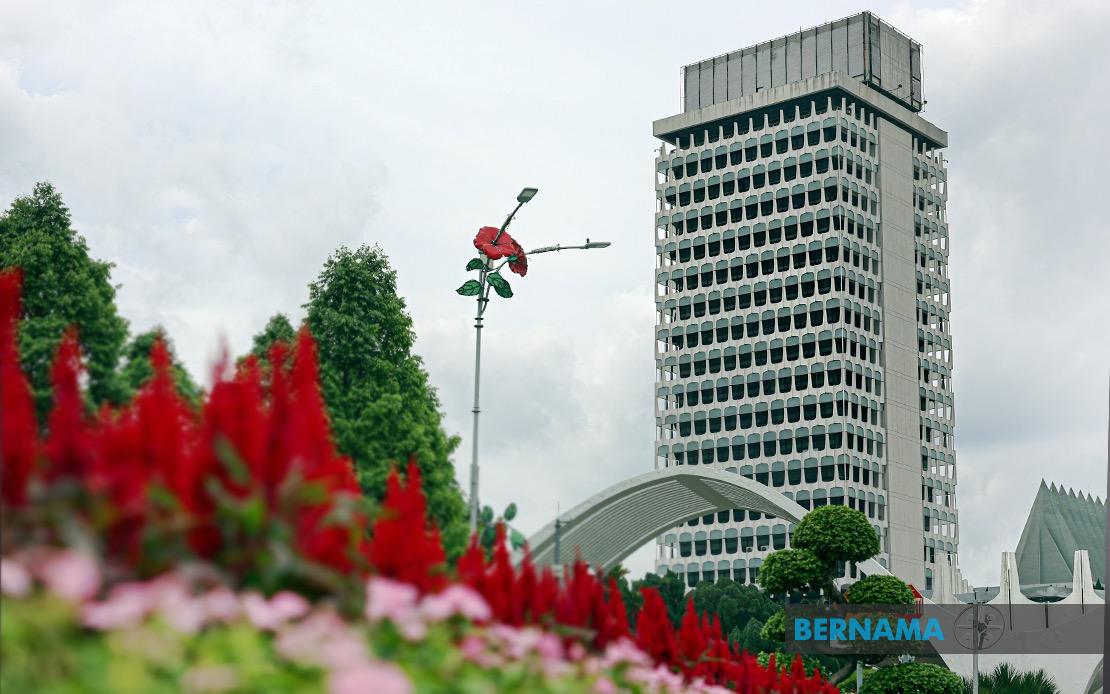
Parliament will turn its attention to two significant regional and domestic policy matters when lawmakers gather for the Dewan Rakyat sitting scheduled to begin at 10 am on 14 July. The Malaysia-Thailand Border Economic Zone and the widening crisis affecting shipping lanes in the Strait of Hormuz are expected to dominate parliamentary questions, reflecting growing concerns about the nation's economic growth prospects and strategic regional positioning amid geopolitical turbulence.
Datuk Adnan Abu Hassan, representing Kuala Pilah under the Barisan Nasional coalition, has filed questions directed at the Prime Minister seeking clarity on the anticipated financial gains flowing from the bilateral border development initiative. His inquiry extends beyond headline figures to probe the distribution mechanisms intended to ensure that smaller enterprises and residents in frontier districts benefit fairly from the zone's expansion. This focus on grassroots economic participation underscores lingering anxieties about whether major infrastructure projects genuinely translate into prosperity for communities closest to implementation zones or whether gains concentrate among larger corporations and urban centres.
The Malaysia-Thailand Border Economic Zone represents a cornerstone of bilateral cooperation aimed at transforming the traditionally under-developed border region into a hub of cross-border commerce and manufacturing. Yet parliamentary scrutiny suggests policymakers remain uncertain whether current frameworks adequately protect the interests of local stakeholders who may face disruption from accelerated development. Questions about benefit-sharing mechanisms signal that cabinet ministers must justify how economic expansion translates into tangible improvements for small traders, agricultural producers, and wage-earning families residing in these border communities.
Separately, Datuk Rosol Wahid from the Perikatan Nasional coalition in Hulu Terengganu will press the Prime Minister for a comprehensive government assessment of how the protracted Strait of Hormuz standoff threatens Malaysia's political and economic resilience. The Persian Gulf chokepoint handles roughly one-third of the world's seaborne petroleum trade, making disruptions in that waterway a matter of acute concern for an energy-importing nation dependent on stable oil supplies and uninterrupted shipping corridors. Malaysia's position as a major petrochemical processor and petroleum product exporter means that instability affecting Hormuz flows creates cascading ripples throughout the domestic economy, from fuel prices at the pump to manufacturing costs and export competitiveness.
The Malaysian government has not previously detailed how internal policy machinery assesses or monitors risks emanating from Hormuz tensions or articulated comprehensive mitigation strategies beyond rhetorical expressions of concern. Parliamentary questioning may compel ministers to specify which government agencies coordinate crisis response, what contingency planning exists should Hormuz become fully compromised, and whether strategic petroleum reserves have been augmented to buffer against potential supply interruptions. For a nation navigating narrow economic margins and competing budgetary demands, clarity on Hormuz risk management carries implications for medium-term planning across energy, transport, and industrial sectors.
The parliament session will also address highway safety following a destructive illegal street racing incident on 1 June in Simpang Renggam, Johor, which sparked public alarm about lawlessness on major transport corridors. Datuk Yusuf Abd Wahab, representing Tanjong Manis under the GPS coalition, will interrogate the Transport Ministry on concrete measures undertaken to eliminate such dangerous practices across the country. This inquiry reflects broader public frustration with persistent enforcement gaps and questions whether existing deterrent mechanisms adequately discourage reckless behaviour that endangers other motorists and destabilises communities.
Beyond the question-and-answer sessions, parliament will advance substantive legislative business through the first reading of two important bills. The Statistics Bill 2026, sponsored by the Economy Minister, aims to modernise the framework governing data collection and statistical practice, potentially enhancing government capacity for evidence-based policymaking. The companion National Trust Fund Bill 2026, introduced by the Finance Minister, represents another component of broader fiscal architecture adjustments intended to strengthen government financial management and institutional accountability mechanisms.
A particularly significant development involves the tabling of the Parliamentary Special Select Committee report on constitutional amendments separating the attorney general and public prosecutor roles. Minister in the Prime Minister's Department Datuk Seri Azalina Othman Said will present findings from seven committee meetings that produced refinements to the original constitutional amendment proposal. These improvements ostensibly strengthen the independence, integrity, and accountability of the public prosecutor institution by removing potential conflicts of interest inherent in unified leadership structures. The separation reflects international best practices and responds to longstanding critiques that concentrating prosecutorial and legal advisory powers in a single office undermines institutional impartiality.
The constitutional amendment undertaking holds particular resonance for Malaysians concerned about judicial independence and the rule of law, pillars underpinning democratic governance and investor confidence. By bifurcating roles previously held singularly, the proposal aims to insulate prosecutorial decisions from political pressures while preserving government access to legal counsel. Committee refinements during the seven meetings presumably addressed technical matters such as appointment procedures, removal safeguards, resource allocation, and coordinating mechanisms between separated institutions to ensure operational efficiency.
Parliament's current sitting represents the sixteenth parliamentary session of the current term, running from 22 June through the following Thursday, providing lawmakers approximately two weeks to advance government business and scrutinise executive performance. The concentrated agenda spanning trade development, regional security concerns, domestic safety, legislative advancement, and constitutional reform reflects parliament's role as the primary venue for testing government policy against elected representatives' concerns and constituents' interests, a function particularly vital during periods of economic uncertainty and geopolitical tension affecting regional stability.

