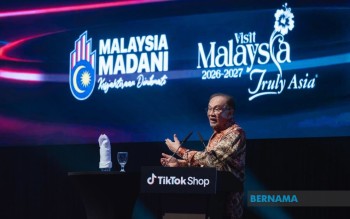
Prime Minister Datuk Seri Anwar Ibrahim has signalled a shift towards more rigorous evaluation of incoming investment proposals, aiming to protect Malaysia's domestic economy from ventures that generate minimal local benefit. Speaking at the TikTok Shop Summit 2026 in Kuala Lumpur on August 20, Anwar outlined plans to review new applicants systematically, ensuring their operations contribute meaningfully to employment creation and national economic growth. The initiative represents a deliberate balancing act between maintaining Malaysia's reputation as an open investment destination and safeguarding local industries from predatory business models that extract value without contributing locally.
The catalyst for this policy review stems from intelligence gathered by the Ministry of Investment, Trade and Industry, which has identified a troubling pattern of foreign enterprises establishing Malaysian operations purely for logistics and warehousing purposes. These entities, according to Anwar, function primarily as transit hubs without generating employment opportunities for Malaysians or purchasing local goods and services. The government has already commenced enforcement action against such operators, though Anwar acknowledged that a more comprehensive framework is necessary to prevent similar arrangements from gaining foothold in future approval cycles. This concern reflects broader anxiety among policymakers about whether Malaysia's liberal investment policies are being exploited by businesses treating the country as a mere distribution node rather than a genuine market opportunity.
The prime minister drew particular attention to a phenomenon gaining traction within Malaysia's rapidly expanding e-commerce ecosystem: the establishment of shell companies registered under ostensibly local trading names that exclusively import and resell foreign goods. Anwar provided concrete examples of enterprises naming themselves after traditional Malaysian businesses such as coffee shops, yet operating entirely on imported inventory with no connection to actual local supply chains. This practice, he suggested, violates the spirit of Malaysia's investment regime while technically complying with registration requirements. The sophistication of such operations—leveraging Malaysian business identities to circumvent regulatory scrutiny while importing low-cost foreign merchandise—underscores a gap between formal compliance and substantive economic contribution that the government now seeks to address.
The broader context for these concerns emerged during a question-and-answer session when TikTok Shop participants raised anxieties about massive influxes of ultra-cheap products from Chinese platforms including Temu and Pinduoduo. These digital marketplaces have fundamentally altered Malaysia's consumer landscape, offering prices that domestic retailers struggle to match regardless of supply chain efficiency. Anwar acknowledged Malaysia's commitment to free trade principles, yet recognised that the surge in cross-border e-commerce has created conditions resembling market dumping, wherein overseas sellers prioritise market penetration and capture over profitability. This creates an inherent tension: Malaysia's identity as an open economy attracts the globalised commerce that now threatens local merchants and manufacturers.
Large-scale warehousing operations at Port Klang exemplify the most egregious cases Anwar cited. Foreign investors lease substantial facility space in Malaysia's premier container port—a location offering world-class infrastructure—yet stipulate no requirement to employ Malaysian workers or source Malaysian products. These ventures function purely as distribution conduits, moving containers through Malaysian territory whilst transferring minimal wealth to communities or workers. The phenomenon highlights how geographic advantage and infrastructure investments alone are insufficient; without contractual or policy mechanisms ensuring local participation, foreign operators can exploit Malaysia's strategic position without reciprocal obligation. Anwar indicated that enforcement officers have begun taking corrective action, though preventing future iterations requires establishing clearer expectations during the investment approval phase.
The practical implications of tightening investment screening are significant for Malaysia's economic strategy. The government must navigate between two competing imperatives: attracting substantial foreign capital that genuinely develops Malaysian capabilities and industries, versus rejecting applications that promise investment while delivering only warehouse rentals and hollow employment figures. This distinction requires greater sophistication in the evaluation process, moving beyond aggregate investment figures towards granular assessment of supply chain integration, employment quality, and technology transfer. Malaysia's position as a middle-income nation attempting to climb the value-added ladder depends on ensuring foreign investment strengthens rather than bypasses local productive capacity.
For Southeast Asia more broadly, Malaysia's recalibration signals a regional rethinking about investment screening standards. Other ASEAN members face identical pressures from e-commerce platforms and logistics-focused foreign operators seeking to use regional nations as transit points. Malaysia's experience demonstrates that formal trade liberalisation and strategic investment vetting are not mutually exclusive; nations can maintain openness whilst imposing substantive conditions on benefits accruing to local economies. This approach differs markedly from protectionist measures that would violate international trade commitments, instead focusing on ensuring commitments made during approval actually materialise in practice.
Anwar's commitment to enhanced review mechanisms also reflects political calculations within Malaysia's complex domestic environment. Small and medium enterprises, traditional retailers, and local manufacturers have grown increasingly vocal about competitive pressures from foreign imports and predatory pricing strategies. By positioning the government as an active protector of local interests—without resorting to tariffs or trade barriers that would invite international dispute—Anwar attempts to address legitimate grievances from constituencies concerned about economic displacement. The policy framing emphasises fairness and reciprocity rather than protectionism, appealing to voters anxious about globalisation's distributional consequences.
Implementing this policy shift operationally presents substantial challenges. Government agencies must develop clearer criteria distinguishing legitimate investment from exploitative arrangements, train officials to evaluate applications more stringently, and establish monitoring mechanisms ensuring compliance throughout investment lifecycles. Currently, MITI lacks comprehensive data on employment actually generated by approved foreign investments relative to initial commitments, or on supply chain integration outcomes. Building institutional capacity for rigorous ex-post evaluation would enable the government to progressively refine approval standards based on evidence about which investment categories deliver promised benefits.
The timing of Anwar's announcement at a major e-commerce summit carries symbolic weight, signalling that digital commerce platforms—however transformative—cannot operate in Malaysia without contributing to local prosperity. This message aims to shape expectations among both established foreign investors and new market entrants that Malaysia welcomes business expansion contingent upon genuine economic participation. Whether this framework can be implemented consistently, without creating bureaucratic obstacles that deter legitimate investment, will determine whether Malaysia succeeds in its stated objective of capturing investment's benefits whilst minimising predatory dynamics that extract value without reciprocal contribution.

