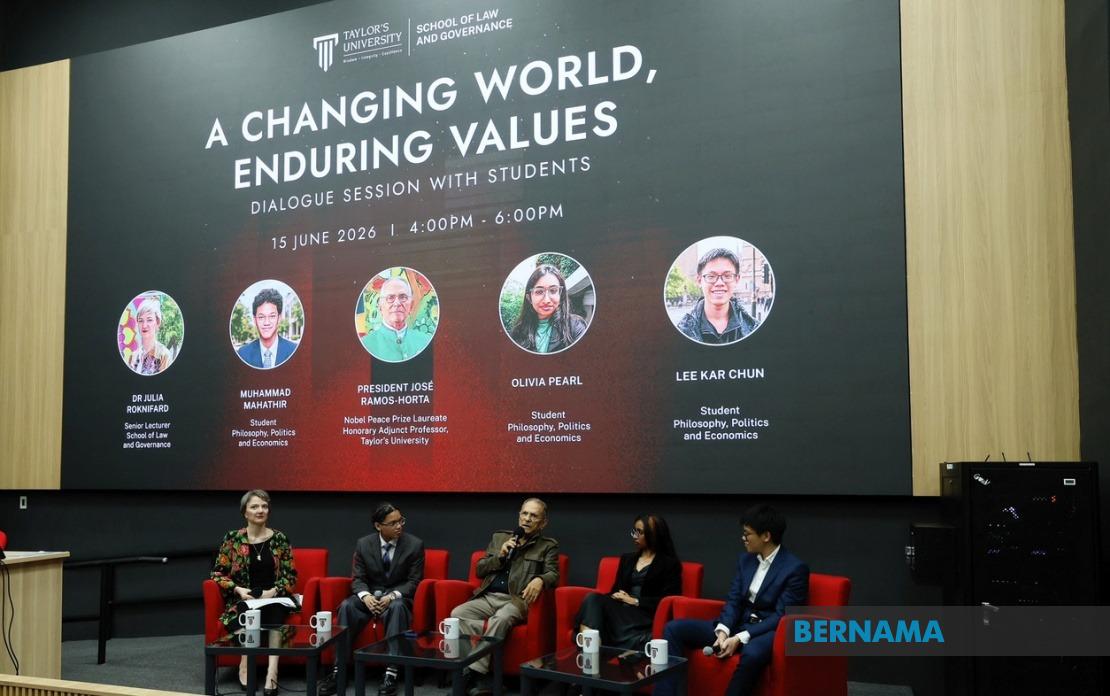
Timor-Leste President Jose Ramos-Horta has characterized the Southeast Asian nation's relationship with Malaysia as exceptionally strong, underscoring the depth of bilateral engagement and mutual support that has developed over more than two decades. Speaking at Taylor's University in Petaling Jaya during a five-day official visit, the Nobel Prize-winning statesman reflected on Malaysia's consistent commitment to his country's development trajectory, tracing support back to the critical peacekeeping operations of 1999 when Timor-Leste was navigating a turbulent path toward independence.
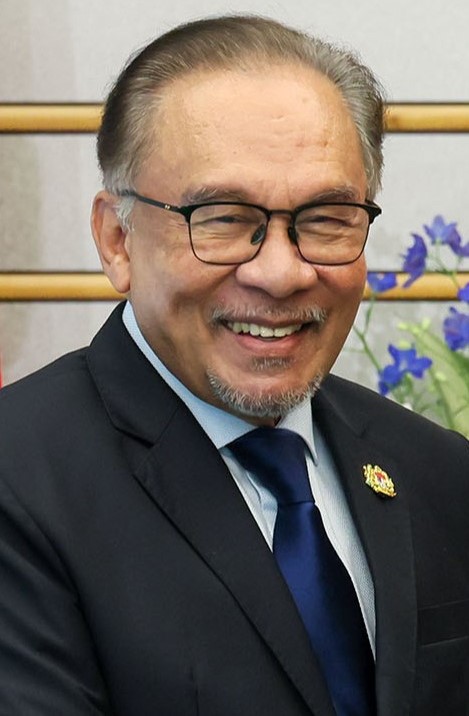
Ramos-Horta's observations extend beyond ceremonial pleasantries, offering substantive recognition of Malaysia's evolving international standing. The former journalist and long-standing advocate for East Timorese sovereignty credited Prime Minister Datuk Seri Anwar Ibrahim with elevating Malaysia's economic presence and diplomatic influence globally in recent years. His remarks reflect a broader Southeast Asian acknowledgment that Malaysia, despite domestic political complexities, has maintained economic momentum and regional relevance through careful statecraft and institutional consistency. This assessment carries particular weight given Ramos-Horta's decades of experience navigating international diplomacy and his perspective as a smaller nation's leader observing regional power dynamics.
The significance of Malaysia's role in Timor-Leste's ASEAN integration cannot be overstated. During Malaysia's ASEAN chairmanship in 2024, the country played a pivotal role in facilitating Timor-Leste's accession to the regional bloc, a process that culminated in the island nation officially becoming ASEAN's eleventh member on October 26, 2025. This represented the first expansion of the 60-year-old organization in more than a quarter-century, a watershed moment for regional composition and geopolitical balance. Malaysia's instrumental position in shepherding this enlargement underscores its continued diplomatic dexterity and commitment to regional stability, even as it manages its own domestic transformation under new political leadership.
Looking ahead, Ramos-Horta articulated ambitious plans for Timor-Leste to host the ASEAN Secretariat and regional summit in 2029. Rather than viewing this prospect as a burden on a developing nation's infrastructure, the president conveyed genuine confidence in his country's capacity to meet the challenge. His characterization—"We can do it"—represents not mere optimism but a calculated assessment rooted in the accelerating pace of development projects currently underway. For Malaysian observers and policymakers, Timor-Leste's ascending role within ASEAN carries implications for regional integration patterns, as a nation still consolidating statehood assumes greater responsibility for continental coordination.
The infrastructure dimension of Timor-Leste's ASEAN hosting ambitions merits attention from a regional development perspective. The country has historically faced significant capacity constraints, with limited institutional apparatus compared to longer-established ASEAN members. However, Ramos-Horta's confidence suggests that recent investments and development initiatives are beginning to yield tangible results. For Malaysia, which has hosted major ASEAN summits multiple times, there exists an opportunity for technical cooperation and capacity-building support as Timor-Leste prepares its institutional and physical infrastructure for regional leadership responsibilities.
Ramos-Horta's commentary on Malaysia's governance and social development deserves separate analysis. His praise for Malaysia's international standing in security, freedom, and democracy reflects the perspective of a leader who has witnessed violent conflict and democratic consolidation challenges firsthand. Timor-Leste's own journey from Portuguese colonialism through Indonesian occupation to independent democratic governance provides the lens through which Ramos-Horta evaluates other nations. His assessment that Malaysia maintains strong democratic institutions and personal freedoms, despite occasional domestic turbulence, positions the country as a model for stability in the region—a valuable endorsement for a nation that occasionally faces international scrutiny regarding political and media freedom.
The president's remarks about the Malaysian media and press freedom assume particular resonance given the occasion of his commentary. Marking National Journalists' Day (HAWANA) celebrations scheduled for Penang, Ramos-Horta emphasized the critical role of informed public discourse in maintaining social cohesion and addressing collective challenges. His statement that "only a well-informed society will be able to stay together, promote unity and face challenges" reflects decades of experience observing how information flows, journalistic integrity, and public literacy directly influence democratic health and national resilience. Coming from a leader whose own transition to statehood occurred amid international media attention and documentation, his recognition of Malaysian journalism's role carries authentic weight.
The bilateral relationship's trajectory reveals important patterns about regional alignment during a period of significant geopolitical realignment in Southeast Asia. Malaysia's consistent support for Timor-Leste—from peacekeeping operations in 1999 through ASEAN sponsorship—demonstrates sustained commitment to regional integration and stability irrespective of shifting international power dynamics. This stands in contrast to the more transactional diplomatic approaches sometimes adopted by larger powers in the region. For smaller nations like Timor-Leste, Malaysia's steady engagement provides reassurance about the predictability and reliability of regional partnerships, even as great power competition intensifies around the peripheries of Southeast Asia.
The broader context of this exchange reveals deeper currents in regional development and cooperation. As Timor-Leste assumes fuller membership within ASEAN and prepares for hosting responsibilities, the country's reliance on established members like Malaysia for technical expertise, infrastructure support, and diplomatic mentoring becomes increasingly valuable. Malaysia's own experience transitioning from a developing to middle-income economy, coupled with its institutional maturity within ASEAN, positions it as a natural partner for Timor-Leste's aspirations. This intergenerational transfer of knowledge and capacity within the regional system strengthens ASEAN's overall functionality and cohesion.
Ramos-Horta's five-day visit to Malaysia carries symbolic importance beyond the speeches and dialogue sessions. It represents a conscious diplomatic investment in reinforcing bilateral ties at a moment when Timor-Leste is establishing its place within expanded ASEAN structures. The choice to engage with university students at Taylor's University, rather than limiting engagements to governmental spaces, reflects an understanding that building lasting partnerships requires investment in knowledge transfer and people-to-people connections. Malaysian universities and civil society increasingly serve as venues for regional diplomatic engagement, particularly with emerging ASEAN members seeking to deepen institutional linkages and educational partnerships.
Looking forward, the consolidation of Malaysia-Timor-Leste relations will likely evolve along several trajectories. Economic cooperation through ASEAN frameworks will expand, potentially including trade arrangements, investment flows, and labor mobility. Infrastructure development assistance, particularly in preparing for 2029 ASEAN hosting, may become an explicit component of bilateral engagement. Educational partnerships and student exchanges will deepen as both nations invest in human capital development. Security cooperation, particularly in maritime domains given Timor-Leste's strategic location and Malaysia's naval capabilities, may receive increased attention. These multifaceted connections reflect the maturation of regional partnerships within an integrating Southeast Asia.