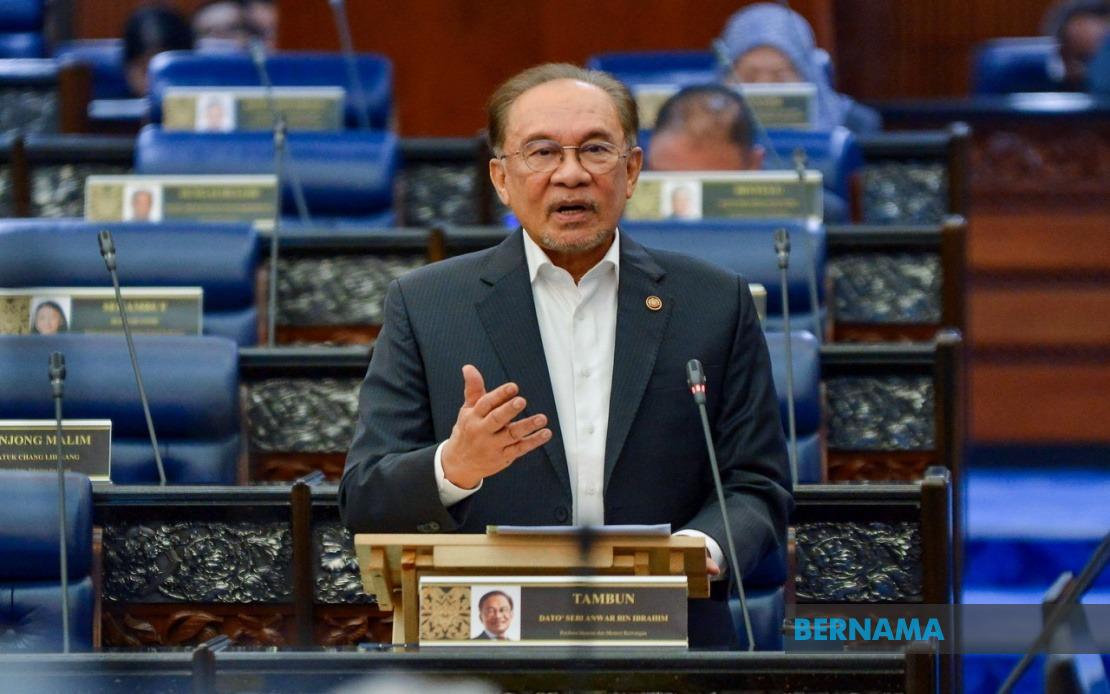
Prime Minister Datuk Seri Anwar Ibrahim has reaffirmed the government's commitment to strike a careful balance between addressing genuine labour shortages and maximising employment opportunities for Malaysian citizens. Speaking in Parliament on July 14, Anwar acknowledged the complex reality facing the nation's labour market: while certain sectors genuinely require foreign workers to maintain productivity and competitiveness, the government must simultaneously ensure that Malaysian job seekers receive priority access to available positions.
The prime minister's remarks came in response to concerns raised by Khoo Poay Tiong, the Member of Parliament for Kota Melaka, regarding workforce shortages affecting small and medium enterprises and the parallel challenge of creating adequate employment pathways for young Malaysians. Anwar's statement reflects a nuanced approach to labour policy that recognises the interdependence of both goals rather than treating them as mutually exclusive objectives. His emphasis on examining needs through established regulatory channels signals an attempt to move beyond ad-hoc hiring practices towards a more systematic and transparent framework.
A significant component of the government's strategy involves reorganising the process by which foreign workers fill vacancies. Rather than immediately recruiting new foreign labourers to meet sectoral demands, Anwar stressed that existing legal foreign workers already employed in Malaysia should be offered priority to transition into available positions across different industries. This approach aims to maximise the utilisation of the existing migrant workforce while reducing the administrative and economic burden of new recruitment cycles. The policy reflects acknowledgment that millions of foreign workers are already embedded within Malaysia's economy and labour market, suggesting that redeployment and better coordination could address some acute shortages without expanding the total foreign worker population.
Anwar's comments also targeted the long-standing issue of foreign worker syndicates, which he characterised as entrenched exploitative structures that have enriched unscrupulous intermediaries for decades. By framing the syndicate problem alongside broader labour policy, the prime minister signalled that labour reform encompasses not just worker numbers but also the integrity of systems through which foreign workers enter and remain employed in Malaysia. This acknowledgment is particularly significant because it links employment policy to governance and corruption concerns, suggesting that addressing foreign worker issues requires multi-agency coordination and enforcement capacity beyond simple approval mechanisms.
The government's framework for managing foreign worker admissions will involve joint study and coordination between two critical ministries: the Ministry of Human Resources and the Ministry of Home Affairs. This inter-ministerial approach reflects recognition that foreign worker policy intersects with both labour market needs and national security considerations. By institutionalising coordination between these bodies, the government hopes to prevent situations where labour shortages drive ad-hoc hiring decisions that might compromise security vetting or create vulnerabilities in border and immigration controls. The security dimension is particularly relevant given Malaysia's regional context and the ongoing challenges related to irregular migration across Southeast Asian borders.
A particularly noteworthy element of Anwar's statement concerns tightening approval requirements for foreign professional workers, particularly in high-skill sectors such as artificial intelligence and digital technology. The prime minister highlighted instances where companies had obtained approvals to hire foreign experts in emerging fields but subsequently deployed these workers in capacities unrelated to their approved expertise. This regulatory drift undermines both genuine skill development objectives and fair competition for Malaysian professionals seeking positions in growth sectors. By strengthening oversight mechanisms, the government aims to ensure that foreign worker approvals genuinely serve intended purposes rather than becoming convenient legal channels for circumventing labour market regulations or displacing qualified local workers.
Anwar's position on enforcement reflects a commitment to impartial application of labour laws regardless of worker nationality. He indicated that the government would intensify enforcement action against workers—whether Malaysian, foreign, or Rohingya—who violate employment regulations or work illegally. Simultaneously, he emphasised that workers complying with regulations would receive government protection. This dual-track approach sends a clear signal to both legitimate and illegitimate participants in the labour market: compliance will be rewarded with legal certainty and protection, while violations will trigger swift official action including seizure of business premises and other penalties. The explicit mention of Rohingya workers signals awareness of this particularly vulnerable population within Malaysia's informal labour market and the need for enforcement frameworks that address irregular employment across all migrant communities.
The implications of this labour policy framework extend beyond immediate employment concerns to encompass Malaysia's positioning within regional and global labour markets. As Southeast Asian economies increasingly compete for investment and talent, managing foreign worker policies requires balancing the flexibility necessary to attract regional investment with the political and social imperatives of prioritising local employment. For Malaysian SMEs operating in sectors with persistent labour shortages—particularly in manufacturing, hospitality, agriculture, and domestic work—the government's commitment to studying sectoral needs provides a potential pathway to regulated foreign worker access. However, the emphasis on local employment priority and enhanced enforcement also signals that such access will be contingent on documented local unavailability and compliance with tightened regulatory standards.
The government's approach also addresses concerns regarding youth employment and economic opportunity distribution. By restricting foreign worker access to genuinely unavailable positions and tightening professional approvals, the policy framework aims to reserve growth-sector positions for Malaysian talent. This strategy assumes that reducing foreign competition in emerging fields like AI and digital technology will create clearer career pathways and better remuneration prospects for Malaysian professionals. Whether this assumption holds depends partly on corresponding investments in skills development and education to ensure Malaysian workers can fill positions in these sectors at competitive quality levels.
Moving forward, the success of Malaysia's foreign worker policy will depend on effective inter-agency coordination, consistent enforcement capacity, and genuine responsiveness to sectoral labour market data. The government's recognition that both local employment and foreign worker needs are legitimate policy objectives suggests a shift away from purely restrictive approaches towards more sophisticated labour market management. For Malaysian workers, particularly young people entering the job market, the policy offers both protection through preferential access and the imperative to develop competitive skills. For employers, particularly SMEs, the policy provides a framework for accessing foreign workers while facing stricter compliance requirements and reduced opportunities for exploiting labour market loopholes.

