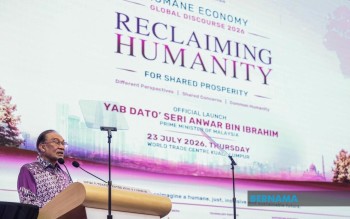
Prime Minister Datuk Seri Anwar Ibrahim has signalled that Malaysia's budget-setting machinery will shift into high gear next month, with preparation work on Budget 2027 commencing in August ahead of its formal presentation to Parliament in early October. Speaking in his dual capacity as Finance Minister, Anwar outlined an approach to the nation's largest annual fiscal exercise that departs from conventional metrics of economic success, instead positioning the budget as a tool for delivering concrete improvements in how ordinary Malaysians experience daily life.
The timing announcement comes as the government enters the latter half of its five-year term, a period when fiscal announcements carry particular weight in shaping public perception of ministerial stewardship. By beginning formulation two months before tabling, the administration is signalling a methodical approach to what will be a crucial spending blueprint for an election year. The October tabling date aligns with Malaysia's established parliamentary calendar and provides sufficient lead time for implementation by the fiscal year beginning January 2027.
At the heart of Anwar's articulation of Budget 2027's philosophy lies a fundamental reorisal of how economic performance should be measured and judged. Rather than celebrating increases in gross domestic product or expansion of the money supply as ends in themselves, he positioned these metrics as mere instruments serving a broader social purpose. This rhetorical shift echoes emerging global discourse about moving beyond GDP-centric development models, a debate gaining traction among policymakers navigating post-pandemic economies grappling with inequality and social fragmentation.
The Prime Minister's insistence that economic activity must translate into tangible improvements in living standards represents a pointed critique of growth that concentrates wealth or fails to reach lower and middle-income households. For Malaysian readers accustomed to decades of development messaging centred on national economic expansion, this reframing carries implications for how future budgets might be structured and evaluated. It suggests potential shifts in policy prioritization, from infrastructure megaprojects to programmes addressing wages, employment quality, and household financial security.
Anwar's emphasis on dignity, security and purpose as economic objectives rather than mere byproducts marks a departure into territory often labelled the "humane economy"—a concept gaining currency among economists and development thinkers concerned that traditional growth metrics obscure suffering and marginalisation. His remarks, delivered at the Humane Economy Global Discourse 2026 conference held in Kuala Lumpur, positioned Malaysia as a participant in this emerging intellectual movement while simultaneously signalling the government's intent to embed such thinking into the nation's spending priorities.
The articulation that growth's value should hinge on whether it widens or narrows opportunity speaks directly to a concern animating political discourse across Southeast Asia: the perception that economic expansion has failed to reach working families, that wage stagnation persists despite national prosperity, and that social mobility has calcified. For Malaysian households watching real wages struggle against inflation and housing affordability worsen despite economic growth, such language carries resonance. Budget 2027 will be closely watched to determine whether rhetoric translates into resource allocation.
Anwar's insistence that families and communities must be strengthened rather than left vulnerable acknowledges growing social fragmentation and the erosion of traditional support structures, trends accelerated by digital disruption and the pandemic's lingering effects. This concern extends across income levels—middle-class Malaysians worry about precarity and retirement security, while lower-income groups face compounding pressures on household budgets. Whether Budget 2027 will be structured to address these anxieties through targeted transfers, wage support, or other mechanisms remains to be determined during the formulation process beginning next month.
The Prime Minister's framing explicitly encompasses four major policy pillars—semiconductor strategy, energy transition, digital transformation, and broader economic policy—as domains where "moral purpose" must guide decision-making. This language signals that Budget 2027 will attempt to align industrial policy with social outcomes, a notable commitment given that such policies traditionally emphasise competitiveness and export prowess with less regard for distributional effects. The semiconductor sector, crucial to Malaysia's manufacturing base, and energy transition, critical for environmental stability and long-term costs, both carry profound implications for employment, regional development, and household budgets.
Anwar's emphasis on meaningful work and fair wages addresses a structural challenge within the Malaysian economy: many jobs created in recent years offer limited advancement potential or social protection. The distinction he drew between human beings as partners in development versus mere instruments of production echoes labour movement concerns about automation, casualization, and the squeeze on worker bargaining power. Budget 2027 instruments addressing skills development, wage floors, and employment transitions may reflect these preoccupations.
The commitment that prosperity should manifest in affordable housing and accessible healthcare directly acknowledges two policy domains where Malaysian households report acute dissatisfaction. Property prices in major urban centres have spiralled beyond reach for many young workers, while healthcare costs—though lower than in developed nations—consume substantial shares of working-class budgets. These areas have featured prominently in political discourse and represent areas where budget choices carry immediate household impact and electoral significance.
Sustainability language in Anwar's remarks—specifically the invocation of not burdening future generations with environmental and financial costs—carries particular weight for a nation confronting climate risks and managing sovereign debt. This framing suggests Budget 2027 may incorporate environmental costing mechanisms or climate-resilience investments that go beyond conventional green development rhetoric to substantive fiscal allocations. For a region increasingly vulnerable to climate shocks, such commitment carries material importance.
The formulation process beginning in August will occur against a backdrop of competing priorities: maintaining growth amid global economic headwinds, managing inflation's impact on household budgets, investing in future competitiveness, and addressing immediate social pressures. How these tensions resolve during the budget-building process will reveal the seriousness with which the government intends to operationalise Anwar's "humane economy" framework. The October tabling will thus be scrutinised not merely for aggregate spending levels but for granular choices reflecting whether stated philosophical commitments have translated into budgetary reality.

