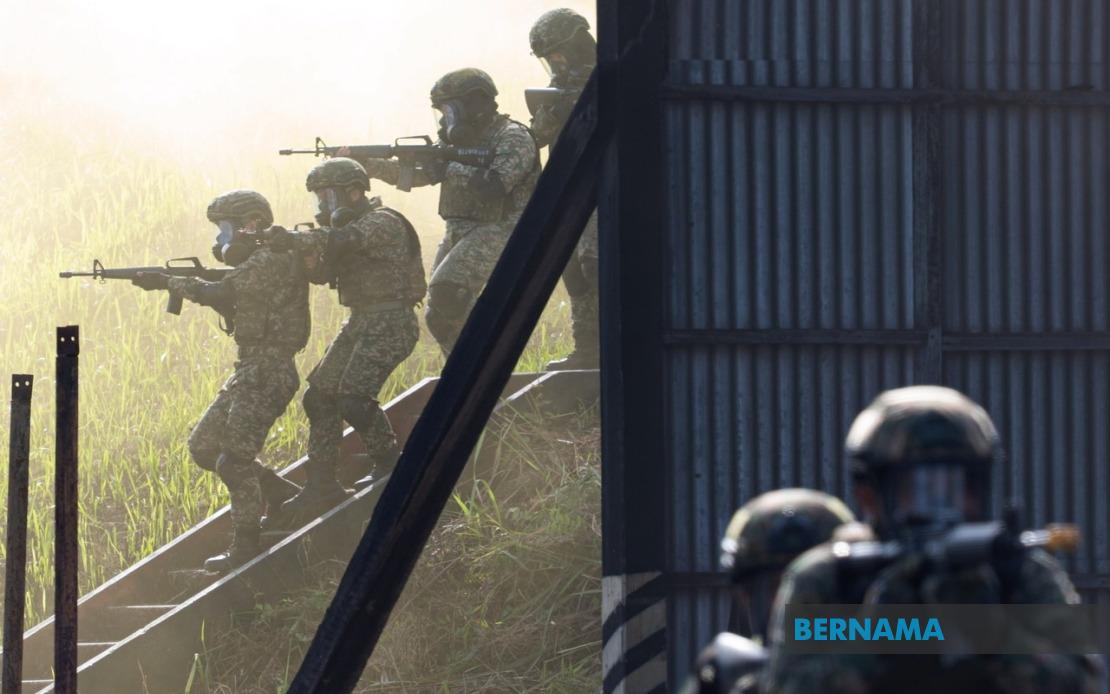
Prime Minister Datuk Seri Anwar Ibrahim has committed to seeking a substantial increase in defence allocation for Budget 2027, signalling the government's determination to maintain robust military preparedness and elevate standards across the Malaysian Armed Forces. Speaking at an event in Melaka on August 7, Anwar, who also holds the Finance portfolio, underscored that enhanced investment in defence infrastructure and personnel is essential to protect the nation's most cherished asset—sustained peace and stability.
The Prime Minister's emphasis on proactive military preparedness reflects a strategic shift in how Malaysia approaches national security planning. Anwar articulated a forward-looking doctrine, noting that defence readiness cannot be reactive. Instead of waiting for threats to materialise or for another nation to escalate tensions, the government must invest consistently in capabilities that deter conflict and protect sovereignty. This perspective is particularly relevant for Southeast Asia, where maritime disputes, evolving security dynamics, and shifting geopolitical alignments have created an unpredictable strategic environment.
Central to the proposed spending increase is a comprehensive upgrade to personnel welfare and military infrastructure. The additional funds would address long-standing gaps in servicemen's living conditions through improved barracks, construction of a modern medical facility, and maintenance of essential amenities including water supply systems. These investments acknowledge that military effectiveness depends not only on hardware but on the quality of life and morale of those in uniform—a recognition that has historically been underemphasised in Malaysian defence budgeting.
Anwar emphasised that procurement processes must adhere to principles of transparency and integrity, explicitly rejecting practices involving profiteering or inflated commissions paid to intermediaries. This pledge carries particular weight given persistent concerns about defence procurement corruption in the region. By tying increased allocation to stringent governance standards, the government signals its intent to extract genuine operational value from every ringgit spent, rather than allowing defence budgets to become vehicles for rent-seeking or political patronage.
The timing of this announcement aligns with Malaysia's improving macroeconomic position. The Prime Minister cited recent gains—a stronger ringgit, increased foreign direct investment inflows, and controlled inflation—as factors that create fiscal space for elevated defence spending. Over the preceding three years, the MADANI Government has already expanded the Defence Ministry's budget by more than 35 percent, a substantial commitment that Anwar acknowledged has not received sufficient public recognition. This trajectory suggests the government views defence investment as integral to its medium-term development strategy rather than as a discretionary expense to be trimmed during fiscal pressures.
The announcement reflects broader challenges facing Malaysia's security posture. The Malaysian Armed Forces confront multiple demands: safeguarding territorial waters, managing maritime security in strategically vital sea lanes, countering transnational threats, and maintaining capability parity with regional neighbours. Ageing equipment, infrastructure deficits, and personnel retention challenges have constrained operational effectiveness. A dedicated increase in defence allocation addresses these systemic constraints, though the actual delivery of promised capabilities will depend on disciplined execution and effective project management.
Beyond headline military spending, Anwar also directed immediate support to armed forces welfare programmes. The government allocated RM147,000 to the Armed Forces Family Welfare Association and committed RM1 million toward maintaining religious facilities—mosques and prayer halls—across four military establishments in Melaka. These allocations, though modest in absolute terms, acknowledge that military personnel and their families require holistic support encompassing spiritual and social dimensions, reflecting Malaysia's multicultural security forces and the integration of religious observance within military life.
The scheduled tabling of Budget 2027 on October 9 will clarify the precise magnitude of the defence allocation increase and its distribution across personnel, operations, and capital expenditure. Parliamentary scrutiny of defence budgets remains inconsistent, with limited public debate regarding procurement priorities, strategic rationale, or long-term force development planning. The coming budget presentation offers an opportunity for more substantive discussion of Malaysia's security strategy, force modernisation, and the alignment between stated defence requirements and available resources.
Anwar's pledge must also be contextualised within Southeast Asian defence trends. Several regional neighbours—including Indonesia, the Philippines, and Vietnam—have been gradually increasing defence spending, driven by similar concerns about maritime security and regional stability. Malaysia's commitment to enhanced defence investment positions the country within this broader regional trajectory, though questions persist about whether spending levels remain adequate relative to evolving threats and the capabilities of potential adversaries. The transparency principle Anwar articulated becomes crucial as Malaysia competes for scarce defence resources against other pressing development priorities including healthcare, education, and infrastructure.
The presence of senior military and government figures at the Melaka announcement—including Defence Ministry representatives, the Chief Secretary to the Government, and the Army chief—reflected the cross-government consensus on defence readiness. This institutional alignment suggests the commitment extends beyond rhetorical commitment and reflects considered strategic planning within the defence establishment. However, converting budget pledges into operational capability improvements requires sustained political will, disciplined implementation, and protection from bureaucratic fragmentation.
Looking ahead, the success of this defence investment initiative will be measured not merely by budgetary allocations but by tangible improvements in force readiness, personnel welfare outcomes, and the elimination of procurement irregularities. For Malaysian citizens and the broader region, the commitment signals a government taking national security seriously and willing to commit resources accordingly. Yet the broader challenge remains ensuring that increased defence spending translates into genuine security enhancements rather than perpetuating inefficiencies or consolidating institutional interests within the military-industrial complex.

