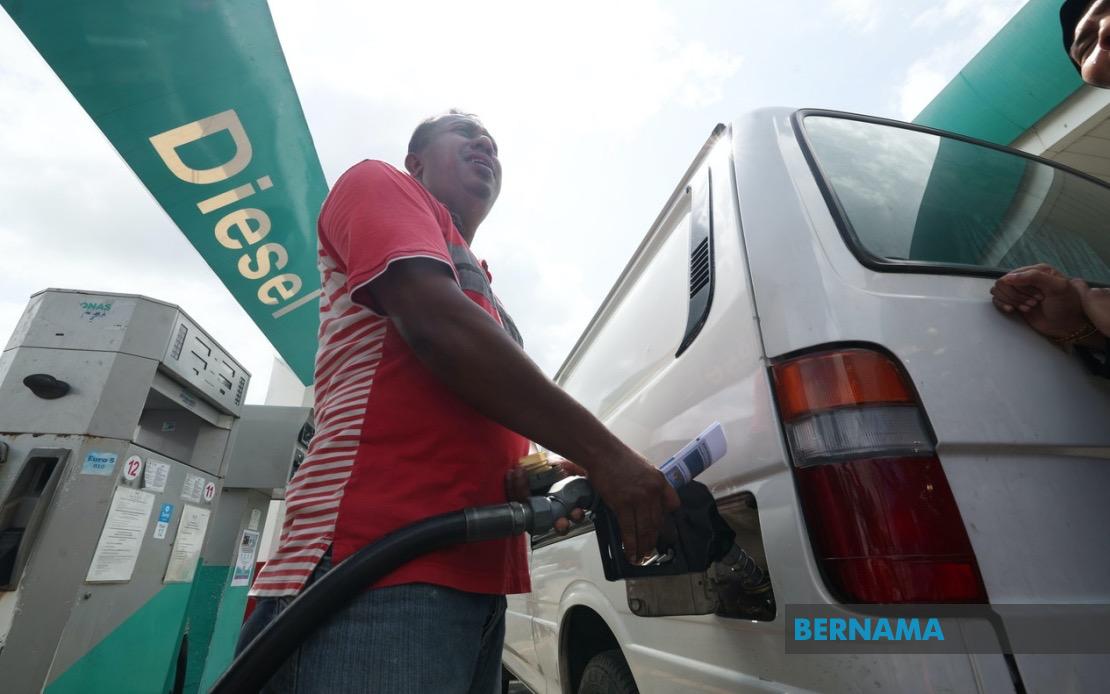
Malaysia's government will introduce a fresh round of fuel subsidy reform next month, capping the price of diesel available to qualifying Malaysian citizens at RM2.10 per litre starting in July 2026. Prime Minister Datuk Seri Anwar Ibrahim made the announcement while presiding over a ceremonial cheque handover for the conversion of Bintulu Port from federal to state management in Sarawak. The move marks another step in the MADANI government's ongoing effort to balance fiscal sustainability with consumer relief at the pump.
The new diesel pricing structure will employ a verification mechanism similar to the existing BUDI MADANI RON95 programme, which uses MyKad identification to ensure subsidies reach only eligible Malaysian residents. This targeted approach represents a deliberate shift away from blanket fuel subsidies that benefit all purchasers regardless of income or citizenship status. By restricting access through digital identity verification, the government aims to reduce fiscal leakage and concentrate relief spending on domestic consumers most dependent on cheaper fuel.
Finance Minister II Datuk Seri Amir Hamzah Azizan was scheduled to provide detailed implementation specifics to media representatives in Kuala Lumpur immediately following the Prime Minister's announcement. These clarifications would typically address practical questions surrounding the rollout timeline, the technical infrastructure required to verify MyKad holders at fuel stations, and potential transition arrangements for existing subsidy recipients. The sequential announcement approach suggests the government had prepared comprehensive policy documentation ahead of the public unveiling.
The RM2.10 price point sits between Malaysia's current market dynamics and historical subsidy levels. Recent global crude prices and regional diesel costs would typically drive retail prices considerably higher without government intervention, making the announced cap a meaningful discount for eligible buyers. However, the specific percentage subsidy being extended remains undisclosed until the Finance Minister's media briefing, though the figure likely reflects careful calculation of fiscal impact against household purchasing power.
Diesel subsidy reform carries particular significance for Malaysia's economic planning. The nation has spent considerable resources on fuel price controls, straining budget allocations that might otherwise support infrastructure, healthcare, or education spending. By narrowing the beneficiary pool through MyKad verification, policymakers can theoretically preserve subsidy benefits for citizens genuinely dependent on affordable fuel while recovering costs from commercial users, freight operators, and higher-income consumers who can absorb market prices.
The BUDI95 RON95 programme, which serves as the template for this diesel initiative, has operated successfully since its introduction, demonstrating that MyKad-based verification systems can function effectively across Malaysia's geographically dispersed fuel retail network. Petrol station operators have become accustomed to the verification process, and most automated systems now incorporate the technology. Rolling out an equivalent system for diesel should therefore face fewer technical hurdles than the original BUDI95 implementation encountered.
Commercial and logistics sectors will warrant close monitoring following the July rollout. Heavy vehicles, agricultural equipment, and industrial users who rely heavily on diesel may face different subsidy eligibility criteria than consumer vehicles, potentially creating a two-tier pricing structure. Unclear policy guidance on commercial diesel access could disrupt supply chains or create competitive distortions between businesses, so the Finance Minister's detailed briefing will likely address these sectoral considerations comprehensively.
Regionally, Malaysia's subsidy reform reflects broader Southeast Asian trends toward more fiscally disciplined fuel pricing mechanisms. Indonesia, Thailand, and the Philippines have all experimented with targeted subsidy schemes in recent years, with mixed results regarding implementation and political acceptance. Malaysia's approach, refined through the BUDI95 experience, may offer valuable lessons for neighbouring governments balancing electoral pressures against fiscal discipline.
The announcement arrives amid ongoing discussion about Malaysia's medium-term fiscal consolidation goals. Reducing the overall subsidy bill while maintaining consumer purchasing power through targeted mechanisms aligns with the government's stated commitment to sustainable public finances. The July 2026 implementation date provides sufficient lead time for fuel station infrastructure upgrades and operator training, suggesting a reasoned rollout schedule rather than rushed policy execution.
Consumers and industry stakeholders now await the Finance Minister's detailed exposition to understand critical specifics: the exact subsidy quantum, eligibility criteria beyond MyKad verification, anticipated fuel station implementation timelines, and any carve-outs for commercial or institutional users. These clarifications will determine how significantly the policy affects household budgets across different income segments and whether particular industries face unforeseen complications. The policy's ultimate success will hinge not merely on the announced price cap but on execution quality and stakeholder adaptation across Malaysia's diverse fuel retail landscape.

