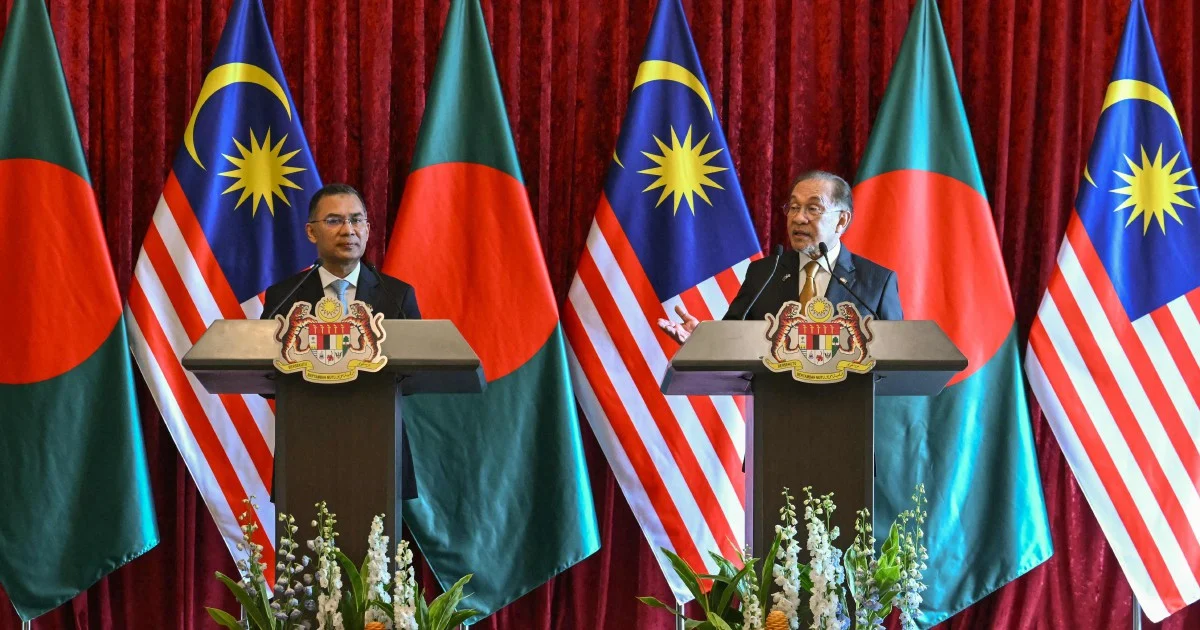
Prime Minister Datuk Seri Anwar Ibrahim has vowed to eradicate the mistreatment and exploitation of Bangladeshi migrant workers in Malaysia, underscoring their indispensable role in sustaining the nation's economic output. His commitment signals a shift toward more rigorous enforcement and protection mechanisms for a workforce that comprises a substantial portion of Malaysia's labour force, particularly in manufacturing, construction, and service sectors.
Anwar's declaration carries significant weight given Malaysia's reliance on Bangladeshi nationals to fill labour shortages across multiple industries. The Prime Minister framed the issue not merely as a humanitarian concern but as an economic imperative, arguing that safeguarding these workers directly strengthens Malaysia's competitive position in regional and global markets. This framing reflects growing international pressure on Malaysia to improve working conditions and uphold labour standards, particularly following high-profile cases of wage theft, unsafe conditions, and contract violations that have attracted scrutiny from international labour organizations and trade partners.
The prevalence of worker exploitation has long been documented through reports from human rights groups, labour advocates, and international organizations. Issues ranging from withheld wages and excessive working hours to inadequate housing and limited access to healthcare have been recurrent complaints. Bangladeshi workers, who often migrate through intermediaries and face language barriers, have proven particularly vulnerable to these abuses. The situation has created reputational challenges for Malaysia on the global stage, potentially affecting trade relationships and investment decisions by countries concerned with labour practices.
Anwar's pledge reflects broader efforts within the Malaysian government to address labour market governance. Strengthening protections would require coordinated action across multiple agencies, including the Ministry of Human Resources, the Immigration Department, and law enforcement bodies responsible for investigating labour violations. Enhanced oversight mechanisms could include surprise inspections of workplaces, stronger penalties for employers who exploit workers, and improved complaint channels that allow migrant workers to report abuses without fear of retaliation or deportation.
The economic dimensions of this commitment warrant attention. Bangladeshi migrants contribute substantially to Malaysia's gross domestic product through their productivity in labour-intensive sectors. Improving their working conditions and ensuring fair wages could paradoxically boost economic efficiency by reducing worker turnover, increasing productivity, and enhancing workplace safety. Companies that maintain ethical labour practices often experience lower operational disruptions and improved international reputation, benefiting Malaysia's image as a responsible employer in the region.
Regional dynamics also inform this policy direction. Southeast Asian nations increasingly compete for foreign direct investment and trade partnerships, with labour standards becoming a differentiating factor for multinational corporations and responsible investors. Countries perceived as tolerating worker exploitation face growing pressure from consumers and shareholders demanding ethical supply chains. By strengthening protections for Bangladeshi workers, Malaysia positions itself as a more attractive investment destination aligned with international labour norms and corporate social responsibility expectations.
The implementation of stronger protections will likely require legislative reforms, increased budgetary allocation for labour enforcement agencies, and capacity-building for inspectors and complaint officers. Training programs could help officials identify exploitation patterns and understand the specific vulnerabilities of migrant workers navigating unfamiliar legal systems and cultural contexts. Additionally, bilateral coordination with the Bangladeshi government could facilitate information sharing and improve mechanisms for addressing worker grievances that span both countries.
Employer compliance represents another crucial dimension. While some Malaysian companies maintain exemplary labour practices, others have flouted regulations with minimal consequences. Establishing a credible enforcement framework with meaningful penalties—including substantial fines, temporary operating license suspensions, and criminal prosecution for serious violations—would create genuine disincentives for exploitation. Public naming and shaming mechanisms, transparency registries identifying companies with poor compliance records, and rewarding firms with strong labour practices could leverage market forces to drive improvements.
Digital innovation offers potential solutions to longstanding problems. Mobile applications enabling workers to report abuses anonymously, blockchain-based wage payment systems ensuring timely salary transfers, and digital identity verification reducing reliance on intermediaries could modernize worker protections. Such technological approaches might particularly benefit Bangladeshi workers who face communication challenges and limited formal documentation of employment terms.
The broader context includes Malaysia's aspirations within the international community. As chair of the Association of Southeast Asian Nations and a developing economy, Malaysia's labour practices receive scrutiny from developed nations and international bodies. Demonstrating tangible improvements in worker protections enhances the nation's credibility in advocating for other development priorities and strengthens diplomatic relationships with both Bangladesh and Western trading partners who increasingly condition trade agreements on labour standard compliance.
Anwar's commitment must now translate into concrete policy changes measurable through enforcement statistics, reduced complaint rates, and improved worker welfare indicators. Success requires sustained political will, adequate resourcing, and cooperation from employers who must recognize that fair labour practices benefit both workers and the broader economy. The government's willingness to prioritize this issue signals recognition that Malaysia's continued economic competitiveness depends not only on access to cheap labour but on building a sustainable, ethical, and productive workforce that the nation can be proud to employ.

