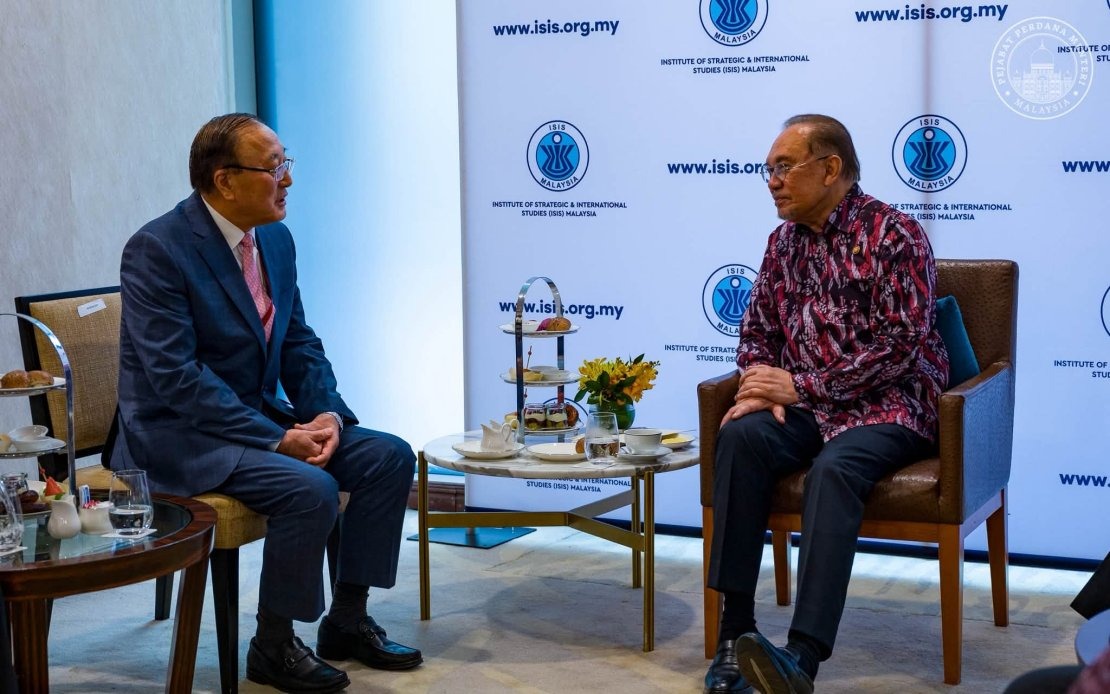
Prime Minister Datuk Seri Anwar Ibrahim has committed Malaysia to deepening its partnership with the Boao Forum for Asia (BFA) across a spectrum of critical development areas, signalling the government's intent to position the nation as a central player in regional economic cooperation. The announcement came during a visit by BFA secretary-general Zhang Jun to Kuala Lumpur on July 2, a meeting that underscored the growing importance both sides place on multilateral engagement in an increasingly volatile global environment.
The scope of Malaysia's proposed collaboration with BFA encompasses eight key domains that reflect contemporary development priorities: trade and investment facilitation, digital infrastructure advancement, artificial intelligence deployment, energy transition strategies, food security initiatives, educational excellence, and talent development programmes. This comprehensive framework demonstrates a shift towards addressing interconnected challenges that no single nation can tackle in isolation, a particularly relevant consideration for Southeast Asian economies navigating overlapping pressures from geopolitical tensions and economic headwinds.
Anwar, who doubles as Finance Minister, underscored the necessity for closer regional cooperation in his remarks, emphasising that dialogue-based approaches remain the most effective pathway towards stability and shared prosperity. His commentary arrives amid a period of significant turbulence in international relations, with trade tensions, supply chain disruptions, and technological rivalries creating uncertainty for developing economies heavily dependent on external markets and foreign direct investment. Malaysia's pivot towards the BFA reflects a strategic recalibration that seeks to leverage regional platforms for economic protection and growth.
The emphasis on artificial intelligence and digital transformation within the proposed partnership holds particular significance for Malaysia's economic ambitions. As the country seeks to move beyond commodity-dependent growth models, technological capacity-building through forums like BFA offers pathways to skill enhancement and innovation ecosystems. The BFA's track record of facilitating knowledge exchange among Asian economies positions it as a credible partner for translating policy dialogues into implementable programmes.
Energy transition initiatives represent another substantive area of cooperation that carries direct implications for Malaysia's development trajectory. As the nation balances economic growth imperatives with environmental commitments, regional frameworks can accelerate technology transfer, investment pooling, and policy harmonisation around renewable energy and sustainable resource management. The BFA's membership base, which includes major energy producers and consumers, creates unique opportunities for Malaysia to participate in shaping regional energy standards and investment protocols.
Food security cooperation through the BFA platform addresses a vulnerability that resonates across Southeast Asia. As climate variability and population pressures strain agricultural systems throughout the region, collaborative mechanisms for knowledge sharing, technology adoption, and supply chain resilience become increasingly vital. Malaysia's position as both an agricultural exporter and importer gives it particular stakes in regional food systems stability, making participation in BFA-coordinated initiatives strategically sound.
The education and talent development components of the proposed partnership speak to Malaysia's longer-term competitive positioning. By facilitating exchange programmes, academic partnerships, and professional networking opportunities through BFA channels, Malaysia can strengthen its human capital base while positioning itself as an attractive destination for regional talent. This dimension also supports the government's broader vision of developing a knowledge-based economy capable of competing at international standards.
Anwar's stress on inclusiveness and dialogue-based cooperation reflects recognition that regional prosperity depends on maintaining open channels even amid disagreements. The BFA, as a relatively non-aligned platform compared to more geopolitically-aligned organisations, offers Malaysia valuable space for diplomatic engagement without compromising its non-aligned traditions. This positioning proves particularly important as larger powers vie for influence across Asia.
The timing of this enhanced commitment signals Malaysia's strategic intent to remain actively engaged in regional architecture-building rather than retreating into bilateral relationships or smaller groupings. In an environment where ASEAN's consensus-based decision-making sometimes limits its effectiveness, complementary platforms like the BFA provide additional venues for advancing shared interests. For Malaysian policymakers, deepening BFA cooperation represents a calculated hedge against uncertainties in the regional security and economic environment.
The broader implications for Southeast Asia merit attention. If Malaysia's BFA engagement catalyses more substantive regional cooperation on critical issues like energy, food systems, and technological development, it could create positive externalities for neighbouring economies facing similar challenges. Conversely, Malaysia's emphasis on dialogue and inclusiveness within the BFA framework may encourage other ASEAN members to similarly leverage the forum for addressing cross-border challenges that bilateral channels cannot effectively resolve.
Zhang Jun's visit to Malaysia and the resulting announcement also reflect the BFA's expanding influence as a coordination platform for Asian economic and political interests. The forum has evolved from a venue for business networking into a serious space for policy coordination and strategic dialogue, a trajectory that benefits Malaysia as a nation seeking greater influence in regional affairs. The emphasis on strengthening the region's resilience, as Anwar articulated, acknowledges that no individual economy can withstand contemporary pressures alone, necessitating frameworks that enable collective action while respecting national interests.

