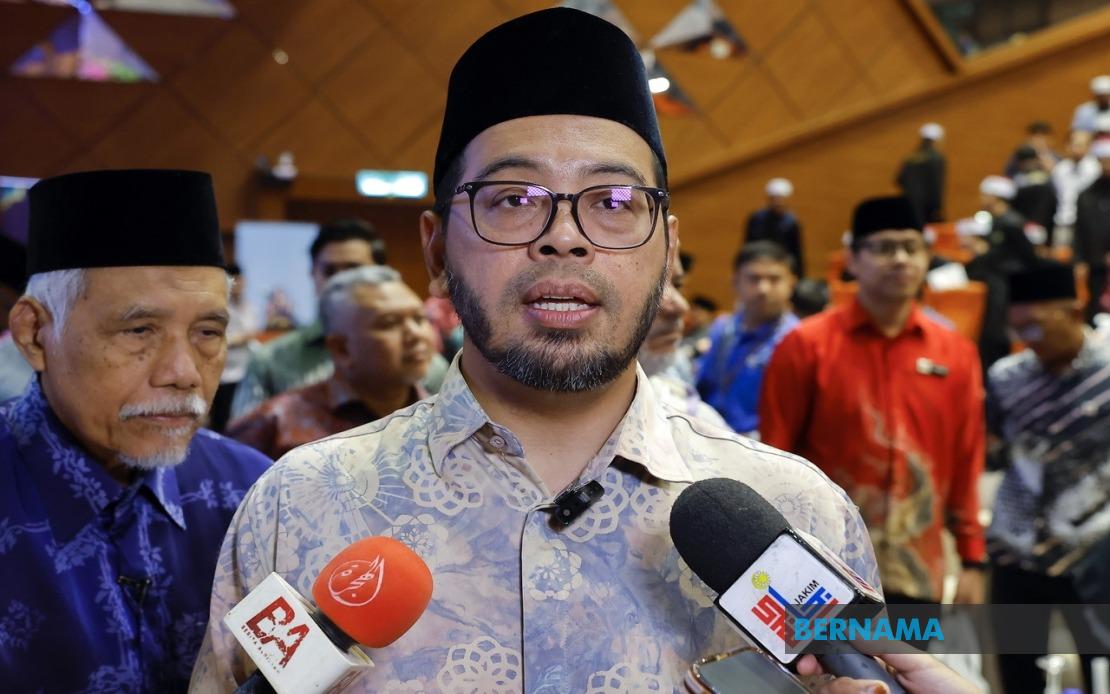
The Prime Minister's Department (Religious Affairs) has pledged to deepen its engagement with young Malaysians in response to a significant royal address delivered by the Sultan of Perak, Sultan Nazrin Shah, who emphasised the crucial role religious leaders must play in countering extremism and digital misinformation. Minister in the Prime Minister's Department (Religious Affairs) Dr Zulkifli Hasan made this commitment during an official address at the National and International Tokoh Ma'al Hijrah Premier Lecture 1448/2026 in Putrajaya on June 18, signalling that the government is elevating youth-focused religious programming as a strategic priority.
Sultan Nazrin Shah's intervention into this policy space represents a significant moment of royal guidance on contemporary challenges facing the nation's younger generation. Speaking last Friday, the Perak monarch articulated a comprehensive vision of the threats confronting today's youth, extending well beyond traditional concerns about religious extremism to encompass a broader ecosystem of digital-age vulnerabilities. His Royal Highness identified climate anxiety, geopolitical instability, economic precarity, and the fracturing effects of polarised online discourse as interconnected challenges that demand urgent attention from religious institutions and moral educators.
The Sultan's address reflects a recognition that religious leadership in Malaysia occupies a unique position to influence young people's worldviews and decision-making processes. Rather than framing religious guidance as peripheral to contemporary concerns, Sultan Nazrin Shah positioned faith-based leaders as essential participants in addressing specifically digital-era challenges. This framing carries particular resonance in Southeast Asia, where Malaysia has increasingly grappled with the spread of radical ideologies through encrypted messaging platforms, social media algorithms, and online echo chambers that traditional regulatory frameworks struggle to penetrate.
Dr Zulkifli Hasan's response underscores the government's determination to operationalise the Sultan's vision into concrete programmes and measurable initiatives. The minister indicated that the department would systematically integrate the royal address's messages into its existing portfolio of youth-focused activities, positioning religious engagement as a preventative mechanism against radicalisation pathways. This approach tacitly acknowledges that conventional top-down counter-extremism messaging often fails to resonate with digitally native audiences, who are more likely to trust peer networks and moral authorities perceived as authentically engaged with their lived experiences.
The timing of this commitment carries particular significance given the documented rise of online extremist recruitment campaigns targeting Southeast Asian youth. Malaysia, as the region's largest English-speaking Muslim-majority nation and a major hub for digital services and technology adoption, faces distinctive vulnerabilities to transnational extremist networks that exploit platform algorithms and exploit grievances around Islamophobia, geopolitical conflicts, and perceived Western hypocrisy. The department's renewed focus on youth engagement represents a tacit acknowledgement that existing counter-narrative programmes and digital literacy initiatives require substantial expansion and recalibration.
Sultan Nazrin Shah's identification of declining institutional trust as a key vulnerability for young people carries profound implications for how religious leaders should approach engagement. Young Malaysians increasingly exhibit scepticism toward traditional authority structures, whether governmental, educational, or religious, particularly when they perceive these institutions as disconnected from digital realities or insensitive to generational concerns. The Sultan's call for more active religious engagement thus implicitly requires these leaders to demonstrate genuine investment in understanding youth perspectives rather than simply broadcasting prescriptive messaging.
The misinformation dimension of the Sultan's address speaks directly to challenges that have intensified dramatically since the COVID-19 pandemic exposed how rapidly false health information can circulate through Malaysian social networks. The government's religious affairs apparatus recognises that combating medical misinformation, political disinformation, and malicious rumours requires credible voices with genuine moral authority among target demographics. Religious leaders who maintain authentic connections with young people are uniquely positioned to provide contextualised fact-checking and critical media literacy guidance that feels less patronising than government-issued advisories.
For Malaysian policymakers and religious educators, the challenge now involves translating this royal directive into sustainable institutional change. Existing approaches to youth religious engagement often emphasise moral instruction and ritual participation without adequate attention to young people's economic anxieties, climate concerns, or intellectual curiosity about navigating contradictions between religious teachings and observed social realities. Programmes developed in response to Sultan Nazrin Shah's address will likely require expanded funding, digital competency training for religious educators, and new collaborative mechanisms connecting traditional religious institutions with civil society organisations, technology companies, and mental health providers.
The department's commitment to mainstream the Sultan's message signals that youth engagement will receive elevated priority within Malaysia's religious affairs portfolio. This repositioning potentially affects resource allocation, personnel training initiatives, and inter-agency coordination mechanisms. By explicitly adopting the royal address as a guiding framework, the department establishes measurable benchmarks against which future performance can be evaluated, creating accountability mechanisms that extend beyond typical government programme cycles.
Beyond immediate policy implications, Sultan Nazrin Shah's intervention reflects broader concerns within Malaysia's leadership class about generational disengagement from both religious institutions and civic participation more broadly. The Sultan's emphasis on young people's multidimensional vulnerabilities—economic, environmental, psychological, and spiritual—acknowledges that counter-extremism work cannot succeed in isolation from holistic youth development strategies addressing educational opportunities, mental health support, and economic mobility.
For Malaysia's regional position within Southeast Asia, the government's response to Sultan Nazrin Shah's address may establish important precedents for how Muslim-majority nations approach religious leadership's role in digital-era governance. As Indonesia, Brunei, and other regional neighbours contend with similar challenges around youth radicalisation and online misinformation, Malaysian initiatives developed in response to this royal call could inform broader regional cooperation on religious engagement strategies.
The coming months will reveal how thoroughly the Prime Minister's Department (Religious Affairs) implements this commitment. Concrete indicators will include programme launch announcements, budget allocations, training initiatives for religious educators, and measurable engagement metrics with youth populations. The Sultan's address has effectively positioned youth engagement on extremism and misinformation as a religious leadership imperative rather than a peripheral security concern, fundamentally reframing how Malaysia approaches one of its most significant generational challenges.