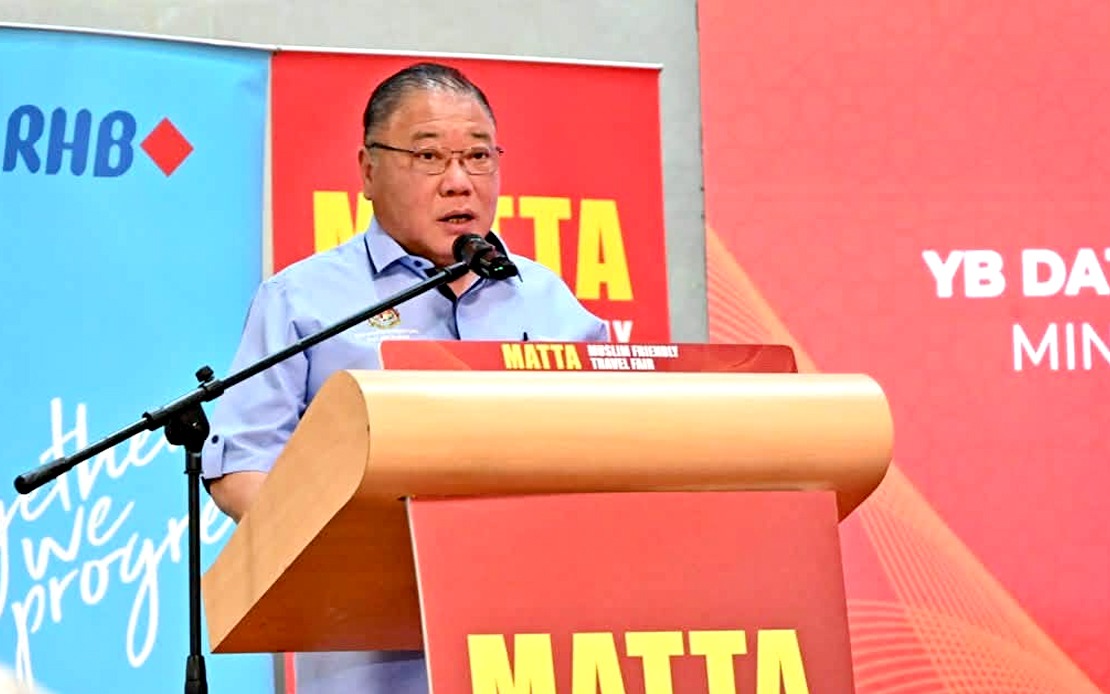
Malaysia is moving to regulate the umrah travel industry through a mandatory minimum pricing framework designed to protect pilgrims from dangerously cheap packages that compromise service quality. Tourism, Arts and Culture Minister Datuk Seri Tiong King Sing unveiled the plan at the Malaysian Association of Tour and Travel Agents (MATTA) Muslim Friendly Travel Fair 2026, signalling government determination to address longstanding concerns about predatory pricing practices that have exposed vulnerable worshippers to substandard accommodation, unsafe transportation, and incomplete religious experiences.
The regulatory mechanism will require all umrah operators to establish baseline prices below which packages cannot be offered, while simultaneously mandating transparent disclosure of all services included within each price tier. This dual approach directly targets the race-to-the-bottom dynamic that has characterised Malaysia's umrah sector, where operators have historically undercut competitors with artificially low quotations that become unsustainable once pilgrims arrive in the Middle East. Tiong emphasised that operators may continue segmenting their offerings into tiered categories—Premium, Gold, Silver, and Platinum—but each classification must respect the prescribed minimum threshold, preventing the current situation where budget packages remove basic necessities to reach unviable price points.
The initiative addresses a persistent problem affecting Malaysian Muslim travellers. Numerous cases have documented pilgrims stranded abroad, unable to return home when unscrupulous operators misallocate funds or provide non-existent services. The government's concern extends beyond financial harm; pilgrims who cannot complete their umrah due to poor logistics and inadequate accommodation face profound spiritual and emotional distress. By establishing service standards linked to pricing, the policy aims to eliminate scenarios where people sacrifice substantial savings only to find their religious objectives thwarted by negligent operators cutting corners on essential facilities.
The government has coordinated this regulatory approach across multiple agencies, including Tabung Haji and the Minister in the Prime Minister's Department (Religious Affairs), demonstrating the cross-sectoral seriousness applied to the issue. This collaborative framework suggests the standards will incorporate both tourism sector expertise and Islamic affairs perspectives, creating comprehensive guidelines that address practical logistics alongside religious authenticity. The involvement of Tabung Haji—Malaysia's pilgrim fund board with decades of hajj and umrah experience—brings institutional knowledge about what constitutes sustainable, quality-assured religious travel packages.
Beyond immediate consumer protection, Malaysia's intervention reflects strategic economic positioning in the competitive Muslim-friendly tourism sector. Tiong highlighted that rival destinations are aggressively developing their appeal to Muslim travellers. Macau's expansion of halal dining, prayer facilities, and Muslim-centric hospitality demonstrates how traditional non-Muslim destinations recognise the commercial opportunity within this demographic. Southeast Asian nations including Indonesia, Thailand, and Singapore are simultaneously enhancing their Muslim-friendly infrastructure, gradually eroding Malaysia's historic competitive advantages in this niche market.
Malaysia's traditional positioning as the preferred Muslim-friendly destination has relied partly on cultural familiarity and Islamic governance structures. However, this soft advantage weakens if service quality deteriorates through unregulated cost-cutting. Establishing minimum standards paradoxically strengthens Malaysia's market position by ensuring that budget-conscious pilgrims choose Malaysia not despite competitive pricing but because pricing reflects genuine quality assurance. Premium market positioning, rather than race-to-the-bottom commoditisation, protects Malaysia's brand equity among Muslim travellers willing to pay for reliability.
The regulatory framework also addresses a gap between Malaysia's aspirations in Muslim-Friendly Tourism and Hospitality (MFTH) and practical implementation. While government policy emphasises Malaysia as a premier destination for Muslim tourists, the umrah sector's reputation has been tarnished by numerous operator failures. A coherent minimum pricing system signals to international travellers that Malaysia's tourism authorities exercise meaningful oversight, distinguishing regulated Malaysian packages from less scrupulous operators in other regional competitors.
Implementation will require careful calibration. Setting minimum prices too high risks driving cost-conscious pilgrims—a substantial demographic segment—toward cheaper alternatives in competing destinations, potentially reducing overall market share despite improved quality perception. Conversely, floors set too low fail to eliminate predatory pricing practices. The government's consultation process with industry stakeholders, travel associations, and religious affairs bodies will be critical in identifying appropriate price thresholds that balance consumer protection with market competitiveness.
Operators will also need clear guidance on service standards corresponding to each price category. Ambiguity about what constitutes acceptable accommodation, transportation quality, meal provisions, and guide services could create enforcement challenges. The regulatory framework must establish measurable benchmarks—room standards, staff-to-pilgrim ratios, transportation specifications—preventing operators from technically complying with minimum prices while circumventing spirit of service quality improvements.
For Malaysian pilgrims, the policy represents recognition that religious travel deserves consumer protection equivalent to other major expenditures. Umrah packages often represent significant family savings, particularly among middle and lower-income Muslims. The minimum pricing framework acknowledges that cost-cutting in this sector carries heightened human and spiritual consequences compared to standard tourism. Protecting pilgrims from financial deception and service failure reflects both consumer welfare and religious values emphasising honest commerce and fiduciary responsibility.
The regulatory initiative also creates opportunities for operators demonstrating genuine commitment to quality differentiation. Transparent service standards allow premium operators to build competitive advantage through superior offerings, rather than competing solely on price. This may incentivise investment in better accommodation partnerships, more experienced guides, and enhanced support services—innovations difficult to achieve under previous cost-competitive pressure.
Regional implications extend beyond Malaysia. If the framework succeeds in elevating service standards whilst maintaining reasonable accessibility, other Muslim-majority nations managing significant pilgrim flows may adopt similar regulatory approaches. Conversely, if implementation proves burdensome or ineffective, regional competitors may use this as a marketing advantage, positioning themselves as less regulated and therefore cheaper alternatives. Malaysia's approach thus carries demonstration effects for the broader Southeast Asian Muslim tourism market.
The government's intervention signals that protecting pilgrims from exploitation has become a policy priority matching broader religious affairs governance. This reflects evolving understanding that commercial activity within religious contexts requires heightened scrutiny and oversight. As umrah travel becomes increasingly commercialised across Southeast Asia, establishing baseline protections and transparency requirements may represent the beginning of more comprehensive religious tourism regulation, potentially extending to other pilgrimage and religious travel sectors.

