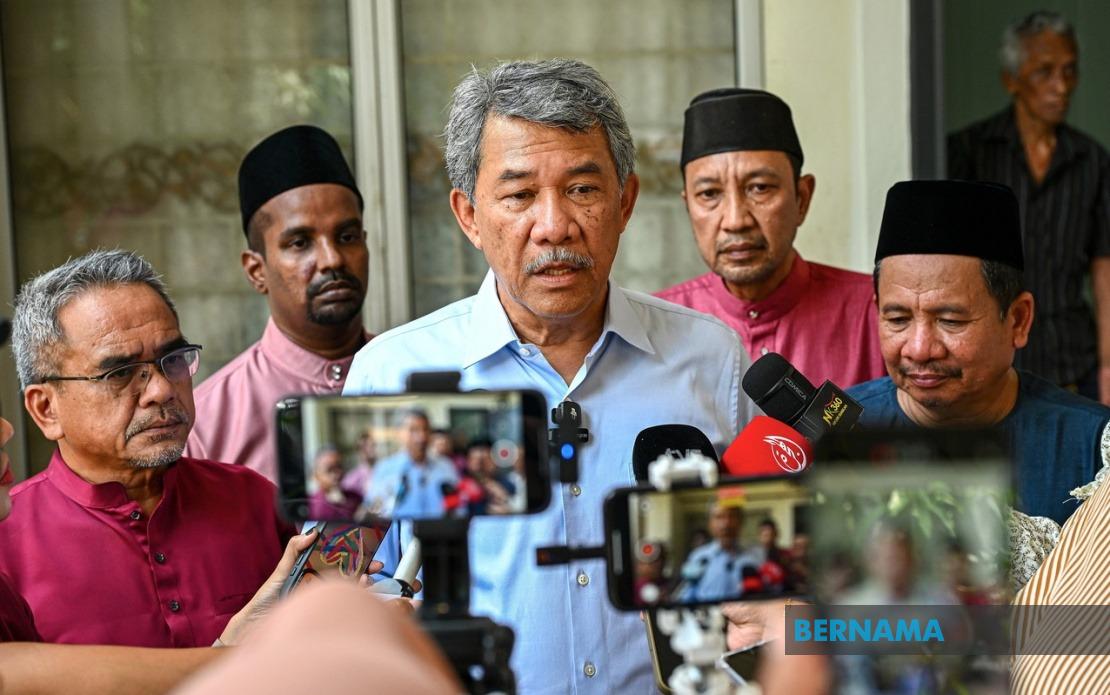
Malaysia intends to place refugee welfare at the centre of any repatriation process involving Myanmar nationals currently residing in the country, according to Foreign Minister Datuk Seri Mohamad Hasan. Speaking in Seremban on Wednesday, he outlined an approach that balances humanitarian obligations with diplomatic relations, stressing that no person would be sent back without thorough verification of their circumstances and assurance of their protection upon arrival.
The cooperation framework linking the United Nations High Commissioner for Refugees and Malaysia's Home Ministry will form the backbone of this vetting process. Mohamad Hasan underscored that such institutional collaboration is essential for confirming each refugee's legal status while simultaneously gauging the security environment they would encounter in Myanmar. This two-pronged assessment reflects Malaysia's recognition that the situation in Myanmar remains fluid, with civilians facing risks from ongoing conflict and political instability that persist despite international diplomatic efforts.
Directives have already been issued to the Secretary-General of the Ministry of Foreign Affairs to establish channels with the Myanmar government through its embassy in Malaysia. These conversations aim to facilitate the gradual return of verified individuals, avoiding the rush-to-process approach that characterised earlier discussions. Mohamad Hasan made clear that Malaysia would not be constrained by arbitrary targets, dismissing suggestions that the country should wait for large cohorts to accumulate before initiating returns.
Reports had circulated that Myanmar's government stood prepared to receive 5,000 of its nationals by sea transport. However, Malaysia's position prioritises incremental repatriation over expedited bulk movements. The Foreign Minister revealed that approximately 1,000 individuals have already been identified and cleared for return, and these persons can begin the repatriation process without waiting for additional numbers to meet a predetermined threshold. This measured approach allows Malaysian authorities to maintain quality control over the process and respond to any complications that emerge during early phases.
The regional dimension of the Myanmar refugee situation has grown increasingly prominent in ASEAN discourse. Mohamad Hasan emphasised that member states view the refugee issue as a collective concern requiring coordinated action rather than isolated national responses. The bloc's approach rests fundamentally on the Five-Point Consensus adopted following the military coup, which continues to serve as the agreed framework for addressing Myanmar's political and humanitarian crisis. Adherence to this consensus represents ASEAN's commitment to principles of dialogue and peaceful resolution.
For Malaysia specifically, the refugee situation carries particular weight. The country hosts one of Southeast Asia's largest Myanmar refugee populations, reflecting its geographic proximity and relative stability compared to other regional alternatives. Managing this population responsibly—neither abandoning vulnerable individuals nor allowing the situation to perpetuate indefinitely—requires nuanced policymaking that considers both humanitarian and strategic dimensions. Mohamad Hasan's statements suggest the government is conscious of these competing pressures.
The emphasis on gradual repatriation reflects international best practice in refugee return operations. Bulk movements have historically created logistical challenges and increased vulnerability to trafficking, coercion, or placement in unsafe conditions. By processing individuals through verified channels and monitoring initial returns, Malaysia can adjust its approach based on real-world outcomes. Should security deteriorate or problems emerge, the system allows for pause or modification without stranding large groups.
The security assessment component deserves particular attention given Myanmar's trajectory since the February 2021 coup. While some areas have stabilised, others remain sites of active conflict between military forces and resistance groups. Refugees returning to zones still affected by violence face genuine peril. The UNHCR's involvement ensures that international expertise informs these risk evaluations, bringing to bear data and analysis from across Myanmar rather than relying solely on Malaysian intelligence or Myanmar government assurances, which may be incomplete or politically motivated.
Mohamad Hasan's comments also signal Malaysia's intention to maintain constructive relations with the Myanmar government despite international sanctions and criticism. By working through formal channels and avoiding confrontational rhetoric, Malaysia positions itself as a responsible partner willing to assist in stabilising the situation. This diplomatic approach contrasts with more adversarial stances but reflects ASEAN's broader preference for engagement over isolation.
The timeline for repatriation remains unspecified, which provides flexibility but may frustrate those seeking clarity. As initial cohorts return and security conditions are monitored, subsequent groups can be assessed against updated intelligence. This rolling evaluation system acknowledges that conditions in Myanmar are dynamic and require ongoing reassessment rather than one-time determinations made months before departure.
For Malaysian policymakers, managing the Myanmar refugee situation involves balancing humanitarian obligations, regional diplomacy, domestic security concerns, and practical resource constraints. Mohamad Hasan's recent remarks demonstrate a commitment to principled approaches that prioritise individual safety over administrative convenience, suggesting the government views this as both a moral imperative and a strategic investment in ASEAN solidarity and regional stability.

