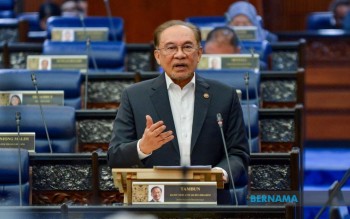
Malaysia's government will undertake a comprehensive examination of strategies needed to establish a national petroleum reserve, according to Prime Minister Datuk Seri Anwar Ibrahim, signalling a shift towards more defensive energy planning in response to mounting geopolitical tensions and international supply chain instability. The directive emerged from the inaugural National Energy Council Meeting for 2026, which Anwar chaired in Kuala Lumpur on July 15, reflecting growing concern about the country's vulnerability to external energy shocks and the need for strategic stockpiling mechanisms.
The push for a petroleum reserve underscores Malaysia's recognition that energy security transcends mere production capacity and renewable generation targets. With geopolitical flashpoints increasingly affecting global oil flows and supply routes vulnerable to disruption, having strategic reserves allows nations to weather short-term crises without triggering economic upheaval. For Malaysia, which remains a significant petroleum producer but faces rising domestic consumption and export obligations, such reserves would provide a crucial buffer against price volatility and supply interruptions that could ripple through Southeast Asian markets.
The government's renewed focus on energy resilience comes alongside accelerating progress in renewable energy deployment. As of December 2025, Malaysia's renewable energy capacity had climbed to 31 per cent of installed generation, a substantial increase reflecting the administration's commitment to reducing dependence on coal-fired generation. This shift represents a dual-track strategy: transitioning the energy mix away from fossil fuels while simultaneously securing strategic petroleum stocks to maintain economic stability during the prolonged transition period.
A pivotal element of this renewable push has been the Corporate Renewable Energy Supply Scheme, or CRESS, which has now integrated battery energy storage systems to address the intermittency challenges inherent in wind and solar generation. Battery storage is transforming renewable energy from a weather-dependent source into dispatchable capacity that can respond to demand fluctuations, a critical capability as Malaysia scales up its clean energy infrastructure. The pairing of CRESS with energy storage technology signals that the government understands the practical requirements for maintaining grid reliability as fossil fuel contributions decline.
Transport electrification represents another crucial plank of Malaysia's energy transition strategy, with the government reporting steady progress across multiple initiatives. Already, 250 electric buses operate within public transit networks nationwide, while electrified rail infrastructure now spans 800 kilometres of coverage. These deployments reduce petroleum demand in a sector historically dependent on fossil fuels and demonstrate tangible momentum toward greening Malaysia's transport systems. The rollout addresses both environmental objectives and energy security by diversifying away from oil consumption.
Biofuel development is being accelerated through the adoption of B15 biodiesel blends in transportation, a relatively low-cost measure that reduces crude oil imports without requiring wholesale vehicle fleet replacement. Petronas, Malaysia's national energy company, is spearheading development of a dedicated biofuel production hub in Pengerang, Johor, which will anchor regional supply chains and position Malaysia as a clean fuel producer. The Pengerang facility could generate export opportunities while simultaneously reducing the country's petroleum import burden.
Hydrogen energy represents an ambitious frontier for Malaysian energy policy, particularly through the Autonomous Rapid Transit system hydrogen hub being developed in Sarawak. Phase 1 development is scheduled for completion by year's end, signalling that the government is moving beyond pilot projects toward demonstrable hydrogen infrastructure. Hydrogen offers long-term decarbonisation potential for heavy transport and industrial applications where electrification remains technically challenging, and early-stage deployment in Sarawak positions Malaysia to develop expertise and supply chains before hydrogen emerges as a mainstream energy carrier across Southeast Asia.
The interconnection between these initiatives reveals sophisticated energy policymaking. Rather than pursuing renewable energy expansion in isolation, the government is building a comprehensive framework that combines new generation capacity with storage systems, sectoral electrification, alternative fuel adoption, and strategic reserves. This multifaceted approach acknowledges that energy transition requires simultaneous progress across generation, storage, demand-side efficiency, and security mechanisms.
For regional observers, Malaysia's petroleum reserve strategy carries important implications. Southeast Asia remains highly vulnerable to global energy supply disruptions, with many nations depending heavily on imported hydrocarbons. Should Malaysia successfully implement a robust reserve mechanism, the model could influence policy discussions across the region, particularly among other crude-importing nations facing similar geopolitical exposure. Conversely, the government's investment in renewable infrastructure and alternative fuels demonstrates that energy security increasingly encompasses transitional resilience rather than simply maximising fossil fuel reserves.
The timing of this petroleum reserve initiative also reflects Malaysia's heightened awareness of energy market volatility. Global supply constraints, geopolitical tensions affecting maritime shipping lanes, and energy demand surges in Asian markets have all conspired to create unpredictable price environments. Strategic reserves serve as insurance against sudden price spikes or supply disruptions that could strain government budgets and industrial competitiveness. For an economy like Malaysia's, where energy costs influence manufacturing competitiveness and export viability, such insurance holds substantial economic value beyond headline security considerations.
Looking forward, the government faces technical and budgetary questions regarding reserve size, storage infrastructure, management protocols, and deployment triggers. International experience suggests that petroleum reserves require significant capital investment in underground storage facilities, specialized infrastructure, and ongoing maintenance. Malaysia will likely study examples from China, India, the United States Strategic Petroleum Reserve, and Japan to determine optimal reserve sizes relative to national consumption patterns and economic capacity.
The council's decisions reflect a maturing Malaysian energy policy that balances climate commitments with economic pragmatism. Rather than treating renewable energy transition and energy security as competing objectives, the government frames them as complementary elements of a resilient, diversified energy system. This approach positions Malaysia to meet climate pledges while maintaining the energy stability that sustained economic growth requires.

