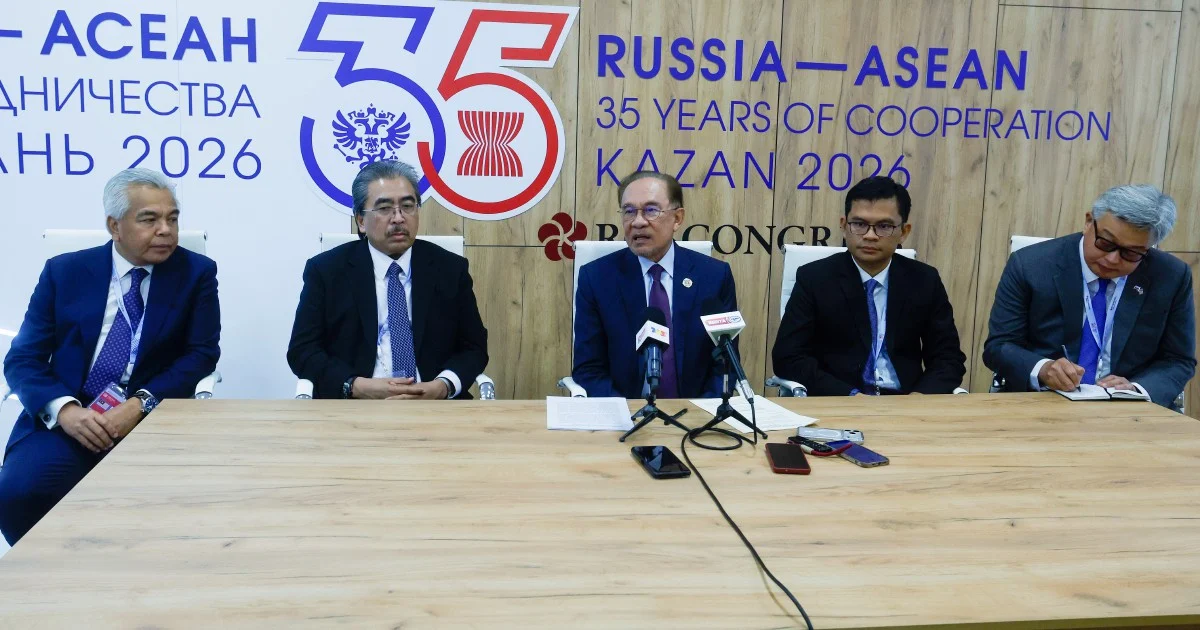
Prime Minister Datuk Seri Anwar Ibrahim has ordered the rapid rollout of visa-free entry arrangements for Russian nationals, signalling Malaysia's commitment to widening its tourism market at a time when the sector seeks to recover from pandemic-induced setbacks. The directive, announced during the PM's visit to Kazan, underscores the government's push to diversity visitor sources and cement Malaysia's position as a competitive Southeast Asian destination.
The acceleration of visa-free travel protocols represents a deliberate policy pivot aimed at unlocking tourism potential from a traditionally underexplored market. Russia has historically maintained limited tourism engagement with Malaysia, partly due to visa requirements that created logistical friction for prospective visitors. By removing this administrative barrier, Malaysia positions itself to capture leisure and business travellers from a nation of 144 million people, particularly as Western travel destinations face geopolitical complications.
The timing of this initiative reflects broader strategic thinking within Malaysia's tourism ecosystem. The Ministry of Tourism, Arts and Culture has been tasked with intensifying promotional campaigns across Russian markets, recognising that visa convenience alone will not guarantee visitor inflows without corresponding marketing efforts. The government recognises that competing Southeast Asian destinations have already adopted similar approaches, making speed of implementation commercially critical.
From a macroeconomic perspective, Russian tourists represent a valuable demographic for Malaysia's hospitality and service sectors. Russian visitors typically remain for extended periods and spend significantly on accommodations, dining, and leisure activities—demographics that substantially benefit regional economies. The tourism industry directly employs over 1.2 million Malaysians and contributes approximately 4% of national GDP, making market expansion a priority issue for economic growth targets.
The geopolitical dimensions of this move merit consideration. Malaysia's foreign policy has consistently emphasised non-alignment and engagement with multiple powers, and expanding tourism ties with Russia demonstrates this principle in practice. The arrangement signals Malaysia's willingness to maintain bilateral relationships independent of Western pressure, reinforcing the country's image as a neutral, inclusive destination welcoming travellers from all major global blocs.
Implementation logistics will require coordination across multiple government agencies. Immigration authorities must update systems to accommodate visa-free entry protocols, while tourism boards prepare infrastructure and messaging to welcome Russian arrivals. Airlines and travel agencies will need updated guidance on processing Russian passenger bookings under the new arrangement. The timeline for full operationalisation remains subject to administrative capacity and bilateral agreements finalisation.
For Southeast Asia more broadly, Malaysia's move may catalyse regional competition in visa facilitation. Neighbouring Indonesia and Thailand have maintained liberal visa policies for years, attracting substantial Russian tourist flows. By joining this cohort, Malaysia acknowledges that visa-free or simplified entry has become a baseline competitive requirement rather than an optional incentive. This trend reflects the broader global shift toward reducing travel friction in pursuit of post-pandemic tourism recovery.
The Russian tourism market itself presents distinct characteristics that Malaysian tourism operators must understand. Russian visitors frequently travel during summer months (June-August) and winter holidays (December-January), creating seasonal concentration. They demonstrate strong preferences for beach destinations, cultural heritage sites, and shopping experiences—areas where Malaysia already maintains established infrastructure and attractions.
Previous visa arrangements between Malaysia and Russia required Russian citizens to apply through conventional diplomatic channels, a process often taking two to four weeks and deterring spontaneous travel decisions. Visa-free entry will fundamentally alter consumer decision-making, enabling impulse bookings and short-notice trips that generate higher-margin tourism revenues. The operational simplicity appeals particularly to independent travellers and smaller travel groups.
Regional integration benefits may extend beyond bilateral tourism metrics. Enhanced connectivity between Malaysia and Russia could facilitate business travel, investment exploration, and cultural exchanges. Malaysian companies seeking Russian market entry find visa ease beneficial, while Russian enterprises investigating Southeast Asian operations gain practical advantages. The decision thus serves purposes beyond pure tourism promotion.
Private sector stakeholders, particularly hotel operators, airlines, and tour companies, have anticipated this policy shift. Several major hospitality players have already positioned themselves to capture Russian demand through targeted promotions and service adaptations. The announcement provides formal confirmation of a market opportunity these operators already recognised, potentially accelerating their investment and expansion timelines.
Challenge areas remain, however. Potential security screening mechanisms must balance visitor convenience with national security requirements. Malaysia's security apparatus will require training and resources to effectively process the anticipated volume increase. Market education is equally important—many Russians remain unaware of Malaysia's tourism offerings, necessitating substantial promotional budgets across Russian media platforms.
Longer-term implications suggest this serves as a template for Malaysia's broader tourism strategy. The government appears committed to systematic visa barrier reduction across multiple markets, recognising that such policies deliver measurable returns in visitor arrivals and tourism revenues. Future quarters will reveal whether implementation meets the stated acceleration timeline and whether Russian visitor numbers rise sufficiently to justify the policy shift.

