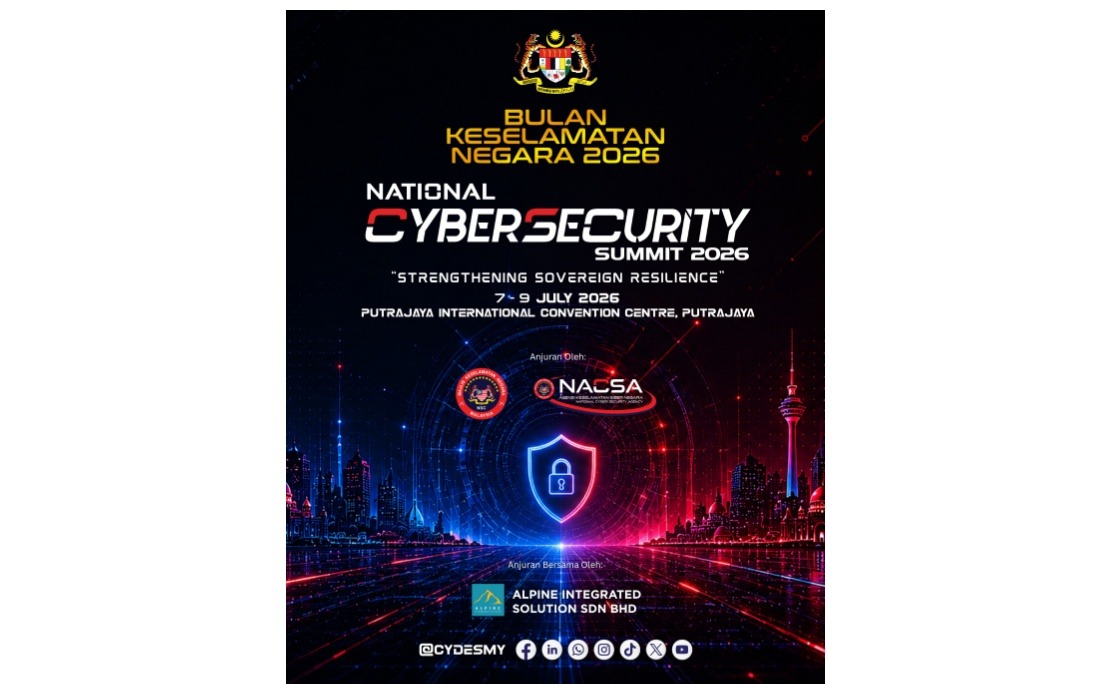
Malaysia's cyber security landscape is entering a critical phase with the staging of the National Cyber Security Summit 2026, scheduled to take place at the Putrajaya International Convention Centre from July 7 to 9. Organised by the National Cyber Security Agency operating under the Prime Minister's Department, the three-day gathering represents a comprehensive national effort to consolidate Malaysia's position as a digitally resilient economy capable of defending itself against increasingly sophisticated cyber threats. The timing of the summit is particularly significant, arriving just days after parliament passed the Cybercrimes Bill 2026 on July 1, marking a legislative milestone that underscores the government's serious commitment to tackling digital criminality through robust legal frameworks.
The summit's overarching theme, "Strengthening Sovereign Resilience", encapsulates the underlying philosophy of Malaysia's cyber security vision. Rather than simply reacting to threats as they emerge, the nation is attempting to build foundational institutional and technical capacity that allows for proactive threat identification and mitigation. This shift reflects global trends in cyber security where leading economies recognise that resilience must be embedded across all sectors of the economy, from critical infrastructure to financial services to healthcare systems. The summit's positioning as part of National Security Month demonstrates how cyber security has become inseparable from broader national security considerations, a recognition that digital vulnerabilities now constitute existential risks comparable to traditional security challenges.
Central to Malaysia's cyber security agenda is the Malaysian Cyber Security Strategy 2025-2030, a six-year roadmap that provides the strategic direction for all cyber security initiatives across government and industry. The Cybercrimes Bill 2026 itself represents the legislative scaffolding necessary to implement key aspects of this strategy, creating legal instruments that enforcement agencies require to prosecute increasingly complex cyber crimes. By convening the summit immediately after the bill's passage, policymakers are signalling to the international business community and to Malaysia's own industry that the legal environment for cyber security operations has fundamentally shifted, with clear regulations now governing everything from data protection to incident reporting to cross-border cyber crime investigations.
The breadth of participation planned for the summit underscores its national importance. The event will host approximately 3,000 attendees drawn from government ministries, enforcement agencies, private sector technology companies, academic institutions and the broader cyber security professional community. A total of 96 speakers and panellists have been recruited to lead discussions, lending credibility and depth to the proceedings. Notably, the summit will also attract significant international participation, with 44 companies from seven countries represented among the 122 exhibitors and sponsors. This international dimension is crucial for Malaysia, as cyber threats operate across borders and effective defence requires knowledge-sharing and coordination with global cyber security leaders.
The structured programming across 41 sessions reflects the complexity of modern cyber security challenges. Beyond traditional policy forums, the summit will feature specialised tracks addressing critical areas including the operations of information and communications technology security officers, women's participation in the cyber security workforce, and technical deep-dives into emerging technologies. The inclusion of a dedicated Women in Cyber session acknowledges a significant skills gap in the global cyber security industry, where women remain severely underrepresented. For Malaysia, developing female talent in this field is both an equity issue and a practical necessity, as the nation faces intense global competition for skilled cyber security professionals. Similarly, the KRYPTECH sessions suggest focused attention on cryptographic standards and implementation, reflecting the reality that encryption underpins virtually all modern cyber security operations.
Prime Minister Datuk Seri Anwar Ibrahim's scheduled participation in launching several key national initiatives at the summit further emphasises the political commitment at the highest levels. Three major policies are set to be unveiled: the National Security Policy 2026-2030, the National Cryptography Policy branded as MyKriptografi, and the Artificial Intelligence Systems Cybersecurity Framework. The National Security Policy update signals that cyber security considerations now permeate all aspects of national security planning. The cryptography policy is particularly noteworthy, as it establishes the technical standards and protocols that will govern encryption practices across Malaysia's public and private sectors. Given the increasing sophistication of quantum computing research globally, establishing clear cryptographic standards now is essential to ensure that systems deployed today will remain resistant to future computational advances.
The Artificial Intelligence Systems Cybersecurity Framework represents Malaysia's recognition that the next frontier of cyber security challenges stems from the rapid deployment of AI systems across critical sectors. As artificial intelligence becomes embedded in everything from banking systems to autonomous vehicles to medical diagnostics, ensuring that these systems themselves cannot be compromised or manipulated becomes paramount. The framework will likely establish baseline security requirements for AI development and deployment, protecting both the systems themselves and the data they process. This is particularly important for Malaysia's ambitions to develop a regional AI hub, as investors and international partners will be reassured by clear security standards.
The summit also reflects Malaysia's desire to position itself as a thought leader in Southeast Asian cyber security. The presence of 250 distinguished local guests alongside 3,000 total participants creates a critical mass of knowledge and expertise that can catalyse collaboration and knowledge transfer throughout the region. Southeast Asia faces particular cyber security challenges, including targeted attacks on regional economic infrastructure, cross-border cyber crime rings exploiting regulatory gaps between countries, and the proliferation of state-sponsored cyber capabilities among regional powers. By hosting a summit of this scale and ambition, Malaysia is establishing itself as a convening power and a source of cyber security expertise for neighbouring countries.
The involvement of diverse stakeholder groups—from multinational technology corporations to local startups, from academic researchers to law enforcement officials—creates opportunities for practical collaboration that might not occur through formal diplomatic channels. The 78 local companies participating aux alongside 44 international firms creates a marketplace environment where business relationships can form and information about emerging threats can be shared. Such informal networks often prove more effective at detecting and responding to cyber threats than purely governmental mechanisms, as companies encounter threats in real-time and can rapidly share intelligence about attack patterns and vulnerabilities.
Looking ahead, the summit's impact will be measured not merely by attendance figures but by whether it catalyses genuine institutional change. The immediate challenge will be ensuring that the Cybercrimes Bill 2026 is effectively implemented by law enforcement agencies, which must develop new capabilities in digital forensics and international coordination. The cryptography policy must translate into concrete technical standards adopted across both public and private sectors. The AI cybersecurity framework must be accessible and practical for developers and deployers of AI systems, not merely aspirational. Success also requires sustained follow-up, with mechanisms established to maintain momentum beyond the three-day summit itself.
For Malaysian businesses and citizens, the summit signals a maturing approach to cyber security that moves beyond viewing it as a purely technical concern for IT departments. Cyber security is increasingly a business imperative, a governance requirement and a personal responsibility. As Malaysia's economy becomes more digitised, from e-commerce to digital banking to remote work arrangements, the nation's cyber defences become as critical to economic stability as physical infrastructure. The summit's emphasis on building a "secure, trusted and resilient national cyber security ecosystem" acknowledges that protection requires action from every layer of society and economy.
The international context adds urgency to Malaysia's cyber security efforts. The region faces persistent threats from various state and non-state actors seeking to compromise critical systems for espionage, financial gain or political disruption. By establishing clear national policies, legal frameworks and security standards now, Malaysia creates a baseline that protects its citizens and institutions. The summit also positions Malaysia favorably within international cyber security governance frameworks, demonstrating to global partners and institutions that the nation takes digital security seriously and maintains standards compatible with international best practices. This positioning matters for everything from foreign investment decisions to international trade negotiations, where partners increasingly view cyber security maturity as an indicator of overall institutional reliability.

