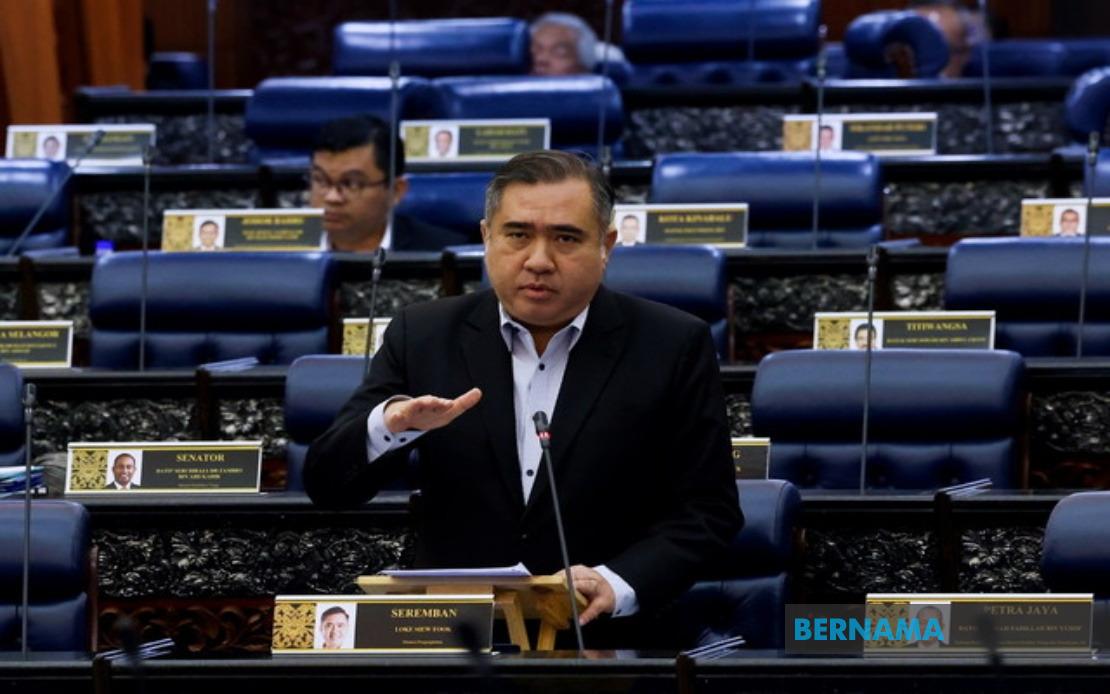
The Transport Ministry has unveiled a significant policy direction to strengthen victim protection in Malaysia's road safety framework, proposing legislative amendments that would embed compensation mechanisms directly into the Road Transport Act 1987. Transport Minister Anthony Loke informed Parliament on July 14 that the government intends to empower courts to mandate financial redress for individuals harmed in fatal or serious injury accidents, addressing a long-standing gap in how the legal system addresses the human cost of reckless driving behaviour.
Under the proposed amendments, courts will gain discretionary authority to impose compensation orders against drivers convicted of serious traffic offences, with the quantum determined by examining the particular facts and circumstances surrounding each incident. The framework contemplates multiple factors in calibrating awards, including the extent and permanence of physical injuries sustained, the measurable economic losses incurred by victims and their dependents, and the offender's demonstrated capacity to meet financial obligations. This multi-dimensional approach recognises that road accidents generate cascading harm—medical expenses, lost household income, funeral costs, and psychological trauma—that extends well beyond the immediate impact.
The proposed mechanism represents a deliberate policy choice to differentiate between dangerous drivers and ordinary traffic offenders, signalling governmental intent that those whose recklessness results in loss of life or debilitating injury will face proportionate legal consequences. Loke stressed that the government views fatalities caused by dangerous driving or illegal street racing not as traffic violations of equivalent severity but as grave breaches warranting the most rigorous legal response. This philosophical reframing has practical importance: it signals to Malaysian drivers that courts will not treat such offences formulaically but will instead consider the devastating real-world consequences experienced by grieving families.
The compensation proposal sits within a broader legislative package already advancing through Parliament. The Road Transport (Amendment) Bill 2026, which has cleared the Dewan Rakyat, established a novel statutory offence specifically criminalising illegal racing through a new Section 42A. This legislative innovation represents a tactical shift in enforcement philosophy. Previously, authorities could only initiate prosecution after a racing-related accident had occurred, meaning dangerous street racing proceeded largely unpunished until harm materialised. The new framework closes this prosecutorial window by permitting action against individuals engaged in illegal racing activities regardless of whether an accident has transpired, fundamentally altering the enforcement timeline.
Penalties attached to the illegal racing offence reflect escalating severity. A first-time offender faces a mandatory fine ranging from RM2,000 to RM10,000, imprisonment extending to two years, or a combination of both. Subsequent convictions trigger substantially harsher penalties: fines between RM5,000 and RM20,000, imprisonment up to five years, or both. These graduated sanctions attempt to deter repeat participation by making the legal consequences progressively more severe, although their effectiveness depends on consistent and visible enforcement.
The enforcement apparatus appears to be responding to the legislative framework already. Recent operations in Johor demonstrate the intensity of contemporary street racing activity in Malaysia. A single enforcement campaign resulted in 16 arrests and seizure of 260 motorcycles involved in illegal racing, illustrating both the scale of underground racing culture and the resource commitment authorities are allocating to suppression. These figures suggest that organised illegal racing represents a persistent enforcement challenge requiring sustained operational pressure.
The human tragedy underlying this policy initiative crystallised on June 1 when a catastrophic accident at Kilometre 27 of Jalan Renggam-Simpang Renggam in Johor claimed five lives. The Attorney-General's Chambers directed that the investigation proceed under Section 302 of the Penal Code—the offence of culpable homicide—rather than ordinary traffic provisions, signifying that prosecutors will treat the incident as involving criminal responsibility for death rather than regulatory violation. This charging decision embeds the principle that extreme recklessness manifesting in multiple fatalities belongs within the criminal rather than administrative realm.
Loke acknowledged that legislative innovation and enforcement intensity represent only partial solutions to Malaysia's persistent road safety crisis. The nation loses more than 6,000 lives annually in road accidents, a figure reflecting structural challenges extending beyond the subset of cases involving illegal racing. The minister identified behavioural transformation and sustained public awareness as equally essential components of a comprehensive response. This recognition reflects evidence that legal penalties and enforcement operations alone do not reshape driver conduct without corresponding shifts in social norms and personal attitudes toward risk-taking on Malaysian roads.
The minister's appeal for cross-ministerial cooperation and societal engagement signals acknowledgment that road safety constitutes a challenge transcending any single agency's mandate or capacity. Addressing Malaysia's accident toll requires coordination among the Transport Ministry, other government departments, local authorities, community organisations, and the public itself. Loke explicitly cautioned against politicising road safety issues, implying that some stakeholders may attempt to leverage road fatality concerns for political advantage rather than engaging constructively in solutions. His emphasis on requiring both political will and broader societal commitment reflects the reality that sustainable safety improvements emerge from genuine consensus rather than partisan positioning.
For Malaysian road users and families concerned about safety, the proposed compensation mechanism offers potential recourse where currently little exists beyond civil litigation, which many victims cannot afford or navigate effectively. The amendments, if enacted, would establish a more accessible path for recovering losses when preventable accidents destroy lives or inflict permanent disability. Whether courts consistently award meaningful compensation that actually provides meaningful relief will depend on how judges interpret and apply the discretionary framework once legislation passes and enforcement begins to generate cases.

