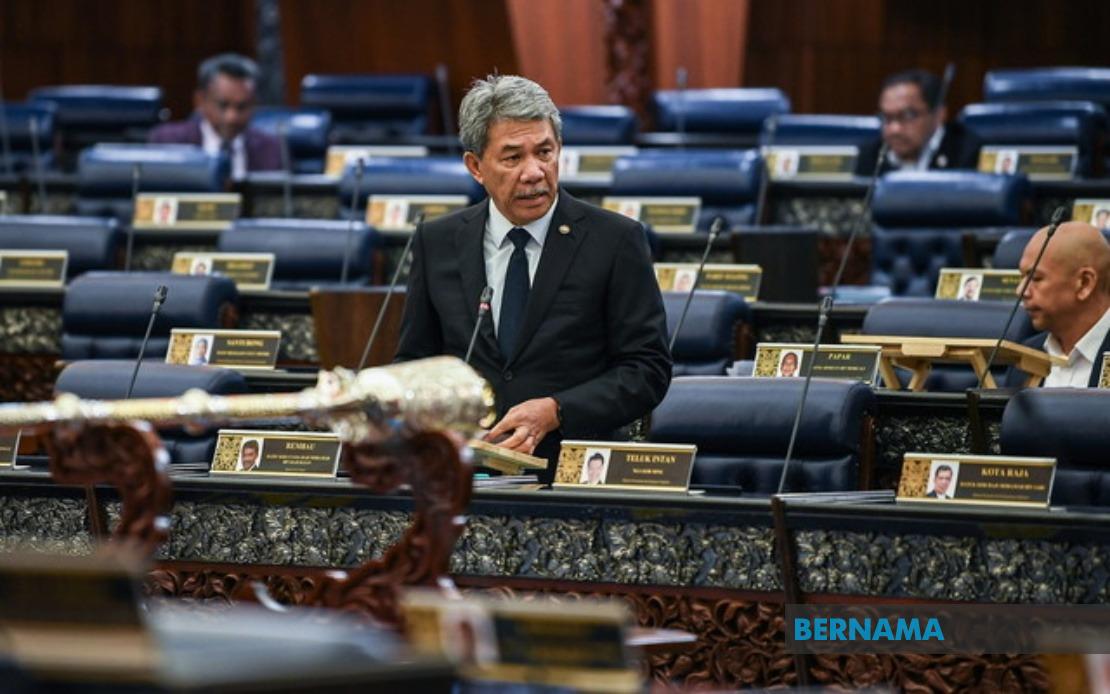
Malaysia intends to mobilise its diplomatic networks across major international institutions to shepherd the troubled West Asia region towards sustainable peace, with Foreign Minister Datuk Seri Mohamad Hasan signalling the country's commitment to engaging through the United Nations, UN Security Council, Organisation of Islamic Cooperation, BRICS and the Non-Aligned Movement. Speaking in Parliament on June 23, Mohamad outlined how this multi-platform approach reflects Malaysia's conviction that regional stability requires coordinated pressure from diverse global stakeholders rather than bilateral initiatives alone.
The Foreign Minister highlighted Malaysia's early endorsement of a memorandum of understanding between the United States and Iran, inked the preceding Wednesday, positioning Kuala Lumpur among the first nations to publicly back the accord. This 60-day framework, Mohamad explained, establishes a concrete negotiating window for both powers to formalise the 14 provisions negotiated between them. The agreement's architecture encompasses reconstruction of Iran's severely damaged infrastructure valued at USD300 billion, restoration of shipping access through the Strait of Hormuz, and withdrawal of Israeli military presence from Lebanon and other occupied territories. For Malaysia and broader Southeast Asia, such developments carry tangible implications given regional dependence on unobstructed maritime trade routes and exposure to energy price volatility triggered by Middle Eastern instability.
Beyond formal support for the agreement, Mohamad signalled Malaysia would maintain vigilant oversight of subsequent negotiations to ensure the momentum towards de-escalation persists. This monitoring role reflects Kuala Lumpur's recognition that preliminary accords often face implementation obstacles when signatories encounter domestic political resistance or shifting strategic calculations. The closure of the Strait of Hormuz referenced by Mohamad as a consequence of escalating tensions underscores why Malaysia views this dispute through an economic lens as well as a humanitarian one, given that global supply chains and oil markets depend on free passage through these critical waterways.
The Foreign Minister articulated a dual strategy combining direct diplomatic engagement with indirect support mechanisms. Malaysia has established contact with key regional actors including Pakistan, which served as host for the US-Iran talks, alongside the United Arab Emirates and Saudi Arabia. These outreach efforts aim to calibrate messaging that balances support for diplomatic solutions while acknowledging the legitimate security concerns of various parties. Mohamad also disclosed that Malaysia has opened dialogue with the incoming President of the UN General Assembly, reflecting the government's belief that mobilising the broader international community strengthens the hand of negotiators and constrains the ability of spoilers to derail progress.
However, Mohamad did not mince words regarding obstacles to peace, directly naming Israel as a force opposed to successful conflict resolution. He characterised the Israeli state as unwilling to allow peaceful settlement to proceed, contending instead that its military operations across Gaza, the West Bank, Lebanon and additional territories represent deliberate attempts to destabilise the region. This candid framing aligns with broader Malaysian foreign policy doctrine, which positions support for Palestinian rights and Arab state sovereignty as core principles. For Malaysian audiences, such statements carry domestic political weight, reflecting constituency expectations that the government articulate a principled stance on Middle Eastern affairs rather than adopt ostensibly neutral postures.
A particularly revealing moment emerged when Mohamad addressed the structural asymmetries constraining international pressure on Israel. Responding to a supplementary parliamentary question from Datuk Seri Dr Ronald Kiandee, the Foreign Minister drew attention to the United States' repeated use of Security Council vetoes to shield its Israeli ally from censure. Mohamad specified that Washington has wielded its veto power on 31 occasions to prevent condemnatory resolutions, essentially rendering multilateral mechanisms ineffective as enforcement tools. This reality underscores the limitations of relying exclusively on UN institutional pathways and explains why Malaysia simultaneously pursues influence through alternative forums like OIC and BRICS, which operate outside the Security Council's veto-wielding permanent members.
The invocation of BRICS and the Non-Aligned Movement as diplomatic venues reveals Kuala Lumpur's strategic calculation that emerging powers and non-aligned nations collectively possess sufficient soft power to create diplomatic costs for intransigence, even absent Security Council enforcement mechanisms. BRICS especially represents a coalition of economically significant nations increasingly willing to challenge Western-dominated international frameworks, potentially offering Malaysia avenues to amplify messaging without confronting entrenched superpower rivalries. The NAM connection, meanwhile, reconnects Malaysia to its foundational foreign policy orientation as a developing nation seeking to preserve strategic autonomy amid great power competition.
The OIC platform holds particular salience for Malaysia's approach, given the organisation's numerical strength and the shared Islamic identity that underpins its membership. As a Muslim-majority nation with established influence within OIC structures, Malaysia can leverage this forum to marshal collective Islamic world opinion without appearing to pursue unilateral agendas. This institutional pathway also offers a face-saving mechanism for moderate Arab states seeking to contribute to peacemaking while managing domestic constituencies and competing security interests. The organisation's diplomatic machinery, though sometimes criticised for rhetorical limitations, nevertheless provides a collective megaphone amplifying calls for restraint.
Modamad's parliamentary articulation of Malaysia's West Asia strategy reflects broader recognition within the Malaysian government that uncontrolled escalation in this region generates unpredictable consequences for Southeast Asian stability, economic prosperity and religious coexistence. Supply chain disruptions ripple through Malaysian manufacturing and energy sectors, while sectarian tensions in the Middle East occasionally find echo in Malaysia's diverse society. By positioning itself as an honest broker invested in peaceful settlement, Malaysia attempts to maintain relationships across the various Middle Eastern blocs while signalling to its domestic audience and the international community a commitment to principled diplomacy.
The timing of these comments, occurring shortly after the US-Iran agreement, suggests Malaysia intends to capitalise on this window of diminished tensions to advance its broader vision of regional stability. Yet the Foreign Minister's scepticism regarding Israeli intentions and American institutional bias indicates Kuala Lumpur harbours no illusions about the ease of sustaining momentum. Malaysian policymakers appear to be settling in for extended diplomatic engagement, leveraging multiple institutional channels simultaneously whilst acknowledging that genuine breakthroughs require addressing underlying security anxieties and territorial disputes that extend far beyond any single agreement's scope.

