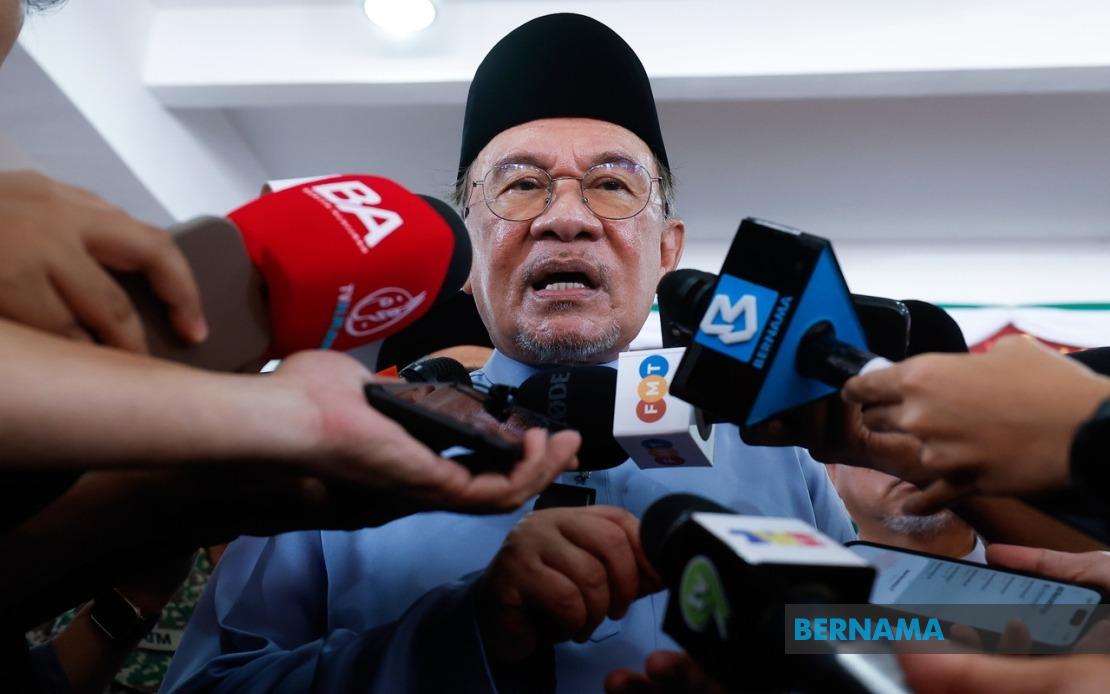
Prime Minister Datuk Seri Anwar Ibrahim has committed to sustained diplomatic efforts with the United States to resolve concerns over new tariffs targeting Malaysia, signalling that discussions will persist until the government achieves an outcome it deems satisfactory. Speaking at Port Dickson following his attendance at a national patriotic programme, Anwar acknowledged receipt of the latest US tariff announcements and indicated cautious optimism about Malaysia's position relative to other affected nations, though he stressed that ongoing consultations remain necessary to safeguard national economic interests.
The tariff action stems from US investigations into Malaysia's enforcement mechanisms for preventing imports of goods manufactured through forced labour. Under Section 301 of the Trade Act of 1974, the United States Trade Representative (USTR) announced duties targeting 60 economies deemed non-compliant with international labour standards. Malaysia, alongside Cambodia and Indonesia, was assigned a 10 per cent duty rate—positioning these three nations among those facing the most lenient penalties in this round of trade measures. By contrast, the remaining 57 countries subject to investigation face a steeper 12.5 per cent rate, a distinction that the Prime Minister highlighted as grounds for qualified relief.
The investigations by USTR Ambassador Jamieson Greer revealed systemic gaps in how Malaysia and similarly positioned nations have enforced prohibitions on goods produced with forced labour. Rather than representing a complete pass, the lower rate designation acknowledges that Malaysia has made demonstrable efforts in this area—even if those efforts remain insufficient according to US standards. This nuance is critical for understanding the broader trade relationship: the tariffs are not punitive in a traditional sense but rather incentivizing mechanisms designed to encourage accelerated compliance with labour standards that increasingly define global commerce.
Anwar delegated detailed negotiations to Minister of Investment, Trade and Industry Datuk Seri Johari Abdul Ghani, indicating a structured governmental approach to managing the tariff dispute. The allocation of this responsibility underscores how closely economic and trade matters intersect with broader foreign policy objectives. Johari's engagement with US counterparts will likely focus on demonstrating enhanced enforcement capabilities, identifying gaps in current mechanisms, and negotiating timelines for remedial action that might warrant duty reduction or removal in future reviews. This negotiating channel reflects Malaysia's pragmatic stance: accepting the tariff outcome as preliminary rather than permanent, contingent upon demonstrable improvements in labour compliance infrastructure.
The tariff framework includes an additional incentive mechanism through tariff-rate quotas, which would permit Malaysia to access more favourable duty treatment for specified textile and cotton inputs sourced from the United States. This provision creates mutual economic interest, as American textile manufacturers would gain preferential access to Malaysian markets in exchange for Malaysia's commitment to stronger forced labour enforcement. Such reciprocal arrangements are characteristic of modern trade diplomacy, wherein penalties are paired with pathways for mitigation and future commercial benefit, rather than serving as indefinite punitive measures.
For Malaysian manufacturers and exporters, particularly those in labour-intensive sectors such as palm oil, textiles, and electronics assembly, the distinction between a 10 per cent and 12.5 per cent tariff carries significant implications. These rates apply to specific product categories identified during the investigation, and the cumulative effect on competitiveness depends partly on the extent to which downstream customers absorb costs versus passing them to consumers. Industries already operating on thin margins may face pressure to relocate production or restructure supply chains, creating secondary economic ripple effects across the region.
The forced labour investigations reflect broader global trends toward supply chain transparency and accountability. International consumers, particularly in North America and Europe, have increasingly demanded assurances that products are made without exploitation. Governments have responded by embedding labour compliance into trade frameworks, making adherence to labour standards as much a feature of modern commercial agreements as tariff schedules and rules of origin. Malaysia's encounter with these tariffs places it alongside other developing economies grappling with the operational and financial costs of upgrading labour monitoring infrastructure.
From a regional perspective, the tariff actions targeting ASEAN nations—specifically Malaysia, Cambodia, and Indonesia—highlight how major trading partners are applying consistent pressure across Southeast Asia to harmonize labour practices. This creates both challenges and opportunities: challenges in meeting costly compliance requirements; opportunities to establish competitive advantages by adopting labour standards ahead of regional competitors. Nations that move swiftly to address forced labour concerns may find themselves better positioned to attract multinational manufacturers seeking compliant supply chains.
Anwar's emphasis on the tariff being "relatively low" should be understood within context. While the 10 per cent rate is lower than the 12.5 per cent applied elsewhere, it remains a meaningful cost for exporters and a signal that US authorities view Malaysia's current compliance efforts as incomplete. The Prime Minister's framing balances several audiences: reassuring domestic manufacturers that the government is managing the situation effectively, signalling to the United States that Malaysia recognizes the seriousness of labour standards, and demonstrating to the international community that Malaysia is engaged in good-faith compliance efforts.
The pathway forward hinges on Malaysia's ability to implement concrete improvements in forced labour detection and enforcement. This may require enhanced training for labour inspectors, expanded monitoring of supply chains, stronger penalties for violations, and improved reporting mechanisms. Investment in these areas, while costly in the short term, could yield longer-term benefits by reducing Malaysia's vulnerability to future tariff escalation and supporting the country's positioning as a responsible global trader.
Ultimately, Anwar's commitment to continued negotiation reflects recognition that tariff disputes in the contemporary trading environment are rarely settled through single transactions. Instead, they represent ongoing dialogues wherein compliance improves incrementally, tariff rates adjust correspondingly, and the relationship between governments and exporters evolves continuously. Malaysia's approach—accepting the initial outcome while actively working to improve it—mirrors the diplomatic pragmatism increasingly necessary in managing trade relationships with major powers in an era of supply chain scrutiny and labour standards integration.

