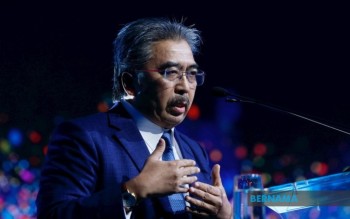
The Malaysian government is carefully navigating the complex challenge of financing a nationwide electric vehicle charging network while managing competing budget pressures and protecting consumer interests. During parliamentary proceedings this week, Investment, Trade and Industry Minister Datuk Seri Johari Abdul Ghani clarified that no final decision has been made on implementing an EV levy, indicating instead that officials are still evaluating the most workable approach to generate revenue for infrastructure expansion across the country.
The government's dilemma reflects a fundamental tension in transitioning to green transportation. While Malaysia aims to accelerate EV adoption, establishing the supporting charging infrastructure requires substantial capital investment that the government, operating under fiscal constraints, cannot fully sustain through conventional budgeting alone. Johari acknowledged this reality during remarks at the RHB Progress Series 2026 conference, explaining that policymakers must weigh multiple approaches rather than defaulting to any single solution. The minister's comments suggest the administration recognises that any costs ultimately borne by manufacturers will be passed downstream to car buyers, a consideration that complicates public acceptance of such measures.
Johari emphasised that Malaysia's energy landscape differs markedly from nations often cited as EV benchmarks. The country remains significantly dependent on natural gas and coal-fired power generation, meaning the broader electricity infrastructure supplying EV chargers carries inherent costs that must be factored into planning. Unlike wealthier economies that have invested heavily in renewable energy capacity, Malaysia's transition to electrified transport cannot ignore the economic realities of its current energy mix. This distinction is crucial for Malaysian policymakers and consumers to understand, as it shapes realistic timelines and funding requirements for nationwide charging expansion.
One proposal under consideration involves imposing a levy on each electric vehicle sold, with revenues directed into a dedicated fund specifically for constructing public charging stations. This mechanism would create a direct link between EV market growth and charging infrastructure development, theoretically ensuring that as more vehicles enter circulation, corresponding investment in charging facilities keeps pace. Johari indicated that relying solely on vehicle manufacturers or distributors to undertake such capital-intensive investments is insufficient, particularly given the scale of infrastructure needed to match China's more comprehensive networks. Malaysia's approach would therefore require structured government involvement funded through industry contributions.
The broader fiscal context animating these discussions cannot be overlooked. A government operating under a deficit must carefully evaluate all revenue options and expenditure commitments. Johari pointedly asked where funds would originate if the government attempted to self-finance charging networks without external support, highlighting that every policy choice involves trade-offs against other pressing budgetary needs. This fiscal reality underscores why policymakers are not simply subsidising charging infrastructure development as they have historically subsidised fuel and electricity for consumers. The sustainability of that model has reached its limits, requiring a structural shift toward user contributions and industry involvement.
The minister's remarks also underscore a strategic decision to maintain technological diversity in Malaysia's transportation sector during the transition period. Rather than aggressively pushing EVs while stranding internal combustion engine infrastructure, the government appears committed to allowing both technologies to coexist, at least for the medium term. This pragmatic stance reflects recognition that Malaysia's motorists cannot all shift to electric vehicles simultaneously, and that prematurely obsoleting petrol and diesel infrastructure would impose unnecessary economic costs. The charging network strategy must therefore be scaled proportionally to realistic EV adoption rates rather than constructed on optimistic projections.
Public perception presents another challenge that Johari identified in his parliamentary remarks. Many Malaysians, he suggested, view EV policy through a narrow lens, focusing on one dimension—perhaps affordability or environmental benefit—without grasping the full complexity of infrastructure requirements, electricity supply costs, and fiscal sustainability. This communication gap means that any levy proposal, regardless of its economic rationale, will face public scrutiny and potential resistance. The government must therefore invest in explaining the interconnected nature of these challenges: why charging infrastructure cannot be free, why manufacturers cannot bear all costs, and why consumers must contribute to building the systems they will depend upon.
The comparison with China, implicitly raised in official discussions, reveals the scale of Malaysia's ambition and constraint simultaneously. China has constructed extensive EV charging networks through massive state investment and coordinated industrial policy, resources unavailable to Malaysia. Rather than attempting to replicate that model, Malaysian policymakers are fashioning a hybrid approach combining government oversight with private-sector participation and dedicated user levies. This hybrid model may ultimately prove more appropriate for Malaysia's institutional capacity and fiscal position, even if it results in slower infrastructure expansion than some advocates prefer.
The timing of this policy deliberation is significant, as Malaysia seeks to position itself as a regional hub for automotive manufacturing and technology. How the government structures EV incentives and charging infrastructure funding will influence whether major vehicle manufacturers view Malaysia as an attractive location for assembly, component production, and technology development. A poorly designed levy or subsidy system could deter investment, while a balanced approach might attract manufacturers seeking stable, predictable policy frameworks. The upcoming months will reveal whether MITI's careful assessment produces a mechanism that satisfies these multiple objectives.
Looking ahead, the government faces a narrow window to build consensus on EV levy design before public opinion hardens around particular positions. Stakeholder consultation—involving manufacturers, electricity providers, consumer advocates, and state governments—will be essential to developing a mechanism perceived as fair and necessary rather than punitive. The fund's governance structure, transparency in spending decisions, and accountability for delivered charging infrastructure will also determine public acceptance. Malaysia's EV transition ultimately depends not merely on policy design but on sustained public confidence that the government is managing the transition thoughtfully and equitably.

