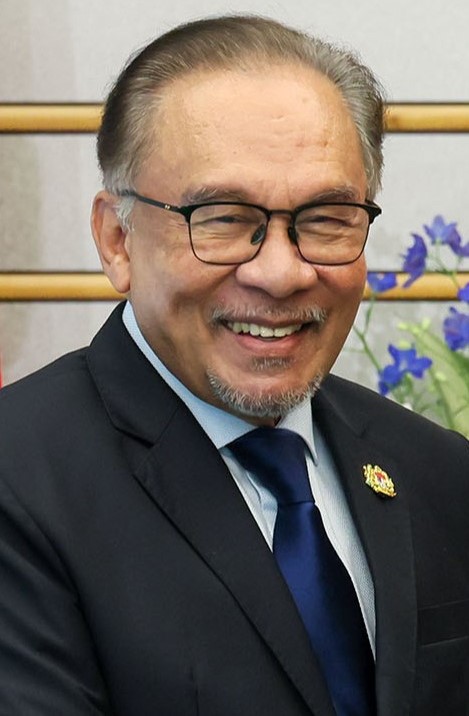
Malaysia's Prime Minister Datuk Seri Anwar Ibrahim has thrown his support behind the nascent understanding between the United States and Iran aimed at halting their escalating confrontation, signalling the country's backing for diplomatic resolution of Middle Eastern tensions that have rippled across global markets and supply chains. In remarks posted on social media, Anwar expressed satisfaction that the two adversaries have moved toward signing a formal memorandum of understanding in the coming period, a development he characterised as a meaningful step away from military brinkmanship that has threatened regional stability.
The Prime Minister specifically acknowledged Pakistan's instrumental role in brokering the agreement, recognising behind-the-scenes diplomatic efforts that have often remained obscured from public view. This explicit commendation underscores Malaysia's appreciation for patient mediation and multilateral engagement as antidotes to military escalation—a principle particularly resonant in Southeast Asia, where nations have long championed dialogue and consensus-building through forums like ASEAN as preferred mechanisms for resolving disputes. Anwar's endorsement reflects a broader Malaysian foreign policy orientation that privileges diplomatic channels and measured responses to international crises.
Central to Anwar's intervention is his emphasis on the urgent reopening of the Strait of Hormuz, through which approximately one-third of globally traded petroleum passes each day. The waterway's closure or disruption poses existential challenges not merely to oil-dependent economies but to the intricate logistics networks that sustain modern commerce. For Malaysia, as a significant petroleum exporter and trading nation whose prosperity relies on unimpeded maritime commerce, the restoration of shipping lanes through the Hormuz Strait carries direct economic consequences. Any prolonged interruption threatens to elevate fuel prices, disrupt petrochemical supply chains, and destabilise the energy markets upon which regional manufacturing sectors depend.
Anwar framed the Strait of Hormuz in language that emphasises its systemic importance to the global economy rather than merely to individual nations, describing it as a critical artery for both energy security and international trade. This characterisation serves to transcend narrow geopolitical positioning by appealing to universal interests—the recognition that blockades and disruptions inflict harm broadly across the international system. By employing such language, Malaysia positions itself as a stakeholder in global stability rather than as a partisan actor, a diplomatic posture consistent with its traditional non-aligned orientation and emphasis on inclusive multilateralism.
The Prime Minister's caution that prolonged disruption would ultimately benefit no party reflects pragmatic acceptance that brute coercion and sustained conflict generate costs for all involved. This sentiment implicitly critiques policies premised on maximum pressure or indefinite confrontation, suggesting instead that rational actors should recognise the mutual advantages flowing from negotiated settlement. Such reasoning carries particular weight in Malaysia's context, where political leaders have historically advocated for dialogue even across seemingly intractable divides, drawing on both Islamic principles of consultation and regional traditions of consensus-seeking.
Anwar went further by urging all parties to proceed in good faith and without unnecessary delay in converting their preliminary understanding into a comprehensive and durable peace settlement. His emphasis on expeditious implementation reflects awareness that momentum in diplomacy can dissipate rapidly, particularly when military establishments or hardline constituencies within either state perceive that adversaries are gaining advantage through negotiating delays. The Prime Minister's call for speed thus carries implicit recognition of the fragility of emerging agreements and the need to institutionalise gains through formal structures before spoilers can mount effective opposition.
Crucially, Anwar cautioned that during this delicate transitional phase, all participants and external actors must exercise restraint and refrain from provocative actions that might reignite hostilities or undermine the fragile diplomatic scaffolding now being constructed. This admonition appears directed both at hardliners within the US and Iran who might seek to sabotage negotiations and at external powers with interests in perpetuating Middle Eastern tensions. Malaysia's willingness to issue such guidance reflects its self-perception as a responsible stakeholder in international peace processes and its conviction that regional security benefits from reduced great-power competition in strategically vital zones.
The Prime Minister positioned Malaysia itself as a potential contributor to consolidating peace, declaring that the country stands prepared to offer support toward achieving a just and lasting settlement. This pledge, while non-binding, signals Malaysia's readiness to participate in verification mechanisms, humanitarian initiatives, or confidence-building measures that might accompany any US-Iran agreement. For a middle-sized power without direct involvement in Middle Eastern conflicts, such offers of constructive engagement represent both a principled commitment to international peace and a shrewd cultivation of diplomatic influence in shaping post-conflict arrangements.
Anwar's intervention also implicitly appeals to the international community more broadly to maintain pressure and incentives for sustained negotiations rather than reverting to confrontation. This call for sustained momentum acknowledges that peace settlements often require external reinforcement through continued diplomatic engagement, economic incentives, and perhaps monitoring mechanisms. Malaysia's emphasis on community-wide commitment reflects understanding that bilateral agreements between adversaries frequently falter without broader international scaffolding and consensus supporting their implementation.
The timing of Malaysia's statement, following President Trump's announcement that a finalised agreement had been reached and his authorisation to reopen the Strait of Hormuz and lift the naval blockade, suggests Malaysian leadership has rapidly mobilised its diplomatic apparatus to endorse and reinforce this development. This swift response indicates both the high stakes involved and Malaysia's judgment that supporting diplomatic breakthroughs serves its regional and economic interests more effectively than pursuing neutrality or silence. By articulating clear backing for the agreement while simultaneously urging all parties toward continued restraint, Anwar has positioned Malaysia as a voice for stabilisation without appearing to favour either party unreservedly.
For Malaysia and other Southeast Asian nations dependent on stable maritime trade through Middle Eastern waters, the restoration of normal shipping through the Strait of Hormuz carries implications extending far beyond oil prices. It signals return to a rules-based international order where vital waterways remain accessible to all nations rather than becoming hostage to great-power confrontations. Malaysia's emphasis on this principle reflects both material interests and broader commitment to international law and freedom of navigation—principles that have anchored ASEAN's approach to maritime disputes and great-power relations throughout the region's recent history.