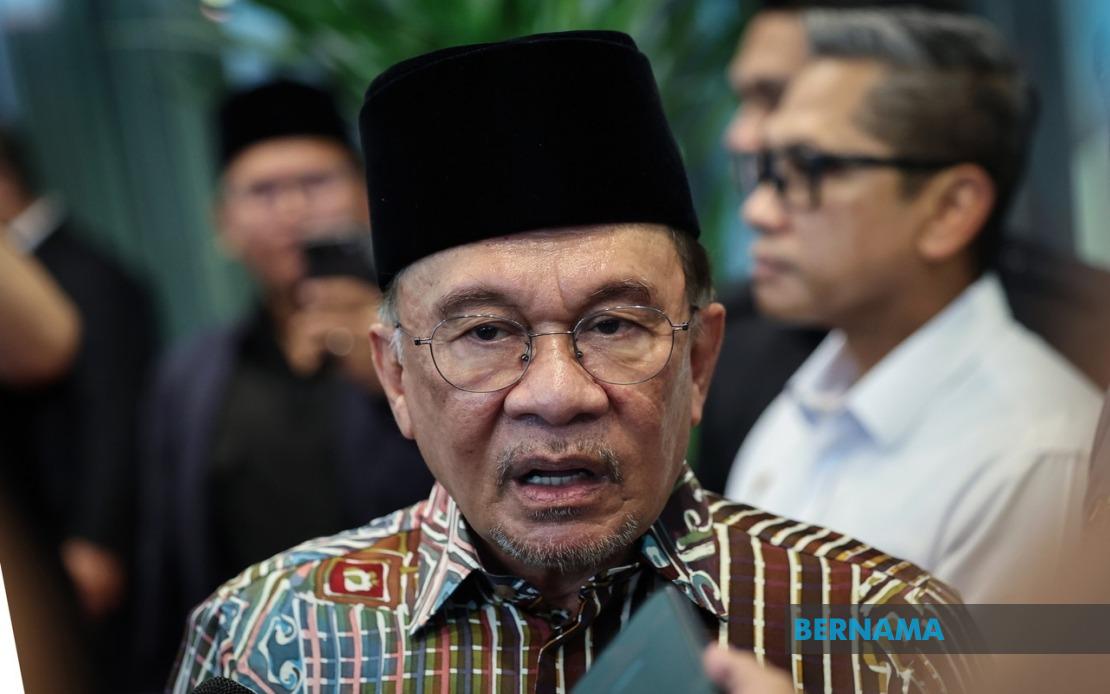
Prime Minister Datuk Seri Anwar Ibrahim has drawn a clear line on refugee conduct in Malaysia, declaring that the government will not tolerate groups who violate laws, disrupt public order or attempt to occupy areas without authorisation. The statement came in response to a gathering of several hundred Rohingya refugees who assembled outside the United Nations High Commissioner for Refugees office on Jalan Bukit Petaling in Kuala Lumpur, having arrived from Penang on three buses that morning.
Anwar's remarks underscore a significant policy position that balances Malaysia's international humanitarian obligations with domestic law and order concerns. Speaking at the closing ceremony of the International Wakaf Dakwah Convention 2026, the Prime Minister outlined a three-pronged enforcement approach involving the Royal Malaysia Police, the Immigration Department and municipal authorities. These agencies have been explicitly instructed to pursue robust action against those who breach the country's legal framework.
The incident that triggered the statement highlights the practical tensions that arise when refugee populations congregate in urban centres. The traffic disruption caused by the UNHCR office gathering particularly concerned Anwar, who emphasised that Malaysia's established legal structure cannot be circumvented by any group, regardless of their circumstances. His language reflected frustration with the assertion of collective rights that conflict with the orderly functioning of public spaces and the rights of ordinary Malaysian residents to move freely.
Anwar acknowledged the legitimacy of refugee protection claims, recognising that some individuals genuinely seek asylum through international mechanisms. However, he made plain that pursuing such protection does not exempt anyone from compliance with Malaysian law. The government's position is that those with proper documentation should receive warnings if they breach regulations, while those lacking valid permits face referral to immigration authorities. Those who continue violations after warnings face formal legal proceedings.
The distinction Anwar drew between documented and undocumented refugees reflects the administrative complexity of Malaysia's refugee situation. The country hosts one of Asia's largest refugee populations, including over 180,000 registered Rohingya, yet remains outside the 1951 Refugee Convention framework. This legal ambiguity has created an environment where refugee rights are negotiated through humanitarian rather than purely legal channels, a reality that occasionally produces friction when refugees or advocacy groups test the boundaries of acceptable conduct.
The gathering outside UNHCR headquarters may represent frustration among refugee communities over the pace of resettlement or the limitations of protection offered by Malaysia. However, Anwar's response indicates that such demonstrations cannot be allowed to escalate or normalise the occupation of public spaces without permission. His administration appears determined to prevent the emergence of refugee enclaves or self-governed zones that might challenge state sovereignty or create parallel structures of authority.
For Malaysian readers, the Prime Minister's stance reflects broader concerns about social cohesion and public order during a period of significant population movement in the region. Malaysia's geographic position along major migration routes, combined with its relatively developed economy and established asylum infrastructure, makes it a destination for displaced persons from Myanmar, Afghanistan, Palestine and other conflict zones. Managing these populations while maintaining community stability represents a significant governance challenge.
The enforcement instructions issued by Anwar suggest that existing regulations will be applied more consistently going forward. Immigration officers will be empowered to take action against undocumented gatherings, while police will address public order violations. Local authorities will support these efforts through their control of public spaces and municipal bylaws. This coordinated approach aims to prevent future incidents while avoiding heavy-handed responses that might draw international criticism or provoke humanitarian concerns.
The timing of the UNHCR office gathering, with refugees arriving from Penang, raises questions about coordination among refugee communities and whether organised movements might become more common. The fact that transportation was arranged suggests some level of planning, potentially through refugee networks or advocacy groups. Anwar's firm response may be designed partly to discourage such organised assemblies before they become normalised or escalate in scale.
For Southeast Asian observers, Malaysia's approach carries implications for regional refugee management. Other countries facing similar pressures will be watching how the government balances humanitarian obligations with enforcement priorities. A strategy that maintains order while respecting genuine protection needs could become a model; conversely, heavy-handed responses might invite regional and international scrutiny.
The Prime Minister's comments also signal that his administration, despite its generally centrist positioning, will not permit refugee issues to become sources of political instability or community tension. This firm line may be partly aimed at reassuring Malaysian citizens that authorities remain in control of public spaces and that vulnerable populations will not be allowed to organise in ways that disrupt ordinary civic life.
Looking ahead, the government will likely intensify coordination between agencies responsible for refugee management. The UNHCR, which operates with significant autonomy in Malaysia, may also face pressure to exercise greater oversight of refugee populations to prevent unauthorised assemblies. For refugees and humanitarian organisations, Anwar's statement makes clear that advocacy and community organising must occur within the bounds of Malaysian law, a reality that requires careful navigation between asserting legitimate claims and respecting state authority.

