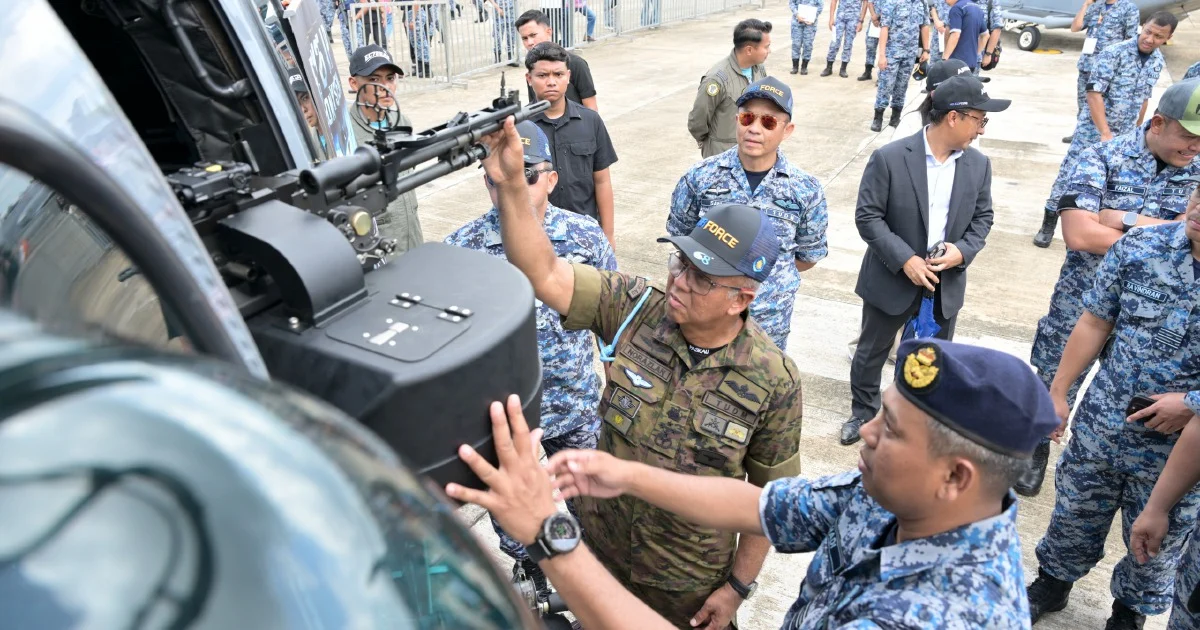
The Royal Malaysian Air Force (RMAF) has taken a significant step towards modernizing its operational capabilities by upgrading its EC725 helicopter fleet with enhanced weapons systems designed specifically for combat search and rescue missions. This development marks an important investment in the service branch's ability to conduct high-risk recovery operations in contested or hostile territory, where aircrews face genuine threats from ground fire and adversarial forces. The addition of firepower to these versatile aircraft reflects Malaysia's commitment to ensuring that personnel recovery teams can operate with greater confidence and self-defence capability when deployed to challenging operational environments.
The EC725, a medium-lift transport helicopter produced by Airbus Helicopters, has become a cornerstone platform within the RMAF's transport and special operations inventory. These aircraft are engineered for flexibility, capable of performing multiple roles including personnel transport, cargo movement, maritime operations, and disaster response. The integration of combat-oriented weapon systems represents an evolutionary upgrade that positions these helicopters to fulfil more demanding security roles without necessitating the acquisition of entirely different platforms. This pragmatic approach allows the service to enhance operational utility while maximizing return on existing infrastructure investments.
Combat search and rescue missions are among the most hazardous operations undertaken by military aviation forces. Personnel recovery teams must penetrate defended airspace or operate in zones where hostile forces maintain a presence, making the ability to suppress or counter ground threats a critical operational requirement. Traditional unarmed transport helicopters, while capable of reaching downed pilots or isolated personnel, remain vulnerable during approach and landing phases when they are at their slowest and most exposed. The weaponry enhancement allows EC725 crews to address defensive needs without relying entirely on armed escorts, improving mission flexibility and reducing the logistical footprint required for complex recovery operations.
The specific armament configurations fitted to Malaysia's EC725 fleet have not been publicly detailed, but modern combat transport helicopters typically employ externally mounted weapons pods, door-mounted machine guns, or pintle-mounted gun systems. Such additions enable crews to deliver suppressive fire that can deter, delay, or degrade hostile ground forces attempting to interfere with rescue operations. The integration of these systems must balance weight and balance considerations with aircraft performance, as adding weaponry affects payload capacity, range, and handling characteristics—factors that require careful engineering to maintain the helicopter's core transport capabilities.
For the Malaysian defence context, this upgrade carries particular significance. The nation operates across diverse terrain ranging from dense jungle to maritime environments, and maintains security interests spanning the South China Sea and surrounding waters. Military air assets capable of rapid personnel recovery enhance operational safety across multiple domains, whether in counter-insurgency operations, maritime enforcement, or humanitarian disaster response. The enhanced combat rescue capability also signals to the international community Malaysia's determination to maintain modern, capable defence forces and to protect its personnel in increasingly complex security environments.
The upgrade programme demonstrates RMAF's recognition that contemporary security challenges demand adaptable, multi-capable platforms. Rather than maintaining separate fleets for transport and armed escort roles, integrating defensive systems into existing helicopters creates greater operational efficiency. This approach has gained acceptance among regional air forces seeking to maximize limited defence budgets while maintaining technological relevance. The EC725 programme illustrates how incremental modernization can extend platform value and operational utility across a vehicle's service lifetime.
From a regional perspective, Malaysia's investment in enhanced combat rescue capabilities reflects broader trends within Southeast Asian defence establishments. Nations throughout the region face similar operational challenges: the need to maintain security across vast geographic areas, the rising complexity of potential threats, and budgetary constraints that demand efficient resource allocation. The Malaysian approach of systematically upgrading existing platforms with improved defensive capabilities offers a template that neighbouring states may observe closely, particularly those operating similar helicopter inventories or facing comparable operational demands.
The integration of weapons systems into the EC725 fleet also carries implications for aircrew training and doctrine development. Personnel responsible for operating these upgraded aircraft must develop proficiency not only in transport and rescue procedures but also in tactical employment of mounted weapons systems. This requires expanded training programmes, updated standard operating procedures, and potentially new qualifications for pilots and door gunners. The RMAF's training establishment will need to incorporate combat helicopter operations into its curriculum, drawing on international experience and best practices from allied air forces with extensive combat rescue experience.
Looking forward, the EC725 upgrade programme may influence future procurement and modernization decisions within the Malaysian defence portfolio. A successful integration of combat capabilities into existing transport platforms could validate the concept for other aircraft types or establish a baseline for future equipment evaluations. The programme also demonstrates the value of maintaining technological momentum through systematic updates to existing inventories, an approach that can yield operational gains even in resource-constrained environments.
The enhancement of the EC725 helicopter fleet underscores Malaysia's commitment to maintaining professional, capable military forces equipped to meet contemporary security demands. By ensuring that personnel recovery teams possess both the lift capacity to conduct meaningful rescue operations and the defensive capabilities to operate in contested environments, the RMAF strengthens its ability to protect military personnel and fulfil national security responsibilities across diverse scenarios and challenging terrain.

