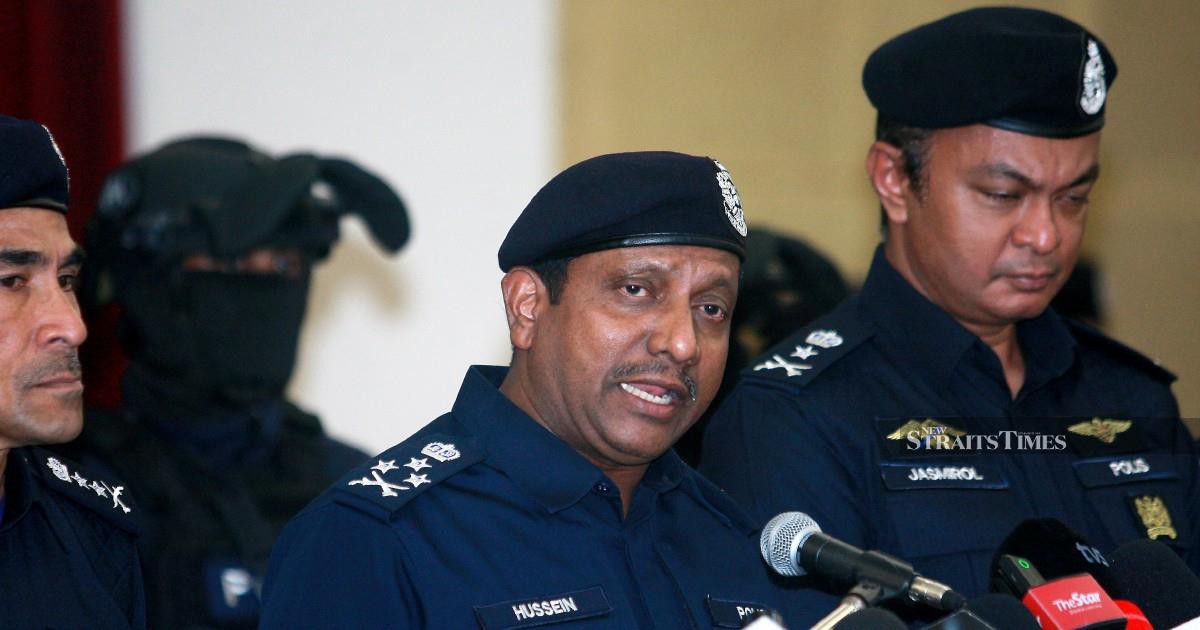
A delegation of four officers from Malaysia's Bukit Aman Narcotics Crime Investigation Department touched down in Jakarta early today to conduct interviews with a Malaysian pilot currently in Indonesian custody. The movement represents an escalation in cooperation between Malaysian and Indonesian law enforcement agencies investigating what appears to be a significant narcotics case with transnational dimensions. Indonesian authorities have authorized the Malaysian team a strictly limited two-day window to conduct their questioning, underscoring the formal protocols that govern cross-border criminal investigations in the region.
The arrival of the NCID contingent signals the seriousness with which Malaysian authorities are treating the case, dispatching senior investigators rather than relying solely on diplomatic channels or written requests for information. Direct access to a suspect allows investigators to gather contemporaneous evidence, assess credibility through face-to-face interrogation, and potentially uncover connections to trafficking networks operating within Malaysia's borders. Such bilateral arrangements, while relatively routine in theory, require significant diplomatic groundwork and mutual agreement on investigative procedures.
The pilot's arrest in Jakarta and subsequent involvement of Malaysian narcotics officials suggests the aircraft and pilot may have connections to Malaysian territory, whether as a base of operations, a point of origin, or a planned destination for contraband. Aviation has long been recognized as a vulnerability in Southeast Asia's drug enforcement landscape, with light aircraft capable of avoiding radar detection and landing at remote airstrips across the region. The involvement of a pilot specifically raises questions about organized trafficking operations that employ professional aviators, indicating a level of sophistication beyond opportunistic smuggling.
Indonesia and Malaysia maintain one of the region's most developed law enforcement relationships, having established numerous memoranda of understanding covering drug enforcement, human trafficking, and transnational crime. These institutional frameworks enable the kind of access granted to the NCID officers, though each case still requires individual authorization and coordination between federal and local authorities in both countries. The two-day limitation reflects Indonesia's own investigative priorities and the need to maintain control over interrogation processes within Indonesian territory.
The compressed timeline places significant pressure on Malaysian investigators to extract maximum intelligence during their permitted window. This necessitates careful preparation, likely including preliminary analysis of documents seized with the pilot, coordination with intelligence agencies about known trafficking patterns and suspected networks, and preparation of specific lines of questioning designed to elicit actionable information. The delegation would typically include both interrogation specialists and officers with expertise in aviation-related trafficking networks.
For Malaysia, the case touches on vulnerabilities in domestic drug enforcement and border security. If the aircraft operated from Malaysian airspace or airstrips without detection, questions will inevitably arise about surveillance capabilities and coordination between aviation authorities and law enforcement. The country remains a significant point on regional drug trafficking routes, serving both as a transit hub and domestic market. Cases involving professional aviators and sophisticated operational security suggest that trafficking networks are evolving their methodologies in response to traditional interdiction efforts.
The broader context involves Southeast Asia's ongoing struggle with synthetic drug trafficking, particularly methamphetamine and fentanyl produced in clandestine labs and distributed through increasingly complex supply chains. Aviation represents just one method; maritime smuggling, overland routes through porous borders, and postal services all feature prominently in regional trafficking patterns. Malaysian authorities have intensified enforcement efforts in recent years, making high-profile arrests and emphasizing maximum penalties for trafficking offences, though challenges remain in disrupting organized networks.
Indonesia, as the region's largest economy and population center, faces intense pressure from drug trafficking organizations seeking to access its massive consumer base or use its territory for transshipment. Jakarta's cooperation with Malaysian authorities reflects mutual recognition that unilateral enforcement efforts prove insufficient in combating trafficking with transnational scope. Intelligence sharing, suspect interviews, and coordinated operations have become standard practice, though implementation sometimes encounters obstacles from bureaucratic procedures or differing investigative priorities.
The two-day interview window will likely be subdivided among multiple questioning sessions, allowing investigators to pursue different lines of inquiry and assess how the pilot responds to new information or evidence presented across separate meetings. The Malaysia delegation will presumably report findings back to Bukit Aman leadership, potentially triggering follow-up investigations in Malaysia involving other individuals, organizations, or locations mentioned during the Jakarta interviews. Any intelligence gathered regarding narcotics distribution networks, financiers, or planned shipments could prove immediately actionable for Malaysian authorities.
Beyond the immediate case, this bilateral operation exemplifies how Southeast Asian law enforcement increasingly recognizes that drug trafficking cannot be countered through isolated national efforts. The region's geography, with maritime boundaries, numerous islands, and shared land borders, creates natural corridors for trafficking unless agencies maintain constant communication and coordinate enforcement strategies. Cases involving professional smugglers and sophisticated methods, like the apparent situation here, particularly demand cross-border collaboration to unravel organizational structures and identify senior members who typically remain insulated from street-level enforcement.
The pilot's status—whether a knowing participant in trafficking operations, a hired professional unaware of cargo details, or a victim of coercion—will significantly influence both the Malaysian investigation's trajectory and potential legal consequences. Aviation professionals with international experience represent valuable assets to trafficking organizations, offering legitimacy and technical expertise that casual smugglers cannot provide. Malaysian authorities will likely investigate whether this individual had prior involvement in contraband operations or represented a recruitment target by trafficking networks seeking to expand operational capabilities.

