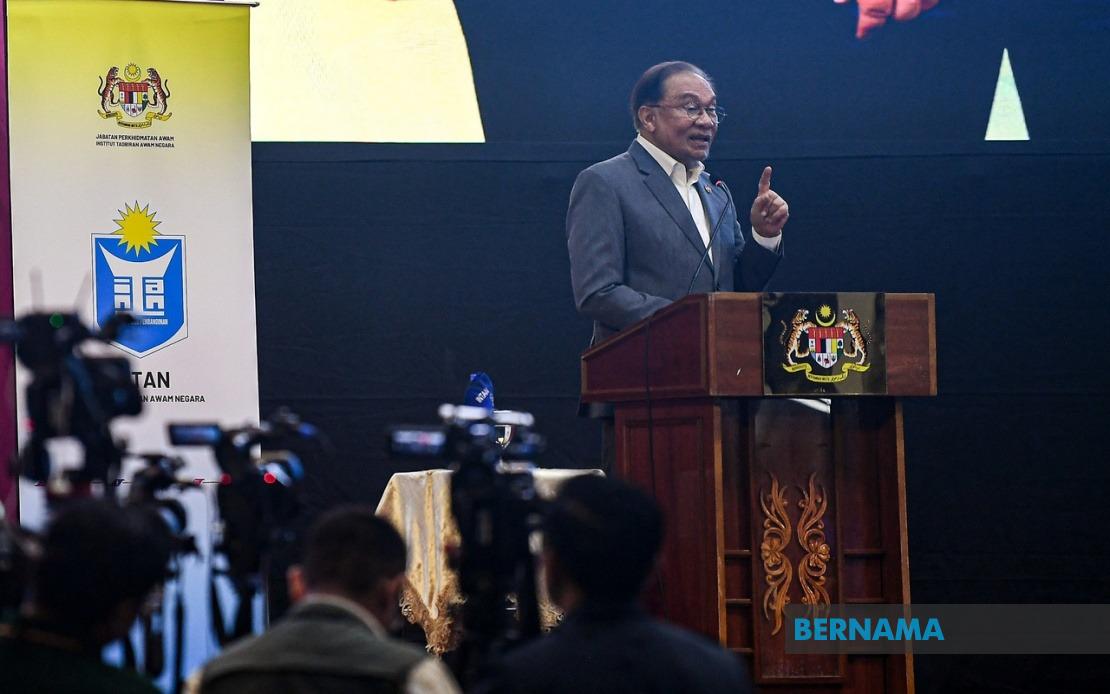
Prime Minister Datuk Seri Anwar Ibrahim has delivered a pointed message to Malaysians about the need to break away from colonial patterns of thinking that persistently place Western systems, languages, cultures and development models on a pedestal. Speaking at an event in Bangi on July 20, Anwar stressed that true independence means more than merely celebrating the nation's freedom from foreign rule—it demands that contemporary Malaysians actively construct a future grounded in Malaysia's own values, distinctive identity and inherent capabilities.
Anwar framed the challenge as a generational responsibility, noting that those born after independence have inherited not just the fruits of the struggle for autonomy but also the duty to ensure that Malaysia's trajectory forward reflects genuine self-determination. He articulated a concern that resonates throughout postcolonial Southeast Asia: the persistence of psychological and intellectual subordination to Western frameworks long after political sovereignty has been achieved. This observation points to a deeper issue that extends beyond surface-level preferences for English or Western education, touching on how entire frameworks of thinking about governance, economics and social progress have been internalised by successive generations.
The Prime Minister painted a vivid picture of a particular mindset that he identified among some post-independence Malaysians. He described individuals who, despite their Malaysian citizenship and brown skin, remain mentally tethered to Anglo-centric worldviews across multiple domains. Education, in this framing, must be conducted in English rather than Malay or other local languages. Cultural aspiration gravitates toward Western norms rather than Malaysian traditions. Economic systems are presumed superior when modelled on capitalist Western templates. Political structures and governance approaches are evaluated through a lens that automatically privileges Western democratic and institutional arrangements as the gold standard against which all others are measured.
This critique carries particular weight in Malaysia's context, where linguistic, cultural and institutional choices made during the colonial period and immediately after independence continue to shape educational and professional hierarchies. The emphasis on English as a language of prestige and opportunity, while practically useful in a globalised economy, has created a situation where proficiency in English can become a marker of sophistication in ways that devalue competence in Malay, Mandarin, Tamil and other languages integral to Malaysia's multicultural identity. Similarly, wholesale adoption of Western educational curricula and pedagogical approaches has sometimes marginalised indigenous knowledge systems and local perspectives on development and social organisation.
Anwar's remarks were delivered during a gathering with civil servants from the Central Zone, alongside Chief Secretary to the Government Tan Sri Shamsul Azri Abu Bakar and Director-General of the Public Service Tan Sri Wan Ahmad Dahlan Abdul Aziz, at Universiti Islam Selangor. The venue and audience selection underscored the intended scope of the message—directed at public sector leaders who shape policy implementation and institutional culture across government departments and agencies. By addressing civil servants directly, Anwar signalled that decolonising the Malaysian mindset must begin with state institutions and the officials who drive government operations.
The timing of this intervention reflects broader regional and global conversations about post-colonial identity and authentic development pathways. Across Southeast Asia, countries have grappled with questions about how to modernise and compete globally while preserving cultural distinctiveness and avoiding mere imitation of Western models that may not suit local contexts. Malaysia's particular challenge involves navigating these questions within a complex multicultural framework where different communities hold varying relationships to colonial legacies, Western influences and indigenous traditions.
Anwar's call for Malaysians to exercise greater intellectual autonomy and self-confidence in determining national direction speaks to frustrations that have accumulated over decades. While Malaysia has achieved remarkable economic progress and institutional development, questions persist about whether these achievements reflect authentic Malaysian solutions or rather sophisticated applications of imported templates. The reliance on English in higher education, the persistence of colonial-era institutional structures in government and the judiciary, and the emulation of Western corporate and management practices remain visible inheritance of the colonial period.
The challenge that Anwar implicitly identifies is how to foster genuine intellectual and cultural confidence without descending into narrow nationalism or rejecting beneficial knowledge and practices simply because they originate from the West. Malaysia cannot effectively advance by abandoning English entirely or dismantling functional institutions inherited from colonial times. Rather, the deeper work involves developing the conceptual independence to critically evaluate what serves Malaysian interests and aspirations, consciously choosing which external models to adopt and which elements of Malaysia's own traditions to revive and reintegrate.
This reframing of development discourse has implications for policymaking across multiple sectors. In education, it raises questions about curriculum content and language policies. In governance, it prompts reflection on whether institutional arrangements serve Malaysian needs or merely perpetuate colonial administrative patterns. In economic policy, it encourages consideration of whether development models emphasise local entrepreneurship and indigenous innovation or default to replicating external templates. In cultural policy, it suggests renewed commitment to sustaining Malaysia's distinct artistic, intellectual and cultural traditions alongside engagement with global influences.
The message also carries weight for how Malaysia positions itself within regional and global forums. A nation that has genuinely decolonised its thinking can contribute distinctive perspectives to international conversations about development, governance and social progress, rather than simply endorsing positions already established by more powerful nations. Southeast Asia has accumulated considerable experience in navigating development challenges and managing cultural diversity that could enrich global discourse if articulated with confidence and clarity.
Anwar's exhortation ultimately represents an appeal for Malaysians to claim full psychological ownership of their nation's future. Independence becomes meaningful not merely as a historical fact but as a continuous practice of self-determination, critical thinking and deliberate choice about which values and approaches to privilege. Building on Malaysia's own strengths, identity and accumulated wisdom does not preclude selective adoption of useful external knowledge and practices, but it does require that Malaysians themselves make those decisions consciously and confidently rather than deferring automatically to Western paradigms.

