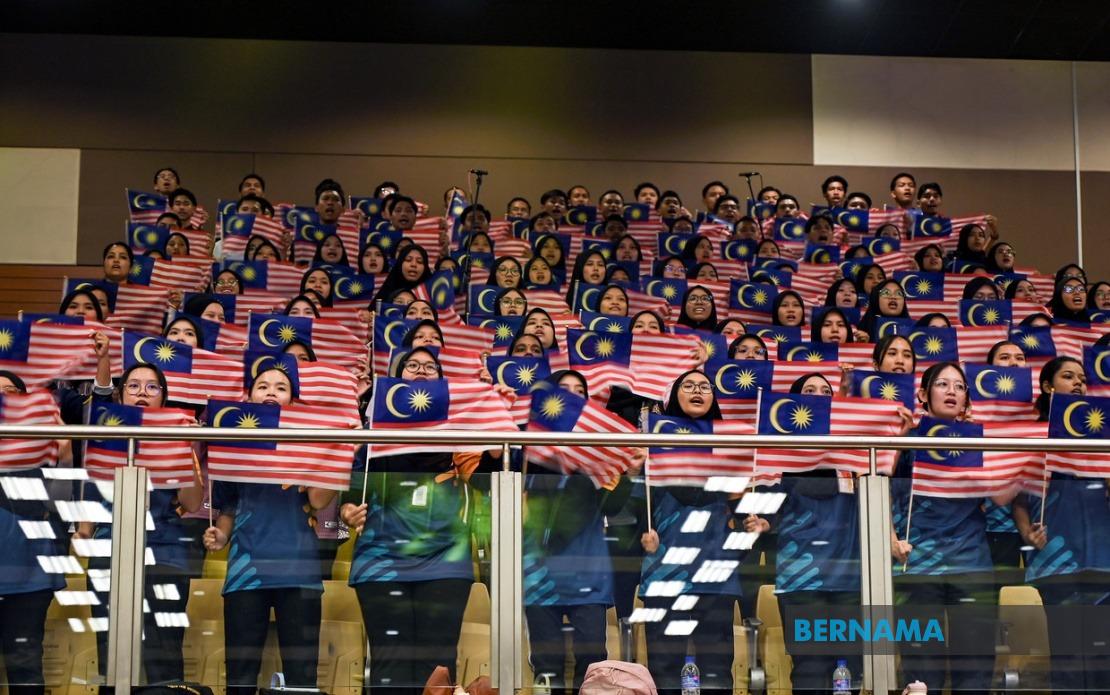
The countdown has begun for Malaysia's National Month and Kibar Jalur Gemilang 2026 launch ceremony, with organisers in Ipoh reporting that preparations have reached the 80 per cent milestone ahead of the Sunday event. The launch, which coincides with National Day and Malaysia Day celebrations collectively known as HKHM2026, represents a significant moment for the nation's patriotic calendar, though organising officials have opted for a more restrained approach to the proceedings without sacrificing their symbolic importance or the underlying message of national unity.
Faizal Adanan, deputy director of the Information Department's Communication Services and Community Development Division, outlined the approach during an inspection of preparations at the venue. The ceremony will unfold at Dewan Sri Perdana within the Sultan Azlan Shah Health Ministry Training Institute complex in Ipoh, a space designed to accommodate 3,000 attendees. Organisers have characterised the event as modest in scale, reflecting broader government priorities around resource management while maintaining the dignity and cultural resonance of the occasion. Final rehearsals are scheduled for Saturday, with teams conducting meticulous preparations to ensure smooth execution when the actual event commences.
Despite the venue's predetermined capacity, officials emphasise that the inclusive nature of participation will amplify the patriotic message. Representation from diverse segments of Malaysian society—spanning different ethnic groups, religious communities, and sectors—has been deliberately encouraged to underscore the concept of national togetherness. This approach aligns with broader themes of unity in diversity that typically characterise Malaysia's national celebrations, particularly during periods when communal harmony requires reinforcement or reaffirmation.
The centrepiece of Sunday's event will be the official launch ceremony, presided over by Prime Minister Datuk Seri Anwar Ibrahim. This represents a key moment in the national calendar, with the Prime Minister's attendance and participation serving as an endorsement of the festivities and their significance to the government's agenda. The ceremony will incorporate several performances and ceremonial elements designed to engage attendees and create memorable moments for those following proceedings remotely.
A notable highlight will be a patriotic choir performance delivered by trainees from the Sultan Azlan Shah Health Ministry Training Institute, the same group whose previous performances generated significant viral attention on social media platforms. Their participation carries particular resonance given their demonstrated capacity to connect with online audiences, extending the ceremony's reach beyond those physically present in Dewan Sri Perdana. This recognition of digital engagement reflects the contemporary reality of national celebrations, where live-streaming and social media distribution often prove as important as in-person attendance.
The programme's schedule includes a Merdeka Patriotic Run anticipated to attract approximately 2,000 participants, to be flagged off by Communications Ministry secretary-general Datuk Abdul Halim Hamzah. This component introduces a physical, participatory element that encourages active engagement with patriotic themes rather than passive observation. The run's inclusion signals organisers' intent to blend ceremonial formality with community-oriented activities that resonate across age groups and fitness levels.
A particularly significant moment will arrive with the Jalur Gemilang flag-raising ceremony by security forces, marking the resumption of this tradition following a two-year interval. The restoration of this ceremonial element carries symbolic weight, suggesting a return to established patriotic rituals and normalcy in national observances. Security personnel's involvement reinforces the connection between national defence and patriotic expression, a relationship central to Malaysia's self-conceptualisation as a sovereign nation.
Additional programming encompasses the launch of the HKHM2026 theme song, performed by a local artist, alongside exhibitions mounted by participating government agencies. These elements provide cultural flavour while creating opportunities for public education about specific governmental initiatives or achievements. The exhibitions serve a dual function: they offer substantive content related to national development while contributing to the festive atmosphere surrounding the celebration.
Recognising that the ceremony remains restricted to invited guests rather than open public attendance, organisers have implemented comprehensive broadcasting arrangements to ensure broad national participation. Live coverage will commence at 10 am on Sunday across multiple platforms, including the social media channels of Radio Televisyen Malaysia, Bernama, the Communications Ministry, and the Information Department. Notably, Merdeka360's Facebook Live stream will provide an additional access point, reflecting the strategic use of digital platforms to democratise participation in significant national events.
This multi-platform approach acknowledges shifting patterns in how Malaysians consume information and engage with national events. Rather than concentrating viewership through traditional broadcast television, the distributed model across RTM, Bernama, government ministry channels, and dedicated social media platforms maximises accessibility while catering to diverse demographic preferences. The decision to livestream rather than restrict coverage to traditional media represents a broader recognition that national celebrations function most effectively when inclusive and widely accessible.
Communications Minister Datuk Seri Fahmi Fadzil has previously articulated the thematic direction for HKHM2026, establishing conceptual parameters that guide the ceremony's messaging and design elements. This forward planning ensures coherence between Sunday's launch activities and the broader National Day celebrations scheduled for August 31 at Dataran Putrajaya. Officials have characterised the August event as similarly modest yet lively in character, suggesting a consistent philosophy animating the year's major patriotic observances.
The Putrajaya celebration will mark the traditional focal point of Malaysia's National Day commemorations, traditionally drawing significant attendance and media attention. By framing both events within comparable parameters—modest in scope but vibrant in character—organisers signal intentional recalibration of how national celebrations function in the contemporary period. This approach may reflect budgetary considerations, sustainability concerns, or deliberate philosophical choices regarding appropriate scale for government-sponsored events.
As final preparations advance through their closing stages, the Sunday launch represents both a concrete milestone in the calendar of national observances and a symbolic marker of Malaysia's commitment to sustaining patriotic traditions. The blend of ceremonial formality, community participation, cultural performance, and digital accessibility suggests a modernised conception of national celebration—one attentive to traditional protocols while embracing contemporary communication technologies and inclusive participation models. For Malaysian citizens and regional observers, the event offers insight into how the nation conceptualises and publicly performs its identity during significant commemorative moments.

