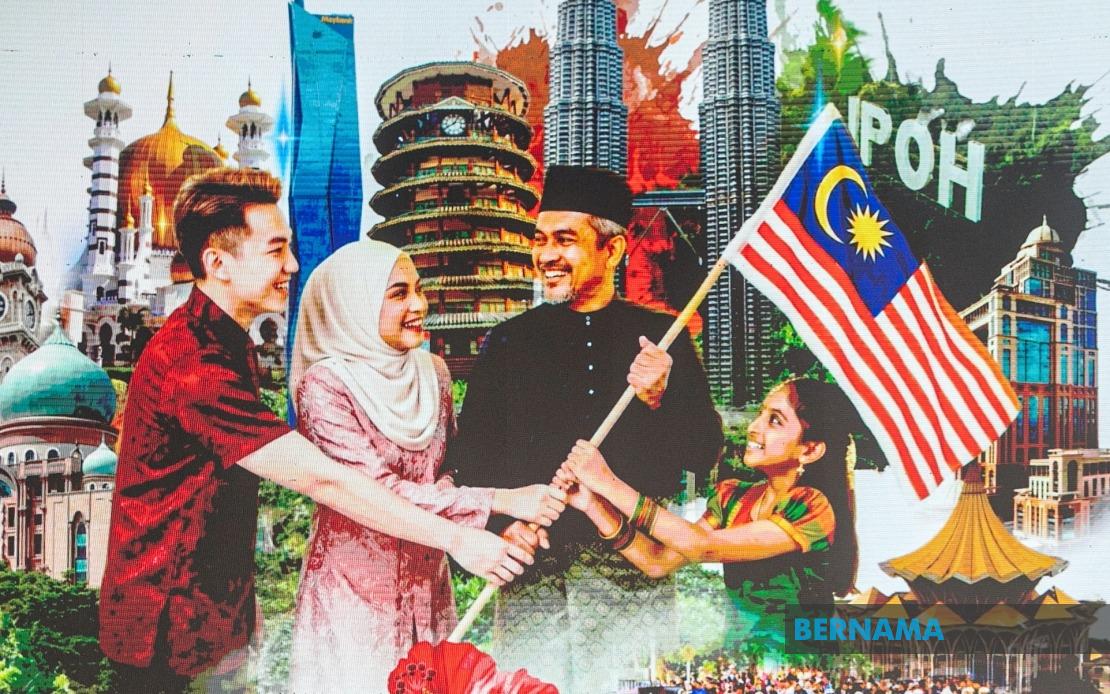
Malaysia's Communications Minister Datuk Seri Fahmi Fadzil has sounded an alarm about the risks of artificial intelligence technology in producing content featuring the national flag, urging content creators to exercise rigorous quality control to prevent embarrassing design errors. Speaking at the launch of the 2026 National Month and Fly the Jalur Gemilang campaign in Ipoh, Fahmi highlighted a specific concern: the inadvertent omission or miscounting of the Jalur Gemilang's 14 distinctive stripes, a foundational element of Malaysia's national symbol that should never be compromised in any representation.
The minister's intervention reflects a growing tension between technological convenience and cultural precision in the digital age. As AI tools become increasingly accessible to the general public and professional media organisations alike, the potential for algorithmic errors to distort national symbols poses both a practical and symbolic challenge. The Jalur Gemilang, with its precisely defined colours, crescent, and stripe pattern, carries profound meaning for Malaysians and requires meticulous accuracy whenever it appears in public communication. A single miscounted stripe or incorrectly rendered element could undermine the dignity of the symbol or inadvertently create mockery on social media platforms, where such errors spread rapidly across borders.
Fahmi articulated a clear educational component to his approach, encouraging all Malaysians to familiarise themselves with proper flag etiquette as part of the broader campaign to boost patriotic sentiment during the National Month celebrations. This dual strategy of raising public awareness while simultaneously warning against technological shortcuts demonstrates that the government recognises the need to engage citizens proactively rather than rely solely on enforcement mechanisms. The minister stressed that learning correct flag protocols should be viewed not as bureaucratic minutiae but as an essential aspect of civic responsibility and national pride.
The government has committed to collaborative oversight of AI-generated flag content throughout the National Month period. Fahmi announced that his ministry will work closely with the Malaysian Press Institute and the Malaysian Media Council to ensure that media organisations across the country maintain accurate representations of the Jalur Gemilang, particularly when these images are produced through artificial intelligence systems. This tripartite arrangement reflects an understanding that legacy media institutions, despite facing technological disruption, remain crucial gatekeepers of national symbolism and can help establish standards that newer digital platforms might otherwise overlook.
When asked about enforcement mechanisms and potential penalties for errors, Fahmi outlined a graduated response that prioritises dialogue over punishment. Rather than immediately invoking whatever legal frameworks exist to regulate the use of national symbols, the ministry intends to first contact content creators who have made mistakes and request corrections. This measured approach suggests confidence in appealing to Malaysians' sense of civic duty, while also recognising that many errors will stem from technological limitations rather than malicious intent. Only if voluntary compliance fails would the government consider escalating to formal legal action, indicating a pragmatic acknowledgment of the challenges in prosecuting unintentional AI errors.
The announcement came during the official launch ceremony held at the Sultan Azlan Shah Ministry of Health Training Institute in Tanjung Rambutan, an event presided over by Prime Minister Datuk Seri Anwar Ibrahim and attended by National Unity Minister Datuk Aaron Ago Dagang and Perak Menteri Besar Datuk Seri Saarani Mohamad. The high-level participation underscores the government's emphasis on National Month celebrations as a significant occasion for reinforcing national identity and unity. The presence of multiple cabinet ministers suggests that flag representation and patriotic expression are viewed as falling within portfolios beyond communications alone, touching on broader issues of national unity and cultural preservation.
As part of the wider campaign initiative, Malaysians are being encouraged to display the Jalur Gemilang continuously from the campaign's launch date through at least September 16, Malaysia Day. This extended flying period, stretching across both the August National Day and September Malaysia Day periods, aims to sustain patriotic sentiment beyond the traditional single-day celebrations. The campaign recognises that maintaining visible symbols of national identity throughout an extended period can reinforce communal bonds and create a tangible sense of collective participation in the nation's story.
The 2026 celebrations will follow a geographically distributed model, with the National Day commemoration scheduled for Putrajaya, the federal administrative centre, while Malaysia Day festivities will shift to Sarawak, with the specific venue still being finalised. This arrangement reflects efforts to distribute major national celebrations across different regions, potentially strengthening connection between federal government institutions and Malaysia's diverse states and territories. The decision to hold Malaysia Day in Sarawak, one of Malaysia's two largest states by land area and a crucial participant in the Malaysian federation, sends a symbolic message about the importance of regional equity in national celebrations.
The intervention by Fahmi addresses a contemporary challenge that traditional governance frameworks were not designed to contemplate: the mass production of national symbols by algorithms rather than human craftspeople or designers. While flag protocols have long existed to govern physical displays and official representations, the democratisation of AI image generation means that millions of Malaysians can now inadvertently produce technically inaccurate versions of the Jalur Gemilang without any intention to disrespect the symbol. The minister's framing of this as primarily an educational and advisory matter, rather than a criminal enforcement issue, suggests that policymakers recognise the fundamental difference between deliberate desecration and accidental technical error.
For content creators and media organisations, the guidance serves as a practical reminder to implement quality assurance processes when incorporating AI-generated imagery into their work. The involvement of the Malaysian Press Institute and Malaysian Media Council provides a pathway for establishing industry standards and best practices, potentially including checklists or verification protocols that editors can apply before publishing flag imagery. As AI tools continue to evolve and become more seamlessly integrated into content production workflows, such proactive standards-setting could prevent embarrassing errors that might otherwise require post-publication corrections and government intervention.
The broader implications extend beyond flag imagery to questions of how Malaysia's cultural and national symbols are represented in the age of algorithmic content generation. If similar concerns arise regarding other national emblems, historical figures, or cultural representations, the precedent established through this flag initiative could shape how government and media industry respond to technological challenges to cultural accuracy. The collaborative approach involving multiple stakeholder groups—government, press institutions, and media councils—provides a model that might be adapted for protecting other aspects of Malaysia's national heritage and identity in an increasingly AI-mediated information environment.

