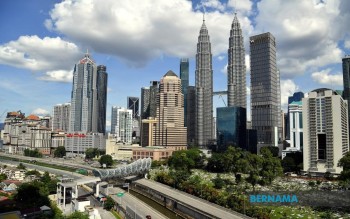
Malaysia's economy expanded at a stronger-than-expected pace in the second quarter of 2026, growing 6.0 per cent year-on-year as domestic consumption and export activity powered the nation through a period of intensifying global uncertainty. This performance represents the third consecutive quarter of resilient expansion and marks the strongest second-quarter outcome since 2014 outside the pandemic era, demonstrating that Southeast Asia's third-largest economy continues to weather international headwinds more effectively than many peer nations.
Prime Minister Datuk Seri Anwar Ibrahim attributed much of this economic momentum to deliberate government interventions designed to protect household purchasing power during a period of pronounced global supply chain disruptions related to escalating tensions in West Asia. These measures encompassed direct financial assistance to small and medium enterprises grappling with elevated input costs, as well as carefully calibrated fuel subsidy arrangements intended to prevent energy price shocks from cascading through the broader economy. The combination of relief programmes and structural reforms under the MADANI Economy framework has effectively insulated Malaysian consumers and businesses from the full severity of cost pressures that have battered economies elsewhere.
Despite worldwide inflationary pressures stemming from supply chain chaos and commodity price volatility, Malaysia managed to keep headline inflation contained at just 1.9 per cent during the quarter, a testament to both policy effectiveness and underlying economic stability. The government simultaneously deployed household cash assistance schemes—Sumbangan Tunai Rahmah and Sumbangan Asas Rahmah—alongside the BUDI MADANI subsidy framework to cushion vulnerable populations from bearing the brunt of global cost escalations. These layered interventions reflect a deliberate policy approach that prioritises social protection even as the nation pursues growth objectives, recognising that economic expansion means little to ordinary Malaysians if its benefits concentrate among the wealthy.
The second-quarter result exceeded the Department of Statistics Malaysia's preliminary estimate and surpassed the Bloomberg median forecast of 5.8 per cent, vindicating the government's economic stewardship during a period when many regional economies have stumbled. First-half performance of 5.7 per cent positions Malaysia comfortably within its full-year growth target corridor of 4.0 to 5.0 per cent, providing considerable buffer against potential deterioration in global conditions during the remainder of 2026. This trajectory contrasts sharply with downgraded forecasts for many developed and developing economies wrestling with persistent uncertainty.
Prime Minister Anwar acknowledged, however, that Malaysia's economic statistics mask considerable distributional challenges beneath headline figures that appear encouraging. While aggregate growth reached 6.0 per cent, he emphasised that millions of Malaysians continue struggling with elevated living costs, particularly those in fixed-income brackets and segments of the workforce facing sectoral headwinds. The government's recognition that economic benefits accrue unevenly across society—with some households and businesses navigating substantially more difficult circumstances than aggregate data suggests—reflects a more nuanced understanding of Malaysian economic realities than simplistic celebration of GDP numbers alone would allow.
The performance drew particular strength from resilient domestic demand, indicating that despite cost pressures, Malaysian households and firms continued spending and investing at respectable rates. This domestic engine proved crucial given that external sector contributions, while positive, faced headwinds from global trade slowdown and shipping disruptions associated with West Asia instability. The ability to maintain consumption momentum despite uncertain conditions underscores the effectiveness of government support measures in sustaining consumer and business confidence during a period when such psychological and financial resilience appeared increasingly scarce across the region.
Looking forward, Prime Minister Anwar outlined that the MADANI Government remains committed to policies prioritising tangible improvements in household incomes, employment quality, and living standards rather than abstract macroeconomic metrics. This reflects implicit acknowledgment that previous growth episodes sometimes failed to translate expansion into meaningful wage gains or job creation for ordinary workers, particularly in lower-income segments. The emphasis on ensuring growth benefits reach beyond urban middle-class constituencies suggests policy recalibration toward more inclusive economic outcomes.
The government identified several persistent risks threatening to derail continued expansion, including unresolved geopolitical tensions, ongoing supply chain fragmentation, volatile food and input prices, and employment pressures in specific sectors such as tourism and manufacturing. These vulnerabilities remain particularly acute for an economy as trade-exposed as Malaysia's, where external shocks can transmit rapidly into domestic hardship. The emergence of employment stress in certain sectors signals that labour market adjustment to global disruptions remains incomplete, with some workers bearing disproportionate burdens from structural economic changes.
Analysts credit Malaysia's relatively strong positioning partly to economic diversification, with services, technology, and financial sectors providing counterbalance to manufacturing exposure. The nation's role in global semiconductor and electronics value chains, while creating vulnerability to supply disruptions, also generates resilience through high-value production capabilities that remain in demand regardless of broader slowdown. This industrial composition has enabled Malaysia to outperform neighbours confronting heavier exposure to tourism-dependent or commodity-reliant models during periods of international turbulence.
The sustainability of current growth rates ultimately hinges on whether global supply networks normalise and whether West Asia tensions stabilise without escalating into broader conflict. Malaysian policymakers appear conscious that current economic performance reflects somewhat cyclical conditions that could reverse rapidly if geopolitical situations deteriorate. The emphasis on maintaining policy ammunition—preserving subsidy flexibility, protecting government finances, and supporting vulnerable groups—suggests preparation for potential deterioration even while current indicators remain positive.

