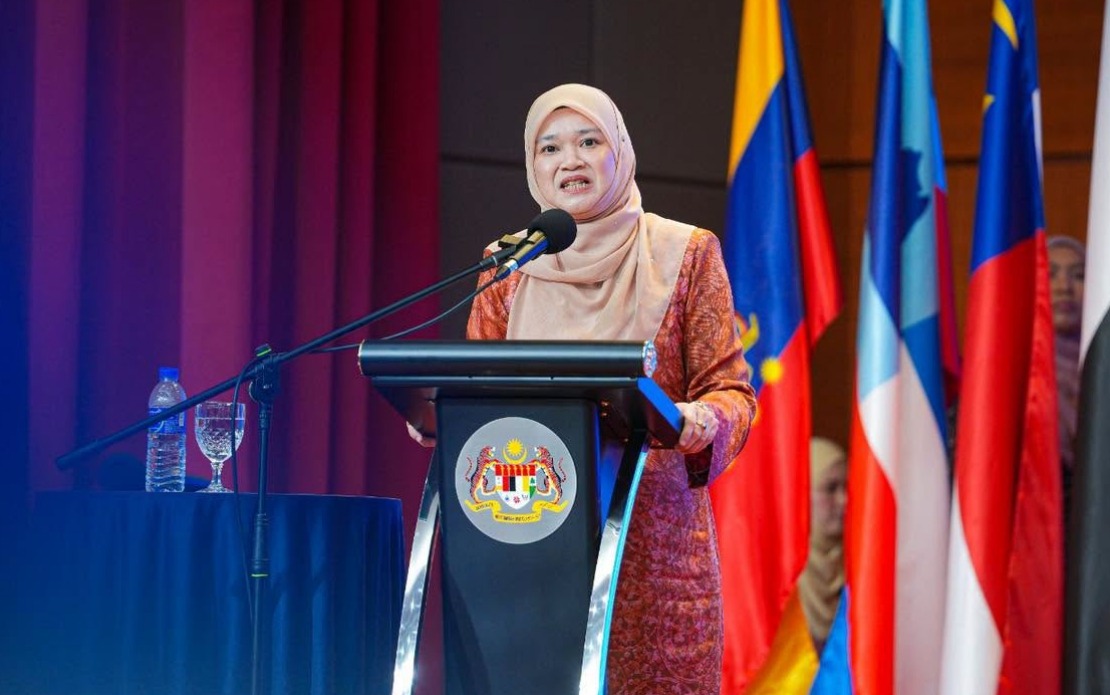
The Malaysian Education Ministry has announced a significant policy shift designed to broaden educational pathways for students completing their schooling within prison institutions, signalling a recognition that academic achievement should not be constrained by circumstance. Minister Fadhlina Sidek revealed the initiative at the 17th Hijrah Kasih Programme in Kajang, a joint collaboration between the ministry and Malaysian Prison Department, positioning it as essential to ensure incarcerated students retain meaningful opportunities to pursue tertiary education following their SPM examination and release from custody.
The initiative addresses a practical barrier that has long complicated university admissions for this vulnerable cohort. Rather than relying solely on SPM results—which prison students have demonstrated they can attain at competitive levels—the ministry will now formally credit extra-curricular participation in sports and other activities as merit points. This structural change acknowledges that educational merit extends beyond written examinations, and that engagement in physical and co-curricular pursuits serves both rehabilitative and developmental functions during incarceration.
Equally significant is the ministry's parallel commitment to formalise skills certificates for students who complete vocational training while imprisoned. Many incarcerated students develop practical competencies in areas such as sewing and food preparation through prison-based programmes. Currently, these achievements remain undocumented in formal credentials. The Education Ministry intends to liaise with the Technical and Vocational Education and Training (TVET) division to ensure these skills are formally certified, creating tangible evidence of capability when students re-enter the job market and wider society. This credential recognition could substantially improve employment prospects, a critical factor in reducing recidivism and supporting successful reintegration.
Deputy Director-General of Education Datuk Zainal Abas provided concrete implementation details, indicating that the Physical, Sports and Co-curricular Assessment (PAJSK) framework will be formally recognised this calendar year. SPM candidates entering the system from 2027 onwards will be eligible to receive up to ten per cent merit credit when submitting university applications, provided their PAJSK scores meet established standards. This specific timeline allows institutions to develop appropriate assessment infrastructure and calibrate standards before implementation, ensuring credibility and consistency across prison school networks.
The policy reform rests upon an impressive empirical foundation. Prison schools have achieved one hundred per cent pass rates in the SPM examination for two consecutive years, a statistic that Minister Fadhlina highlighted as evidence that environmental constraints do not determine educational outcomes. Her assertion that success depends fundamentally on student determination rather than institutional setting reflects growing recognition that prison-based schooling, despite obvious limitations, can facilitate genuine academic achievement. This statistical reality counters prevailing assumptions that incarcerated students inevitably underperform.
Digital access forms another critical pillar of the ministry's modernisation strategy. Prison students currently face significant barriers to accessing learning technologies available to their non-incarcerated peers, potentially widening achievement gaps as digital literacy becomes increasingly central to contemporary education. The Education Ministry is investigating mechanisms to provide controlled access to the DELIMa (Digital Educational Learning Initiative Malaysia) platform, enabling imprisoned students to participate in online learning and retrieve educational materials digitally. The emphasis on controlled access reflects security requirements inherent to custodial environments while attempting to ensure that prison schools offer comparable learning infrastructure to mainstream institutions.
Expanding DELIMa access extends beyond student usage. The ministry also proposes granting teachers at integrity schools and Henry Gurney schools nationwide access to the platform, enhancing their capacity to deliver contemporary pedagogical approaches and access professional development resources. This dual focus—expanding both student and educator access—suggests a systems-based approach to raising educational quality within custodial institutions rather than implementing isolated initiatives.
Minister Fadhlina's emphasis on parental support reveals an understanding that successful educational outcomes depend upon factors extending beyond institutional provision. She stressed that families must maintain engagement and encouragement during what she characterised as the most challenging periods of their children's lives. This observation acknowledges the psychological and social dimensions of incarceration affecting young people, and implies that educational achievement within prison contexts requires sustained emotional investment from families regardless of the circumstances that led to detention.
The policy developments carry profound implications for Malaysian society's approach to youth justice and rehabilitation. By facilitating university pathways for incarcerated young people, the ministry signals that detention should not constitute a permanent educational ceiling, and that redemptive possibilities remain available to those who demonstrate commitment to learning. This philosophical orientation contrasts sharply with purely punitive frameworks and aligns with evidence-based approaches suggesting that educational engagement during incarceration substantially improves reintegration outcomes and reduces re-offending rates.
For regional observers, Malaysia's initiative demonstrates how Southeast Asian education systems are beginning to address structural inequities affecting marginalised student populations. The formal recognition of skills training, digital learning provision, and co-curricular merit in custodial educational settings establishes precedent-setting architecture that other regional governments facing similar challenges might adapt. Thailand, Indonesia, and the Philippines all operate prison education programmes affecting thousands of young people, yet formal pathways enabling university admission from incarcerated cohorts remain underdeveloped in most jurisdictions.
The implementation timeline offers opportunities for iterative refinement. The delay until 2027 for PAJSK credit eligibility allows the ministry to pilot assessment methodologies, train evaluators, and establish quality assurance mechanisms. Early feedback from prison schools and universities will prove invaluable in calibrating the ten per cent merit weighting and ensuring that credited achievements genuinely predict capacity for university-level study. Premature implementation without adequate institutional preparation could undermine the reform's credibility.
Looking forward, the success of this initiative will depend substantially upon university sector cooperation. Tertiary institutions must incorporate PAJSK credits and skills certificates into admissions algorithms in meaningful ways, rather than treating them as token acknowledgments of incarcerated students' achievements. If universities genuinely weight these credentials, incarcerated students will experience genuinely enhanced admission prospects. Conversely, if institutional culture within universities remains sceptical of credentials earned in custodial settings, the ministry's formal recognition will amount to symbolic reform without substantive impact on opportunity access.

