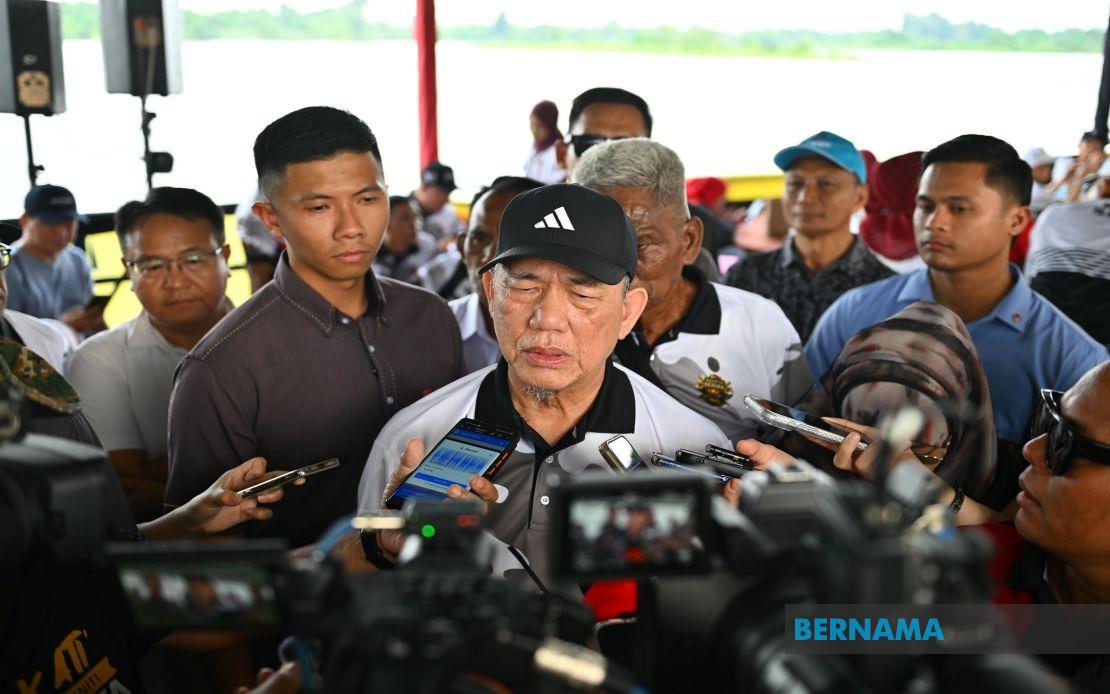
Malaysia's energy security framework remains intact despite mounting geopolitical tensions in one of the world's most critical shipping corridors, according to Deputy Prime Minister Datuk Seri Fadillah Yusof. Speaking in Kuching after attending the closing ceremony of Regatta 2026, he emphasised that the nation has not suffered any disruptions to its fuel supply chain, positioning the government's energy strategy as resilient amid regional volatility.
The assurance comes as international attention focuses on the Strait of Hormuz, a strategic waterway through which a substantial portion of global oil and gas shipments transit daily. For Malaysia, a nation with significant energy export interests and growing domestic consumption demands, stability in this corridor directly influences both national development priorities and broader economic planning. The Deputy Prime Minister's statement reflects the government's confidence in its diplomatic and commercial arrangements to maintain uninterrupted supply flows to Malaysian consumers and industries.
Behind the scenes, Petronas and Prime Minister Datuk Seri Anwar Ibrahim have been conducting extensive engagement at multiple levels to fortify Malaysia's energy position. These negotiations extend across governments, international oil and gas producers, and trading partners, creating redundancy in supply routes and contractual protections. By establishing these multi-layered diplomatic channels, the administration seeks to insulate Malaysia from sudden shocks that could arise from localised disruptions or broader geopolitical escalation. Such proactive engagement reflects lessons learned from previous global energy crises and the vulnerability inherent in depending heavily on any single supply corridor.
However, Fadillah, who serves as Energy Transition and Water Transformation Minister, drew an important distinction between supply security and price stability. While Malaysia's physical access to energy resources remains assured, the volatile international pricing environment presents an ongoing fiscal challenge that cannot be easily resolved through domestic policy alone. Global oil and gas markets respond to expectations about supply scarcity, geopolitical risk premiums, and broader macroeconomic trends—factors largely beyond any single nation's control. This reality shapes how governments must balance competing objectives: maintaining affordable energy for citizens while managing national budgets and supporting broader economic development.
The minister acknowledged that fluctuations in global energy prices create ripple effects throughout Malaysia's economy, affecting everything from manufacturing competitiveness to household utility costs. Even when physical supplies flow uninterrupted, price volatility can strain government finances and reduce resources available for other development priorities. This tension becomes particularly acute in a country committed to maintaining energy subsidies and assistance programmes for vulnerable populations. The government must walk a careful line between protecting citizens from energy cost shocks and ensuring fiscal sustainability for long-term public services.
Petronas, Malaysia's national oil and gas company, plays a central role in this energy security strategy. Beyond commercial operations, it functions as an instrument of national policy, leveraging its regional presence and technical expertise to negotiate advantageous supply arrangements. The company's relationships with international producers and its ability to tap diverse sources—whether from Southeast Asian fields or longer-distance suppliers—provides flexibility that benefits the nation during periods of uncertainty. These arrangements took years to establish and represent valuable strategic assets that the government actively monitors and maintains.
The timing of Fadillah's remarks carries significance for regional observers. The Strait of Hormuz has historically witnessed periodic tensions that occasionally threaten shipping and raise international energy prices. For Southeast Asia, where most nations depend on imported energy or fear supply disruption impacts on their own economies, developments in this corridor warrant careful attention. Malaysia's explicit confidence in its supply position may reassure both domestic stakeholders and regional partners that one major ASEAN economy has positioned itself to weather foreseeable disruptions.
Yet the minister's candid acknowledgment that pricing pressures will persist suggests the government recognises fundamental limitations to its policy toolkit. Subsidies and assistance programmes provide important social buffers, but they represent ongoing fiscal commitments that constrain budgetary flexibility. This creates a long-term planning challenge: how to gradually transition energy pricing toward market rates while maintaining social protection and managing the transition for industries dependent on affordable energy inputs. Energy transition policies, which Fadillah's ministry oversees, intersect directly with these pricing and supply considerations.
The broader context involves Malaysia's energy transition ambitions. As the nation seeks to develop renewable energy capacity and reduce carbon intensity, decisions about fossil fuel supply contracts and price management cannot be viewed in isolation. Long-term energy strategy must account for the declining global demand for coal and petroleum as countries shift toward cleaner sources. This means that while ensuring current energy security and affordability, the government simultaneously invests in alternative generation capacity that will eventually reduce dependence on volatile international markets. The transition period, however, requires managing overlapping energy systems and their distinct economic logics.
Fadillah's statement ultimately reflects the complexity of energy policymaking in an interconnected but unpredictable global system. Governments can negotiate supply arrangements, monitor geopolitical developments, and develop contingency strategies—but they cannot eliminate the fundamental vulnerability of depending on resources whose prices fluctuate due to factors beyond national borders. Malaysia's approach appears to rest on three pillars: diplomatic engagement to secure supply flows, diversified sourcing to avoid excessive dependence on any single route, and transparent communication with citizens about both the achievements and limitations of government efforts to manage energy security.
For Malaysian households and businesses, this translates into relative confidence that petrol pumps will continue dispensing fuel and power stations will maintain electricity generation. Yet citizens should also understand that international energy price movements will continue to influence everything from transport costs to manufacturing competitiveness. The government's role, as Fadillah outlined, involves doing everything possible to stabilise supplies while implementing support programmes that buffer citizens from price volatility—a balancing act that requires both international cooperation and careful domestic financial management.

