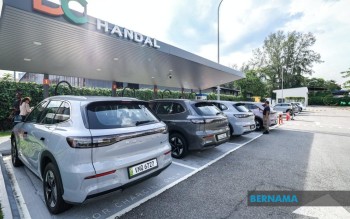
Malaysia's approach to electric vehicle charging infrastructure prioritises market forces over state intervention, according to a statement from the Ministry of Investment, Trade and Industry released in response to parliamentary questions this week. The government has deliberately refrained from imposing price controls on public EV charging services, allowing individual charging station operators to set rates based on their own commercial assessments. This policy framework reflects a broader strategic decision to leverage private sector investment as the primary driver for expanding the nation's charging network rather than relying on government-administered pricing mechanisms.
The decision carries significant implications for Malaysia's electric vehicle adoption trajectory. By permitting operators to determine their own pricing structures, authorities are banking on competitive market dynamics to eventually drive down costs and improve service quality as more players enter the sector. This differs markedly from some neighbouring jurisdictions that have experimented with regulated pricing frameworks. The approach assumes that healthy competition among charging networks will naturally incentivise efficiency, innovation and customer service improvements without requiring direct governmental price-setting authority.
As of May 31, 2026, Malaysia had installed 6,416 public EV chargers nationwide, marking steady progress in infrastructure deployment. These chargers comprise two distinct technologies: direct current fast-charging units account for 2,143 installations representing 33.4 percent of the total, while alternating current chargers make up the remaining 4,273 units or 66.6 percent. The mix reflects the gradual transition toward faster charging capabilities, though the dominance of AC chargers suggests many installations still serve residential and workplace applications where overnight or extended charging periods remain acceptable to users.
Geographical distribution reveals a substantial concentration of charging infrastructure in Peninsular Malaysia, which hosts 6,176 units or 96 percent of all public chargers. This geographic skew underscores ongoing regional disparities in EV infrastructure development, with Sarawak accounting for just 208 chargers and Sabah for merely 32 units. For Malaysian drivers in East Malaysia, the sparse charging network presents a significant barrier to EV adoption and represents a critical gap that policymakers will need to address to ensure equitable access to this emerging technology across all regions.
The government's position reflects a deliberate choice to maintain a light-touch regulatory approach while still ensuring operational standards. Although pricing remains unregulated, the development and operation of charging facilities remain subject to various technical standards, safety requirements and regulatory oversight administered by multiple agencies. The Ministry of Investment, Trade and Industry coordinates with the Energy Commission and local authorities to enforce these standards, ensuring that while market competition determines prices, quality and safety benchmarks remain non-negotiable.
Two institutional mechanisms have been established to coordinate Malaysia's broader EV ecosystem development. The National EV Task Force Meeting, chaired by MITI, and the National EV Steering Committee Meeting, chaired by the deputy prime minister in his capacity as Minister of Energy Transition and Water Transformation, provide platforms for cross-ministerial collaboration. Through these structures, government agencies coordinate with industry stakeholders on regulatory matters, safety protocols, infrastructure development and sector growth initiatives, creating a coordinated approach despite the absence of centralised price controls.
The government's commitment to regulatory collaboration with industry extends to ongoing work on charging infrastructure frameworks. MITI indicated that continued engagement with the Energy Commission and Tenaga Nasional Bhd is shaping regulatory approaches for EV charging fees. This suggests that while current policy favours market-determined pricing, authorities remain actively involved in monitoring sector developments and may refine approaches if market failures or other complications emerge. The balance between maintaining a conducive investment environment and ensuring fair market competition will likely shape future regulatory evolution.
This policy stance carries implications for consumers navigating Malaysia's emerging EV market. Without standardised pricing, drivers will encounter varying charge rates across different networks, potentially complicating journey planning and cost calculations. Early-adopter consumers in areas with multiple competing operators may benefit from competitive pricing, while those in regions with limited charger availability may face limited options. The lack of government-mandated pricing transparency could also create information asymmetries, requiring consumers to invest time in comparing rates across networks.
For private companies investing in charging infrastructure, the unregulated pricing environment offers substantial commercial upside. Operators can adjust rates dynamically based on demand, location and operational costs, theoretically maximising returns on infrastructure investments. This flexibility may attract more private capital into the sector, accelerating network expansion beyond what government-funded initiatives alone could achieve. However, the commercial orientation also means profitability considerations may shape network development patterns, potentially concentrating chargers in high-traffic, urban areas where revenue potential is greatest.
The regional context adds another dimension to Malaysia's charging infrastructure strategy. As other Southeast Asian nations develop their own EV policies, Malaysia's market-driven approach contrasts with some regional competitors exploring more interventionist pricing models. Thailand and Indonesia have experimented with various regulatory frameworks, creating a natural policy laboratory within the region. Malaysia's ongoing experience will provide valuable data on whether competitive market dynamics alone can deliver the rapid, equitable infrastructure expansion necessary to support mass EV adoption.
Looking forward, Malaysia's EV charging policy will likely require periodic reassessment. Rapid technology changes, shifts in consumer adoption patterns and evolving regional developments may necessitate adjustments to the current framework. The government's commitment to ongoing collaboration with the Energy Commission suggests flexibility to adapt policies as experience accumulates. Whether market-driven pricing ultimately accelerates or hinders Malaysia's clean energy transition will depend substantially on how effectively private operators respond to investment incentives and how well regulatory agencies monitor for potential market failures.

