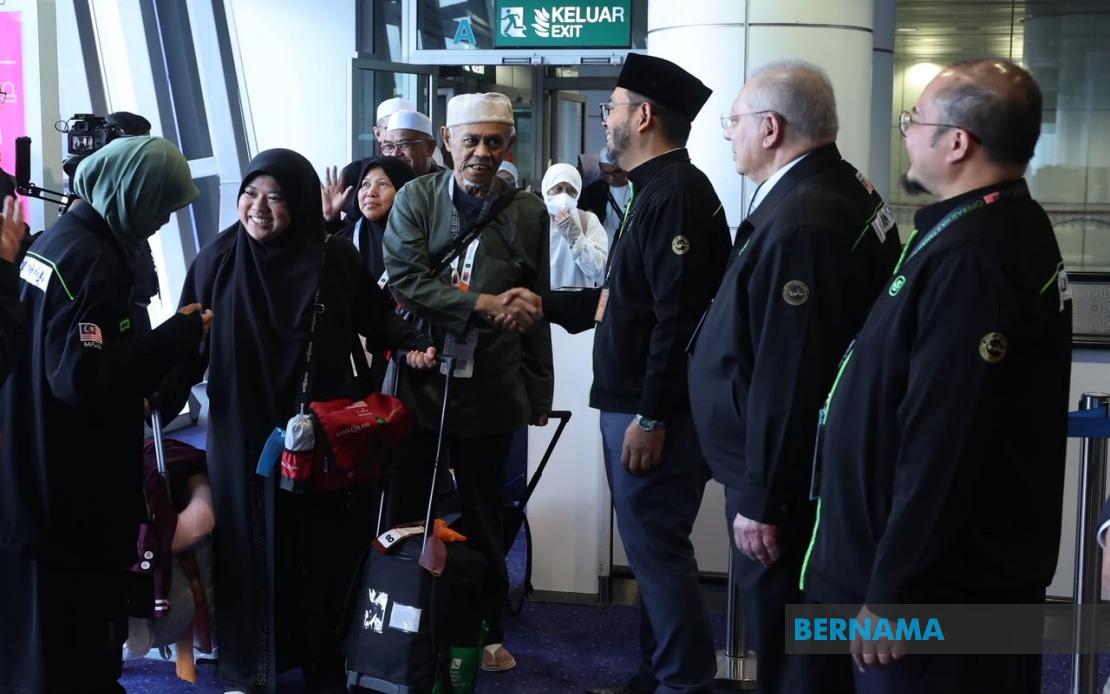
The completion of Malaysia's 1447 Hijrah haj season marked a significant achievement in religious affairs management as 258 pilgrims arrived at Kuala Lumpur International Airport on Tuesday afternoon, bringing to a close months of coordinated operations involving thousands of worshippers and hundreds of personnel. The final flight, Malaysia Airlines MH 8385, touched down at 12.10 pm after departing Madinah the previous evening, symbolising the successful culmination of what officials described as a smoothly executed pilgrimage despite regional instability affecting broader Middle Eastern operations.
Minister in the Prime Minister's Department (Religious Affairs) Dr Zulkifli Hasan greeted the returning pilgrims at KLIA, emphasising the safe passage of all participants throughout the season. His remarks underscored not merely logistical success but the completion of a religious obligation that carries deep spiritual significance for Malaysian Muslims. The minister highlighted how all haj pilgrims departed the Holy Land in good health and returned home without major incident, a noteworthy outcome given the volatile security environment in West Asia during the period when Malaysian pilgrims were undertaking their sacred journey.
The recognition Malaysia received from Saudi Arabia's Ministry of Haj and Umrah demonstrated international acknowledgement of the nation's administrative capabilities. The Labbaikum Diamond Award, presented as the highest honour for global haj management and services, positions Malaysia among the world's elite in organising large-scale religious pilgrimages. This accolade reflects years of institutional development by Tabung Haji and supporting government agencies, establishing a benchmark for efficiency and pastoral care that extends far beyond routine bureaucratic processing.
Deputy Minister Marhamah Rosli and Tabung Haji chairman Tan Sri Abdul Rashid Hussain attended the welcome ceremony, symbolising the whole-of-government approach that underpins Malaysia's haj operations. The presence of senior officials from multiple agencies underscored how successfully executing the haj programme requires coordination across the Health Ministry, Immigration Department, civil aviation authorities, and private logistics providers. This institutional architecture has proven capable of managing the complex requirements of transporting tens of thousands of pilgrims across international borders while maintaining health and safety standards.
Dr Zulkifli attributed operational success substantially to the discipline demonstrated by Malaysian pilgrims themselves, who underwent intensive preparatory courses organised by Tabung Haji before departure. These training programmes address practical matters such as health protocols, accommodation logistics, and group movement procedures, but also emphasise the spiritual dimensions of hajj and appropriate conduct befitting the sacred nature of the pilgrimage. The minister's acknowledgement of pilgrim comportment reflects an understanding that haj operations depend not only on organisational structures but on the cooperation and commitment of individual worshippers navigating unfamiliar environments and religious rituals.
Enhancements implemented during the 2026 season addressed specific pain points identified in previous operations, demonstrating institutional learning and continuous improvement methodologies. The deployment of more rigorous preparatory training sessions equipped pilgrims with better understanding of expectations and procedures. The MyNIISe system, utilised for visa management processes, streamlined bureaucratic requirements that previously created bottlenecks. Physical comfort improvements—including sofa beds and upgraded tent accommodation at pilgrimage sites—addressed wellbeing concerns, particularly relevant given the challenging climatic conditions in the Hejaz region during peak haj season.
Operational innovations extended to transportation logistics, with 24-hour bus services connecting mosques and accommodation facilities reducing coordination friction and enabling pilgrims greater flexibility in managing prayer schedules and rest periods. These service enhancements reflect how modern management practices can meaningfully improve the experience of large-scale religious observance. The deployment of specialised Tabung Haji personnel ensured consistent quality of service delivery across multiple accommodation facilities, reducing variability that pilgrims might encounter.
The successful navigation of external challenges—specifically the geopolitical tensions affecting the broader West Asian region—demonstrated Malaysia's institutional resilience and diplomatic standing. The continuation of Malaysia's haj operations without disruption, despite regional conflicts, indicates both the sacred exemption granted to hajj logistics by belligerent parties and Malaysia's diplomatic positioning that enables normal religious operations regardless of political tensions elsewhere. This represents a significant advantage for Malaysian Muslims compared to nationals of countries more directly involved in regional disputes.
Dr Zulkifli confirmed that Tabung Haji has already initiated comprehensive post-season evaluations and analysis of operational data to identify refinement opportunities. These systematic reviews examine quantitative metrics such as pilgrimage completion rates, health incident statistics, and logistical efficiency measures, alongside qualitative feedback from pilgrims and operational personnel. This analytical approach ensures that each successive haj season benefits from accumulated experience and empirical evidence about what works effectively.
The scheduled National Haj Muzakarah conference in August provides a structured forum for deliberation among religious scholars, government officials, Tabung Haji leadership, and other stakeholders to discuss challenges encountered and propose improvements for future seasons. This consultative mechanism ensures that policy evolution incorporates diverse perspectives and expertise. The conference represents commitment to advancing haj management through collaborative dialogue rather than unilateral institutional decision-making.
For Malaysian Muslims, the successful completion of this season represents not only personal religious fulfilment for thousands of pilgrims but also confidence in national institutional capacity to deliver essential religious services at international standards. The accolades received from Saudi Arabia enhance Malaysia's reputation as a reliable administrator of complex religious programmes, positioning the nation advantageously for leadership roles in broader Muslim-majority nation cooperation on religious affairs. As Malaysia looks toward the 1448 Hijrah season, the institutional foundations and accumulated expertise demonstrate readiness to sustain and enhance the quality of pilgrimage experiences for future cohorts of Malaysian worshippers.

