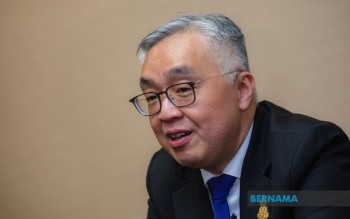
The Food and Drinks Malaysia exhibition, currently underway at the Malaysia International Trade and Exhibition Centre in Kuala Lumpur, is positioned to eclipse the previous year's sales achievement of US$265 million or RM1.081 billion, according to organisers, despite a landscape marked by logistical disruptions and mounting production costs that continue to weigh on the sector.
Henri Tan, managing director of SIAL Network ASEAN & India, expressed confidence that the three-day event would surpass its targets, attributing the projected success to a convergence of favourable market conditions including heightened buyer interest in food commodities and raw materials, accelerated commercial transactions, and notably robust participation levels from both exhibitors and attendees. The optimism underscores a broader resilience within Malaysia's food and beverage sector despite inflationary pressures that have become increasingly visible to consumers at supermarket checkouts and restaurant tables across the nation.
Expectations for visitor attendance have been revised upward substantially, with organisers forecasting a 20 per cent increase to approximately 18,000 guests compared to the 15,184 visitors recorded in the previous edition. This surge in foot traffic reflects strengthened international engagement, with exhibitors drawn from across the globe. The exhibition now features more than 450 companies, with 60 per cent representing international enterprises hailing from diverse markets including South Korea, Brazil and Turkiye, demonstrating how Malaysia continues to function as a critical gateway for Asian food trade networks.
The escalating costs afflicting the industry derive substantially from geopolitical disruptions that have complicated maritime supply routes fundamental to global food commerce. Conflict-related tensions in West Asia have disrupted the flow of shipments through strategically vital waterways including the Strait of Hormuz, creating bottlenecks that have inflated transportation expenses and subsequently filtered through to wholesale and retail prices. These external shocks have proven particularly consequential for nations like Malaysia that depend heavily on imported ingredients and finished products to sustain domestic consumption and feed into regional distribution networks.
SIAL, formally known as Salon International de l'Alimentation and acknowledged as the world's foremost food innovation network, functions as the organising entity behind the showcase. The network collaborates with local partners to facilitate connections between ASEAN and Malaysian food and beverage operators with international suppliers, distributors and industry stakeholders, creating a marketplace where emerging trends in food technology and production methodologies can be demonstrated and negotiated. This positioning has become increasingly important as producers throughout the region confront simultaneously rising input costs and shifting consumer preferences.
Industry representatives have begun appealing to government authorities for targeted interventionist support to counterbalance cost pressures that threaten profitability and expansion capacity. These appeals focus particularly on the forthcoming 2027 Budget, where officials could implement measures such as subsidised technological training programmes designed to equip food and beverage professionals with skills necessary for operational digitalisation and continuous product innovation. Such targeted investment could prove transformative for enterprises lacking capital for independent modernisation efforts.
Small and medium enterprises engaged in food and beverage production have emerged as particular beneficiaries of proposed government assistance mechanisms, including tax incentive frameworks and subsidy structures that would facilitate technology adoption and capability enhancement. Beyond conventional modernisation, industry advocates have suggested that financial support enabling smaller operators to develop competency in artificial intelligence applications could significantly elevate operational efficiencies and position companies favourably within evolving market dynamics. These technologies could enable Malaysian producers to compete more effectively against larger multinational corporations while managing cost containment in an environment of persistent price pressures.
Regional food security concerns have prompted calls for deepened regulatory collaboration among Southeast Asian nations to streamline cross-border movement of food commodities and raw materials. Enhanced coordination between Malaysia, Thailand, Indonesia and other ASEAN partners could theoretically enable manufacturers to source supplies regionally rather than maintaining dependence on distant suppliers located in Europe and the Middle East, where logistical impediments have substantially enlarged procurement expenses. However, this vision confronts practical obstacles including export quota restrictions imposed by neighbouring governments prioritising their own domestic food security, which have paradoxically forced Malaysian importers toward more distant suppliers such as India.
Protectionist regulatory barriers and export restrictions erected by governments worldwide have complicated the regional supply-sourcing strategy, as nations navigate competing imperatives between ensuring domestic food security and maintaining export revenues. This fragmentation of markets has amplified costs for importing nations and created inefficiencies that could theoretically be resolved through greater openness, yet geopolitical uncertainties persist in constraining such collaborative approaches among governments wary of supply vulnerabilities.
Industry analysts and leaders contend that intensified focus on food innovation represents an essential response to converging pressures from geopolitical instability, escalating production costs and food security anxieties. Innovation trajectories encompass improvements in resource productivity, mitigation of waste streams, and creation of premium products incorporating locally-harvested ingredients. Concrete examples already materialising include oyster aquaculture developments in Johor, downstream processing innovations applied to durian exports, and value-added applications of indigenous ingredients such as pepper-based product lines. These initiatives collectively demonstrate industry commitment toward reducing import dependency while simultaneously constructing higher-margin product portfolios.
Historical precedent suggests the Malaysian food and beverage sector possesses demonstrated capacity for adaptation amid severe external shocks, as evidenced through operational continuity maintained during the 2002 SARS outbreak and the transformative COVID-19 pandemic. This resilience operated through combinations of consumer spending pattern adjustments and producer-side process innovations designed to maintain operational viability. Current industry leadership maintains conviction that this adaptive capacity will persist despite contemporary challenges, grounded in fundamental human imperatives toward survival and the continuous evolutionary pressures that characterise competitive markets.

